
60 Best SEO Tools for Keyword Research, Technical SEO, Content, Rankings & More
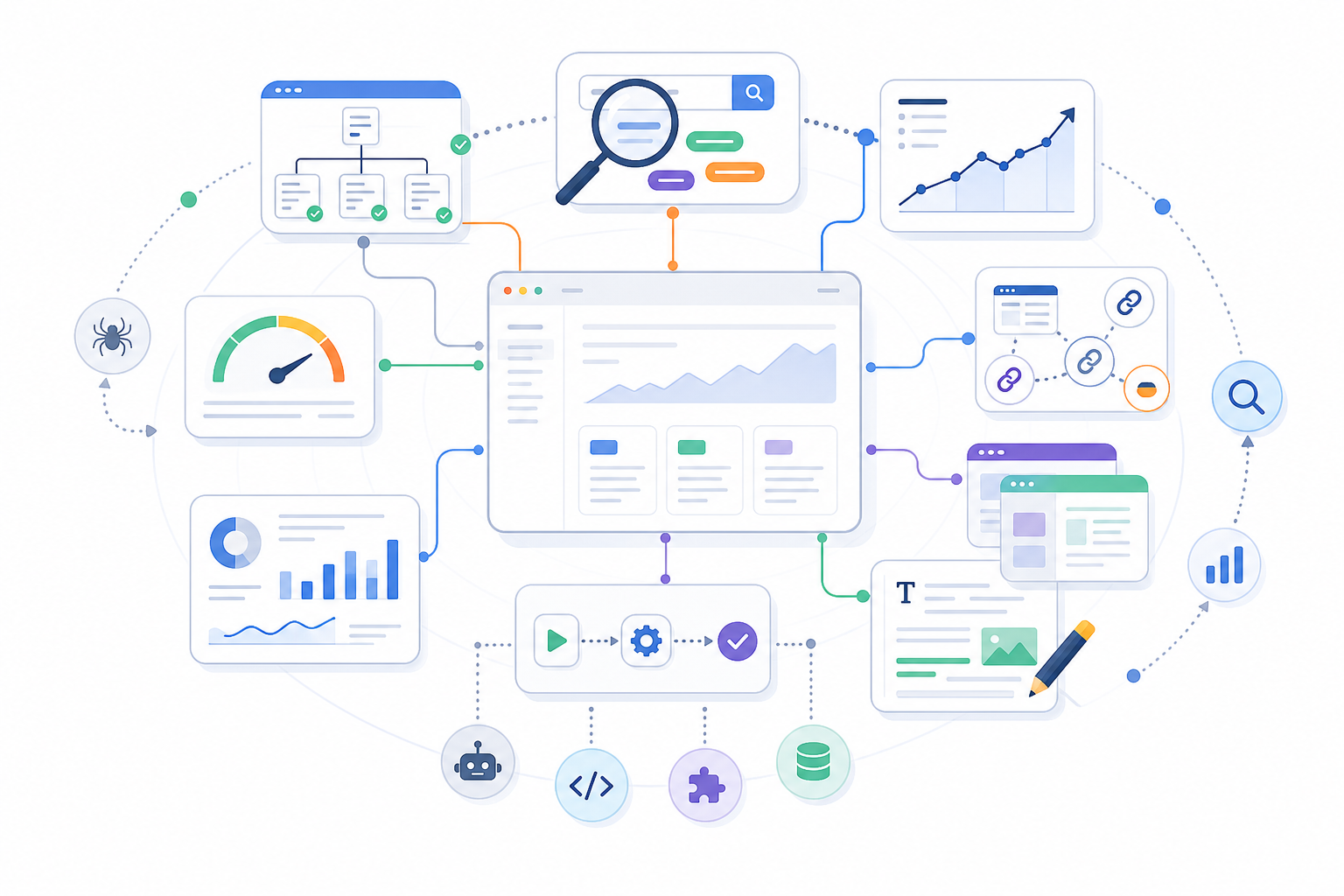
The SEO tools are software platforms that support keyword research, technical SEO, rank tracking, competitor analysis, backlink analysis, content optimization, analytics, reporting, and SEO automation. There is no single best tool for every task; the right choice depends on the SEO function, website type, team, required data, scale, and budget.
The 60 SEO tools covered below represent a mix of all-in-one platforms, specialist tools, first-party data sources, technical crawlers, content systems, reporting platforms, and browser utilities.
- Semrush - Best for comprehensive SEO and competitor research.
- Ahrefs - Best for backlink and organic competitor analysis.
- Google Search Console - Best for first-party Google Search performance data.
- Screaming Frog SEO Spider - Best for technical crawling and URL-level auditing.
- Moz Pro - Best for accessible multi-function SEO research.
- SE Ranking - Best for value-focused all-in-one SEO management.
- Morningscore - Best for simplified SEO monitoring and guided execution.
- Surfer SEO - Best for search-focused content optimization.
- SISTRIX - Best for historical organic visibility benchmarking.
- Mangools - Best for beginner-friendly keyword and ranking research.
- Serpstat - Best for integrated keyword, competitor, and ranking analysis.
- Ubersuggest - Best for budget-friendly SEO research.
- SpyFu - Best for historical SEO and PPC competitor intelligence.
- Majestic - Best for specialist backlink intelligence.
- Similarweb - Best for digital market and competitor traffic intelligence.
- seoClarity - Best for enterprise SEO analytics and management.
- BrightEdge - Best for enterprise organic-search management.
- Conductor - Best for enterprise SEO, content, and AI-search visibility.
- Botify - Best for enterprise technical SEO and search-engine crawling analysis.
- Lumar - Best for large-scale website technical health monitoring.
- Oncrawl - Best for technical SEO crawling and log analysis.
- JetOctopus - Best for large-scale crawling and bot-log analysis.
- Sitebulb - Best for visual technical SEO auditing.
- Ryte - Best for website-quality and technical SEO monitoring.
- WooRank - Best for simplified website audits and reporting.
- Seobility - Best for affordable technical SEO monitoring.
- Sitechecker - Best for website-change monitoring and SEO auditing.
- AccuRanker - Best for dedicated rank tracking and search visibility.
- Advanced Web Ranking - Best for agency and enterprise rank reporting.
- Nightwatch - Best for segmented and location-focused rank tracking.
- Wincher - Best for straightforward daily rank monitoring.
- ProRankTracker - Best for multi-search-engine rank tracking.
- Keyword.com - Best for verifiable SERP rank tracking.
- Keyword Insights - Best for keyword clustering and content planning.
- LowFruits - Best for finding lower-competition keyword opportunities.
- KeywordTool.io - Best for autocomplete-based keyword expansion.
- AnswerThePublic - Best for discovering questions and search themes.
- AlsoAsked - Best for People Also Ask research.
- Google Keyword Planner - Best for Google Ads keyword demand data with SEO research value.
- Google Trends - Best for search-interest trends and seasonality.
- Google Analytics 4 - Best for organic traffic and conversion analysis.
- Looker Studio - Best for SEO dashboards and data visualization.
- Bing Webmaster Tools - Best for first-party Bing search and indexing data.
- PageSpeed Insights - Best for Core Web Vitals and page-performance diagnostics.
- Lighthouse - Best for repeatable page-quality audits.
- GTmetrix - Best for detailed website-performance testing.
- Clearscope - Best for editorial content optimization.
- MarketMuse - Best for content strategy and topical planning.
- Frase - Best for SERP-based content briefs and optimization.
- PageOptimizer Pro - Best for detailed on-page optimization analysis.
- Yoast SEO - Best for mainstream WordPress SEO implementation.
- Rank Math - Best for feature-rich WordPress SEO management.
- All in One SEO - Best for WordPress SEO controls and implementation workflows.
- AgencyAnalytics - Best for multi-client SEO reporting.
- Respona - Best for link-building and digital PR outreach.
- BuzzSumo - Best for content research, media discovery, and monitoring.
- LinkResearchTools - Best for advanced backlink auditing.
- Search Atlas - Best for integrated SEO automation and implementation.
- SEOquake - Best for browser-based SEO inspection.
- Keywords Everywhere - Best for keyword metrics directly inside common browsing workflows.
Each tool below is evaluated using the same attributes: primary SEO function, key features, practical use cases, distinguishing capability, pricing and access, strengths, limitations, and best fit.
1. Semrush
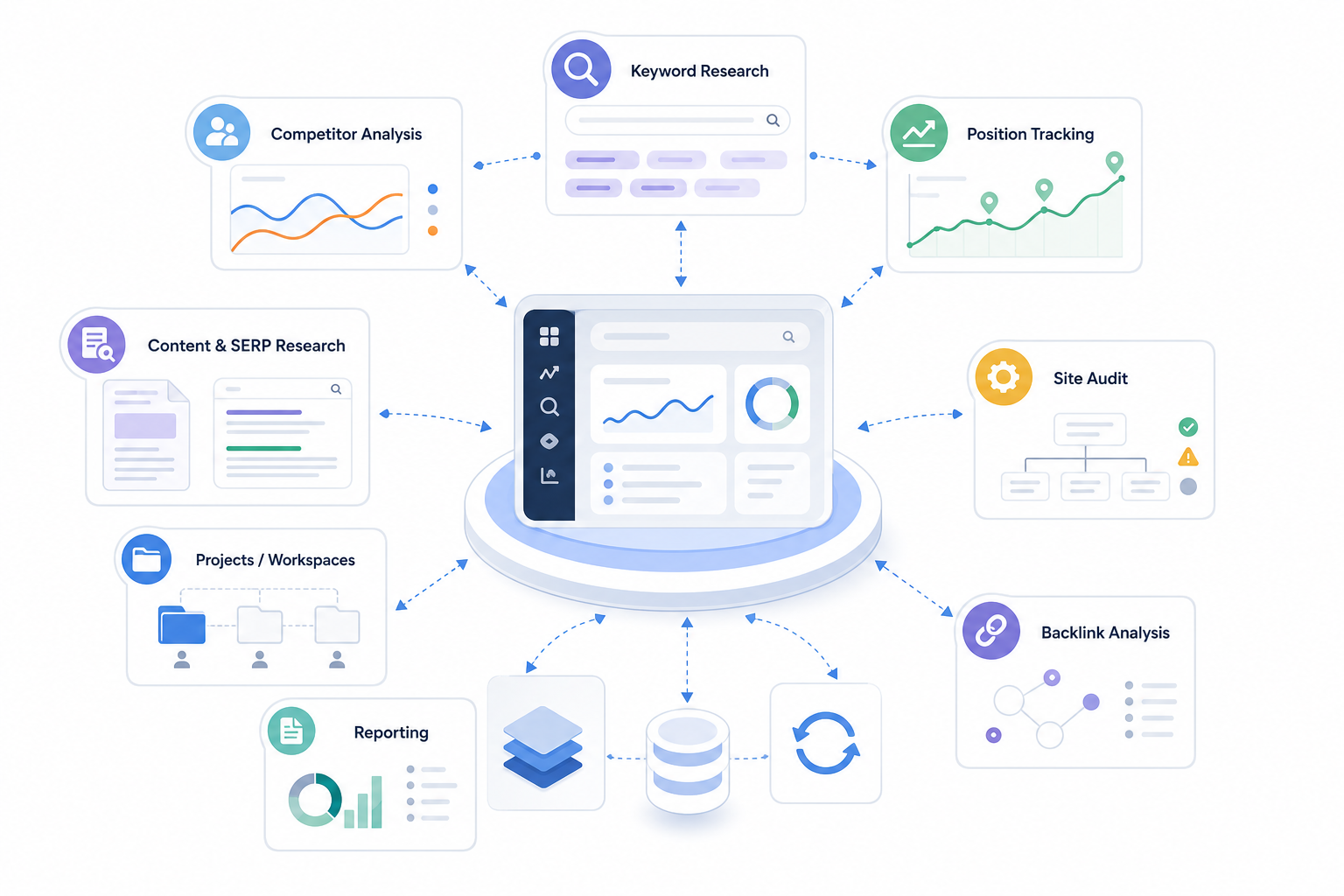
Semrush is an all-in-one digital marketing and SEO platform primarily used for competitive research and broad SEO management, with additional functionality for keyword research, rank tracking, technical auditing, backlinks, content, and reporting.
Primary SEO Function: Multi-function SEO research and campaign management.
Key SEO Features: Keyword research and difficulty estimates; organic competitor analysis; Position Tracking; Site Audit; backlink analysis; content and SERP research.
Best Use Cases: Competitor Research for discovering ranking gaps; Keyword Planning for developing target sets; Site Monitoring for recurring audits and rankings; Agency Work for managing several SEO functions from one platform.
Distinguishing Capability: Broad competitive datasets combined with a large collection of SEO and wider marketing workflows in one account.
Pricing and Access: Paid; pricing varies by plan and usage limits.
Main Strengths: Broad functionality; strong competitive research; integrated reporting and project management.
Main Limitations: Significant feature overlap can make the interface complex; higher limits and specialist functionality increase subscription cost.
Best For: SEO teams and agencies that need broad research, monitoring, and competitive intelligence within one platform.
2. Ahrefs
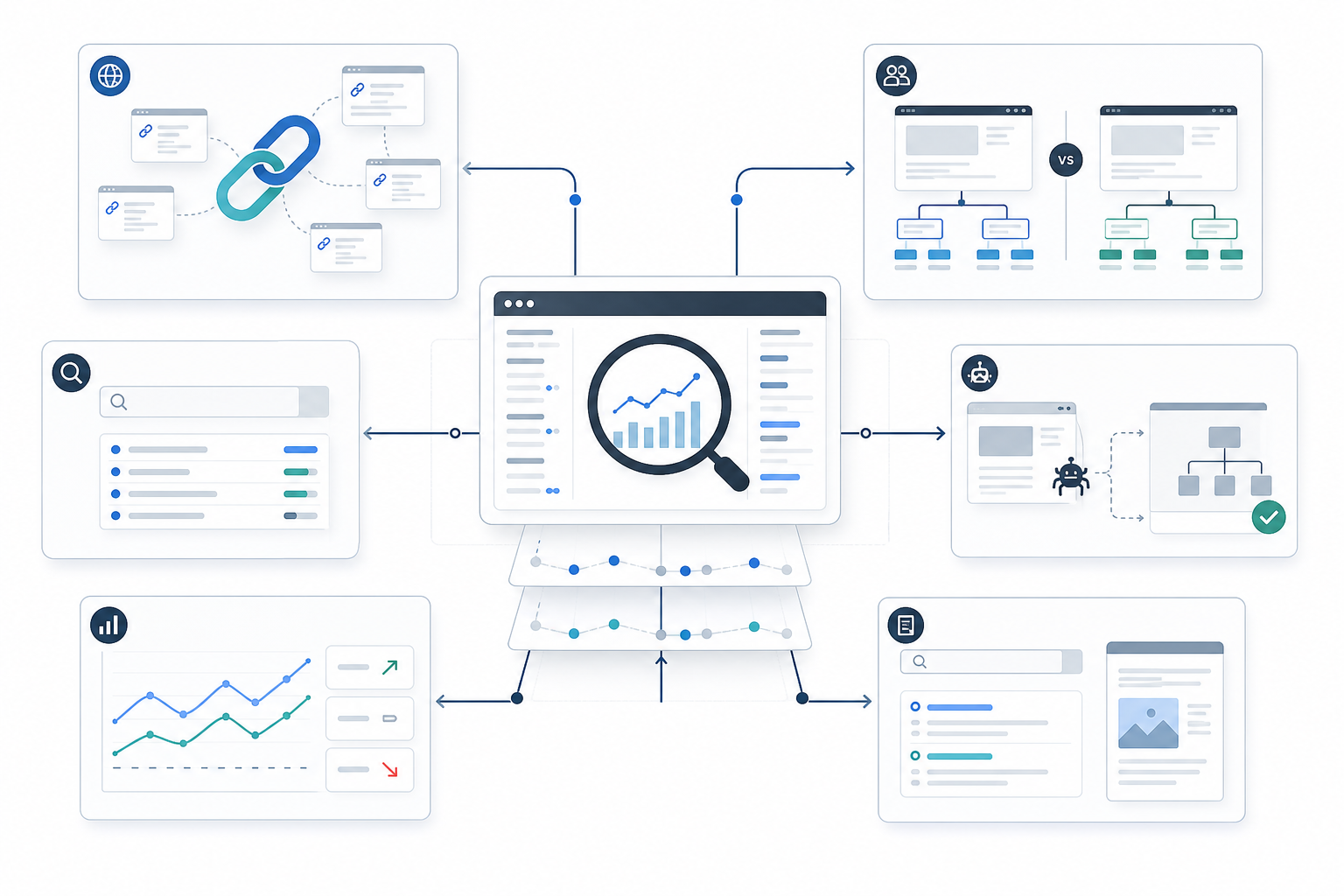
Ahrefs is an SEO research platform primarily used for backlink and organic competitor analysis, with additional functionality for keyword research, site auditing, rank tracking, content discovery, and SERP analysis.
Primary SEO Function: Backlink, keyword, and competitor intelligence.
Key SEO Features: Site Explorer; backlink and referring-domain analysis; Keywords Explorer; Site Audit; Rank Tracker; Content Explorer.
Best Use Cases: Backlink Analysis for evaluating external authority; Competitor Research for discovering ranking pages and keywords; Content Research for identifying successful topics; Technical Auditing for crawl-based website analysis.
Distinguishing Capability: Deep integration between backlink intelligence, ranking-page analysis, keyword data, and competitor research.
Pricing and Access: Paid; limited free website-owner functionality is available through Ahrefs Webmaster Tools.
Main Strengths: Detailed backlink analysis; strong competitor-page research; useful historical organic data.
Main Limitations: Paid access can become expensive for larger teams and heavy usage; modeled traffic and keyword values are not first-party Google data.
Best For: SEO professionals that require detailed backlink and organic competitor research.
3. Google Search Console
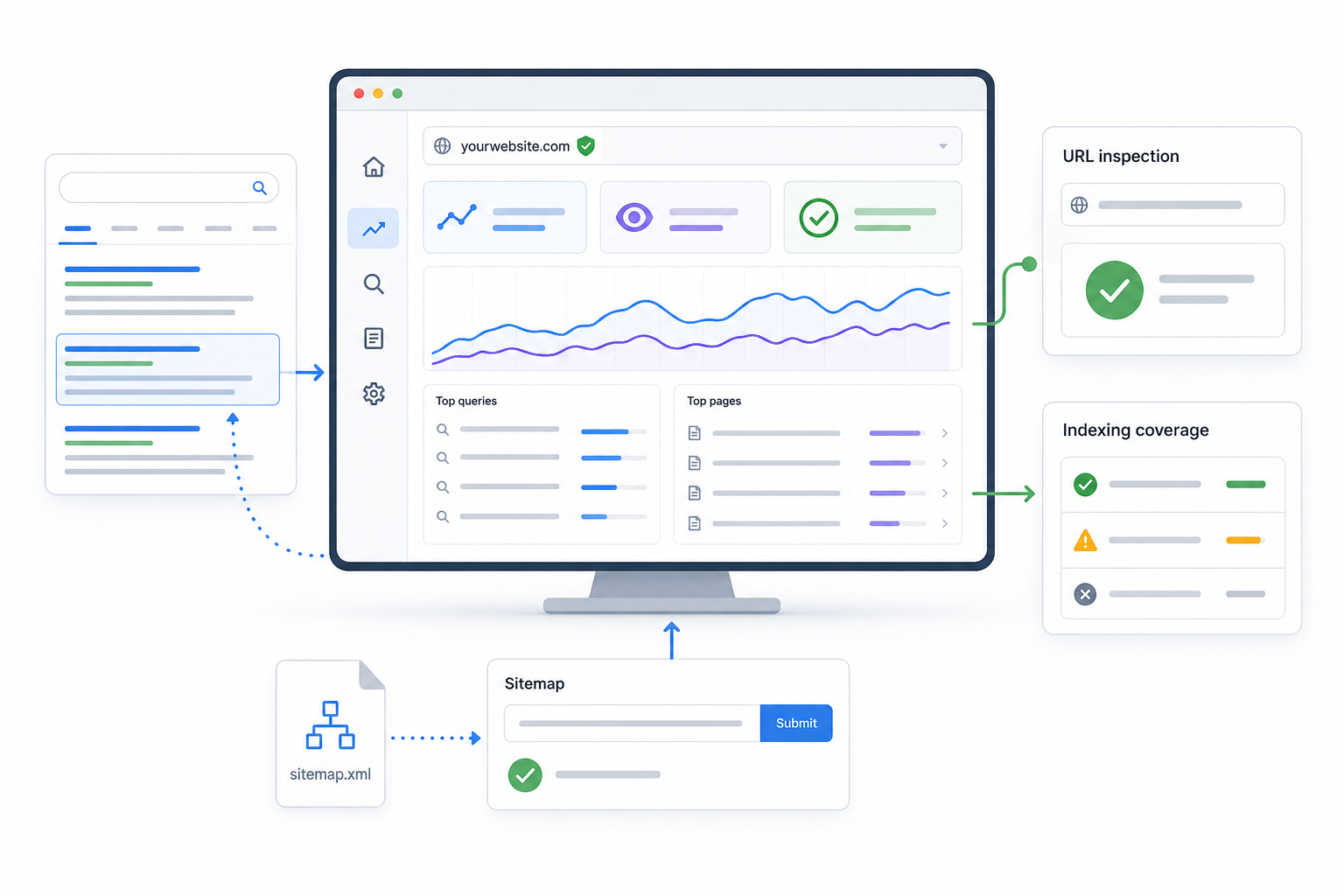
Google Search Console is a free first-party Google platform primarily used for measuring how a verified website performs in Google Search, with additional information about queries, pages, indexing, sitemaps, and search appearance.
Primary SEO Function: Google Search performance and indexing monitoring.
Key SEO Features: Performance reports; query and page data; impressions and clicks; URL Inspection; indexing reports; XML sitemap submission.
Best Use Cases: Search Performance for analyzing actual queries and clicks; Indexation Monitoring for reviewing URL states; Landing-Page Analysis for identifying pages gaining or losing visibility; Technical Validation for examining specific URLs.
Distinguishing Capability: The data comes directly from Google Search for the verified property rather than from a third-party estimate.
Pricing and Access: Free.
Main Strengths: First-party search data; page and query segmentation; essential indexation evidence.
Main Limitations: Limited competitor intelligence; historical and exported data constraints compared with specialist platforms.
Best For: Every website that wants to measure its actual performance in Google Search.
4. Screaming Frog SEO Spider
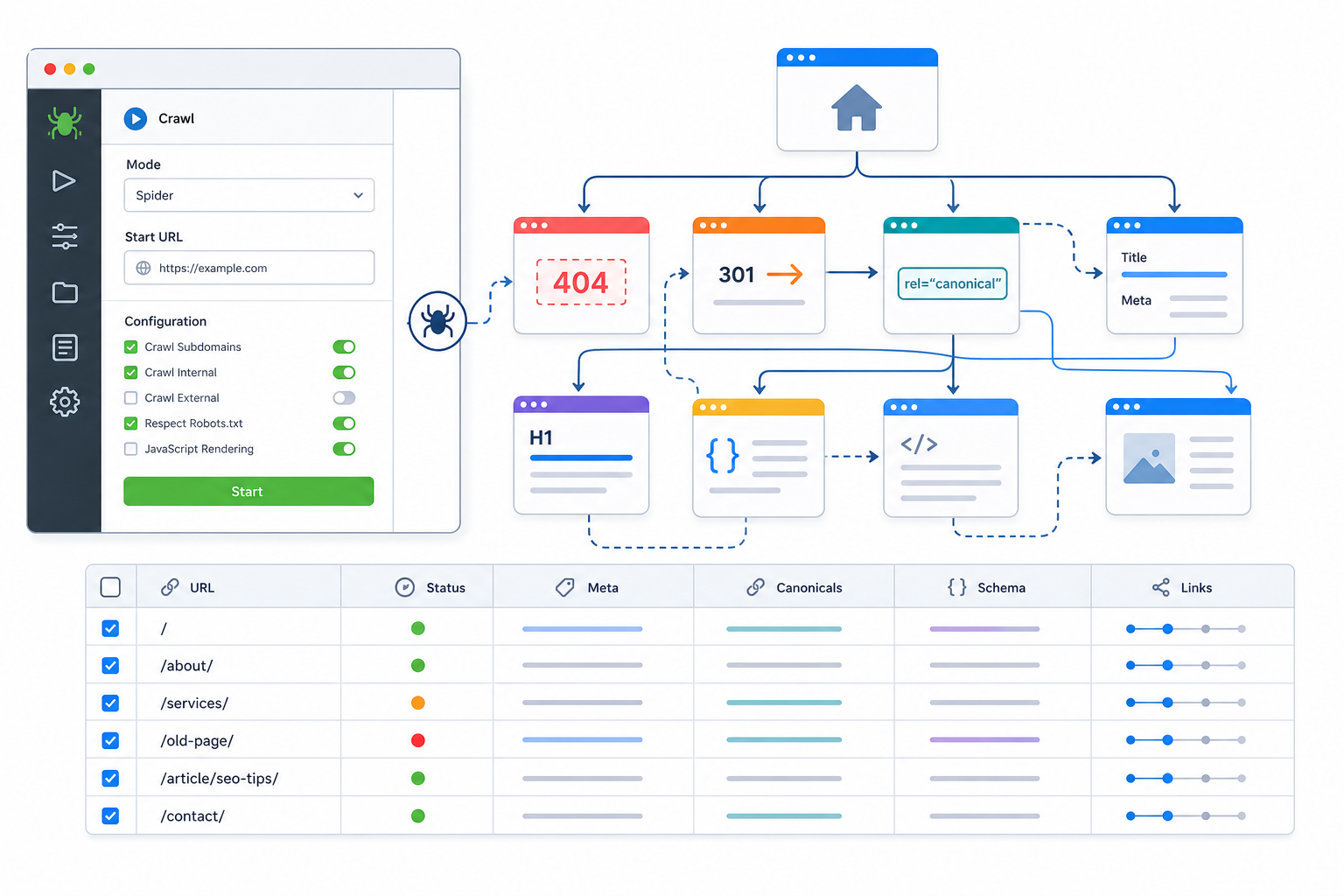
Screaming Frog SEO Spider is a desktop website crawler primarily used for technical SEO auditing, with additional functionality for internal-link analysis, metadata extraction, structured data inspection, JavaScript rendering, and custom extraction.
Primary SEO Function: Technical crawling and URL-level diagnostics.
Key SEO Features: Status-code crawling; redirects and canonicals; metadata and heading extraction; internal-link mapping; structured-data analysis; configurable JavaScript rendering.
Best Use Cases: Technical Audits for identifying URL problems; Migration Checks for validating redirects; Internal-Link Analysis for mapping source and destination URLs; Large-Scale Page Checks for extracting consistent HTML elements.
Distinguishing Capability: Highly configurable crawling and extraction give technical SEOs direct access to detailed URL-level data.
Pricing and Access: Freemium; the free version has crawl limits, while paid licensing unlocks larger and advanced workflows.
Main Strengths: Flexible crawling; detailed exports; extensive integrations and configuration.
Main Limitations: Desktop resource requirements matter on large crawls; interpretation requires technical SEO knowledge.
Best For: Technical SEOs that need granular control over website crawling and diagnostics.
5. Moz Pro
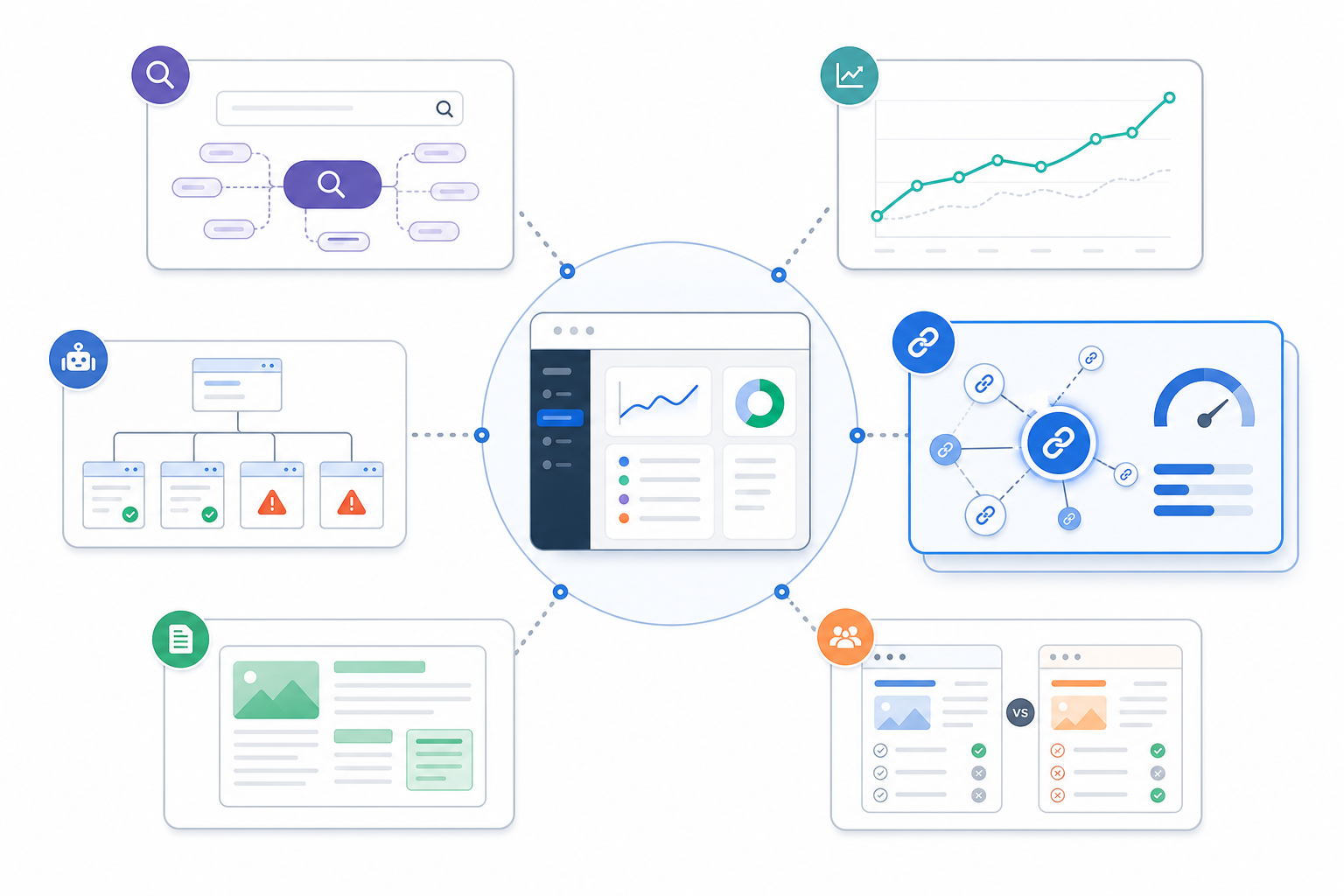
Moz Pro is an all-in-one SEO platform primarily used for keyword, ranking, link, and site research, with supporting functionality for technical crawling and competitive analysis.
Primary SEO Function: General SEO research and monitoring.
Key SEO Features: Keyword Explorer; Rank Tracking; Site Crawl; Link Explorer; on-page recommendations; competitive research.
Best Use Cases: Keyword Research for discovering search opportunities; Rank Monitoring for tracking selected keywords; Link Research for comparing external profiles; Site Auditing for recurring technical checks.
Distinguishing Capability: Moz combines an accessible SEO workflow with widely used third-party link metrics such as Domain Authority.
Pricing and Access: Paid; some Moz research tools provide limited free usage.
Main Strengths: Straightforward workflow; useful link and keyword data; established training ecosystem.
Main Limitations: Proprietary authority metrics are not Google metrics; specialist competitors can provide greater depth in individual functions.
Best For: Small and mid-sized SEO teams that want a broadly accessible SEO research suite.
6. SE Ranking
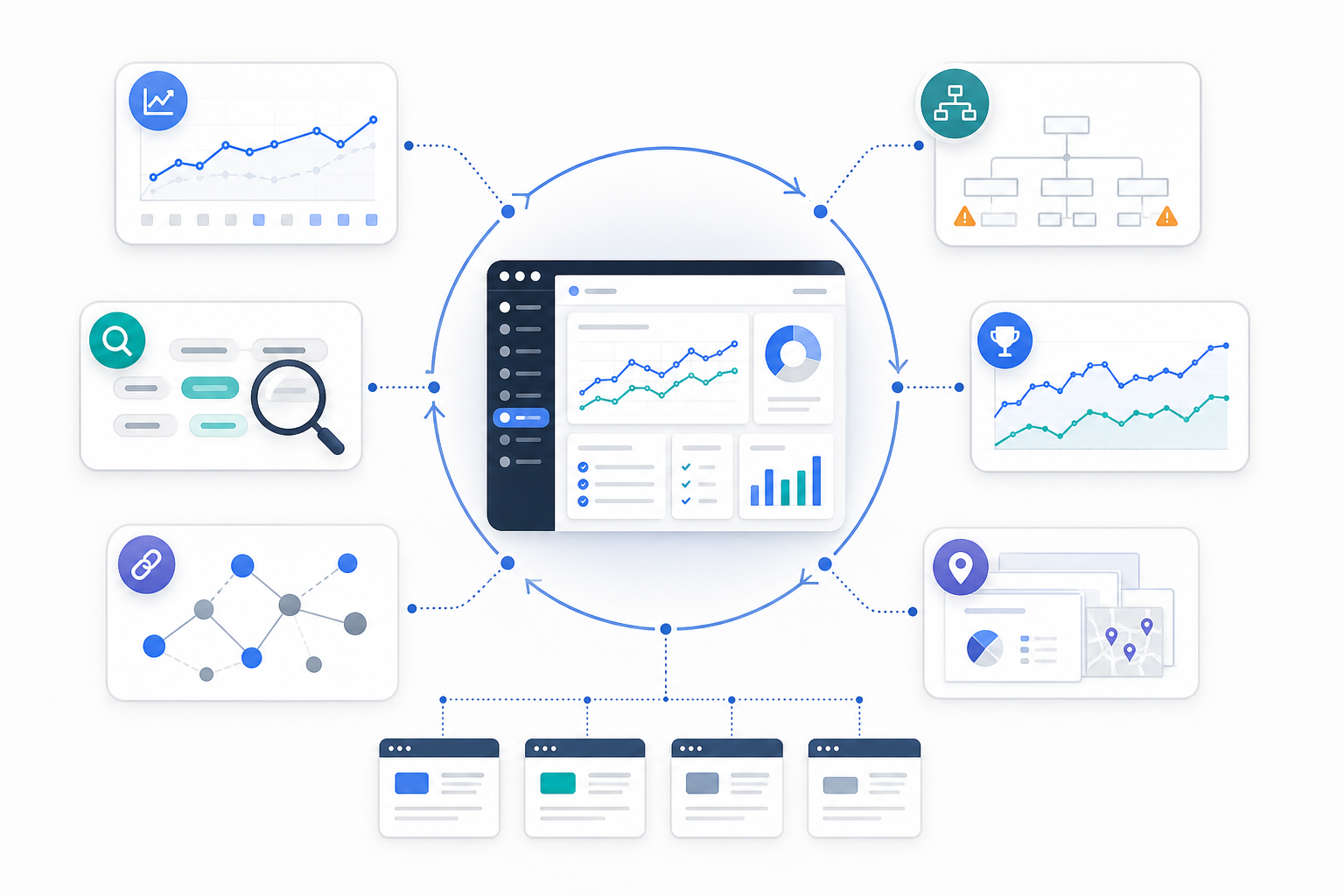
SE Ranking is an all-in-one SEO platform primarily used for rank tracking and ongoing SEO management, with additional keyword, competitor, backlink, auditing, local, and reporting functionality.
Primary SEO Function: Recurring SEO monitoring across several workflows.
Key SEO Features: Rank Tracker; Website Audit; Competitive Research; Keyword Research; Backlink Checker; reporting and local marketing functions.
Best Use Cases: Rank Monitoring for recurring keyword tracking; Competitor Analysis for comparing organic performance; Website Auditing for identifying technical issues; Agency Reporting for organizing multiple projects.
Distinguishing Capability: Broad SEO coverage with plans and limits that can suit teams wanting an alternative to larger premium suites.
Pricing and Access: Paid; pricing varies by usage and plan.
Main Strengths: Broad feature coverage; flexible rank tracking; agency-oriented workflows.
Main Limitations: Third-party keyword, backlink, and traffic values remain modeled estimates; specialist tools can provide deeper individual datasets.
Best For: Small to mid-sized SEO teams and agencies that need broad functionality without maintaining many separate platforms.
7. Morningscore
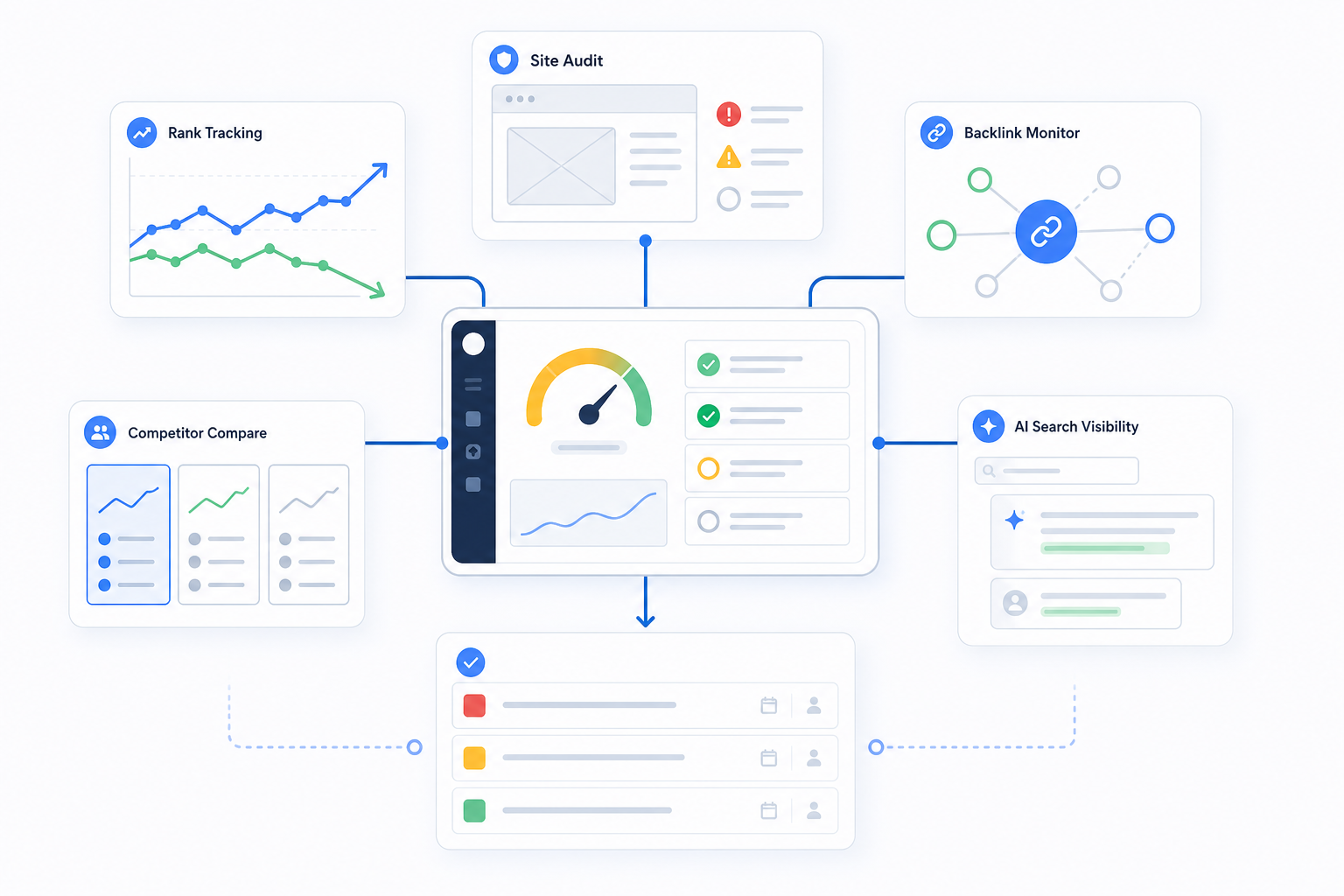
Morningscore is an all-in-one SEO platform primarily designed to simplify SEO monitoring and task execution, with keyword tracking, site-health auditing, backlink monitoring, competitor comparisons, and AI-search visibility features.
Primary SEO Function: Guided SEO management for teams wanting simplified workflows.
Key SEO Features: Keyword monitoring; site-health checks; backlink tracking; competitor comparison; SEO task management; AI-search visibility monitoring.
Best Use Cases: SEO Management for less technical teams; Rank Monitoring for recurring keyword checks; Guided Execution for turning detected opportunities into tasks; AI Visibility Monitoring for tracking brand presence across selected prompts.
Distinguishing Capability: Morningscore presents SEO and AI-search visibility through simplified scoring and task-oriented workflows rather than requiring users to assemble analysis manually. Its current product includes keyword, health, link, and GEO visibility modules.
Pricing and Access: Paid; pricing varies by plan.
Main Strengths: Simplified interface; task-based workflow; combined SEO and AI visibility monitoring.
Main Limitations: Advanced specialists can require deeper technical, keyword, or backlink controls than a simplicity-focused platform provides.
Best For: Small teams and marketers that want guided SEO monitoring without a steep learning curve.
8. Surfer SEO
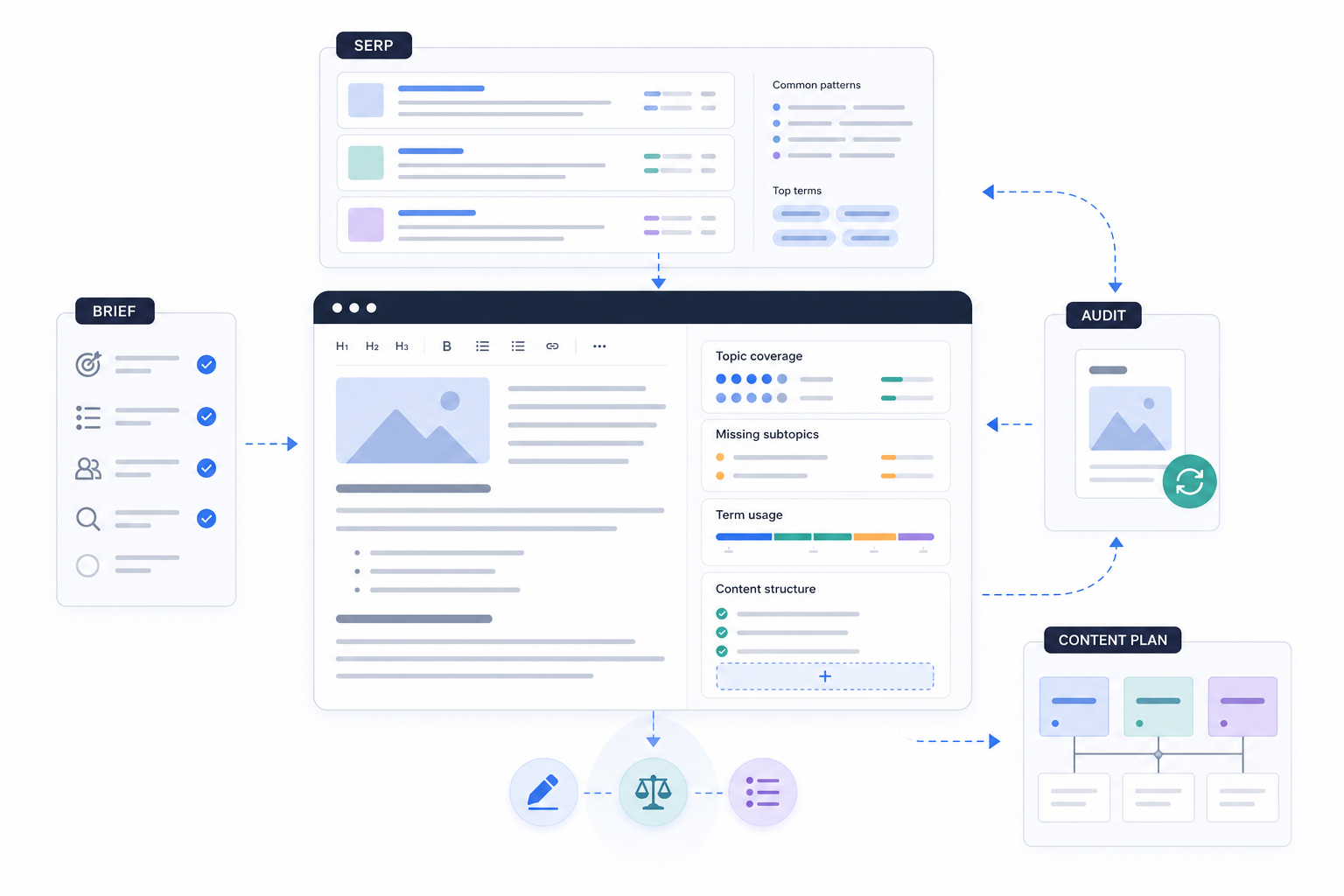
Surfer SEO is a content optimization platform primarily used for analyzing search-result patterns and improving content coverage, with additional functionality for content briefs, auditing, planning, and AI-assisted drafting.
Primary SEO Function: Search-focused content optimization.
Key SEO Features: Content Editor; SERP-based recommendations; topic and term analysis; content audits; content planning; AI-assisted writing.
Best Use Cases: Content Briefing for writers; Existing-Page Optimization for identifying coverage gaps; SERP Research for comparing ranking content; Editorial Workflows for standardizing optimization.
Distinguishing Capability: Real-time content guidance based on patterns observed across competing search results.
Pricing and Access: Paid; pricing varies by plan and content volume.
Main Strengths: Writer-friendly optimization interface; quick competitor comparison; scalable editorial workflow.
Main Limitations: Content scores are proprietary indicators, not Google ranking scores; following recommendations mechanically can produce unnecessary optimization.
Best For: Content and SEO teams that regularly create or refresh search-focused pages.
9. SISTRIX
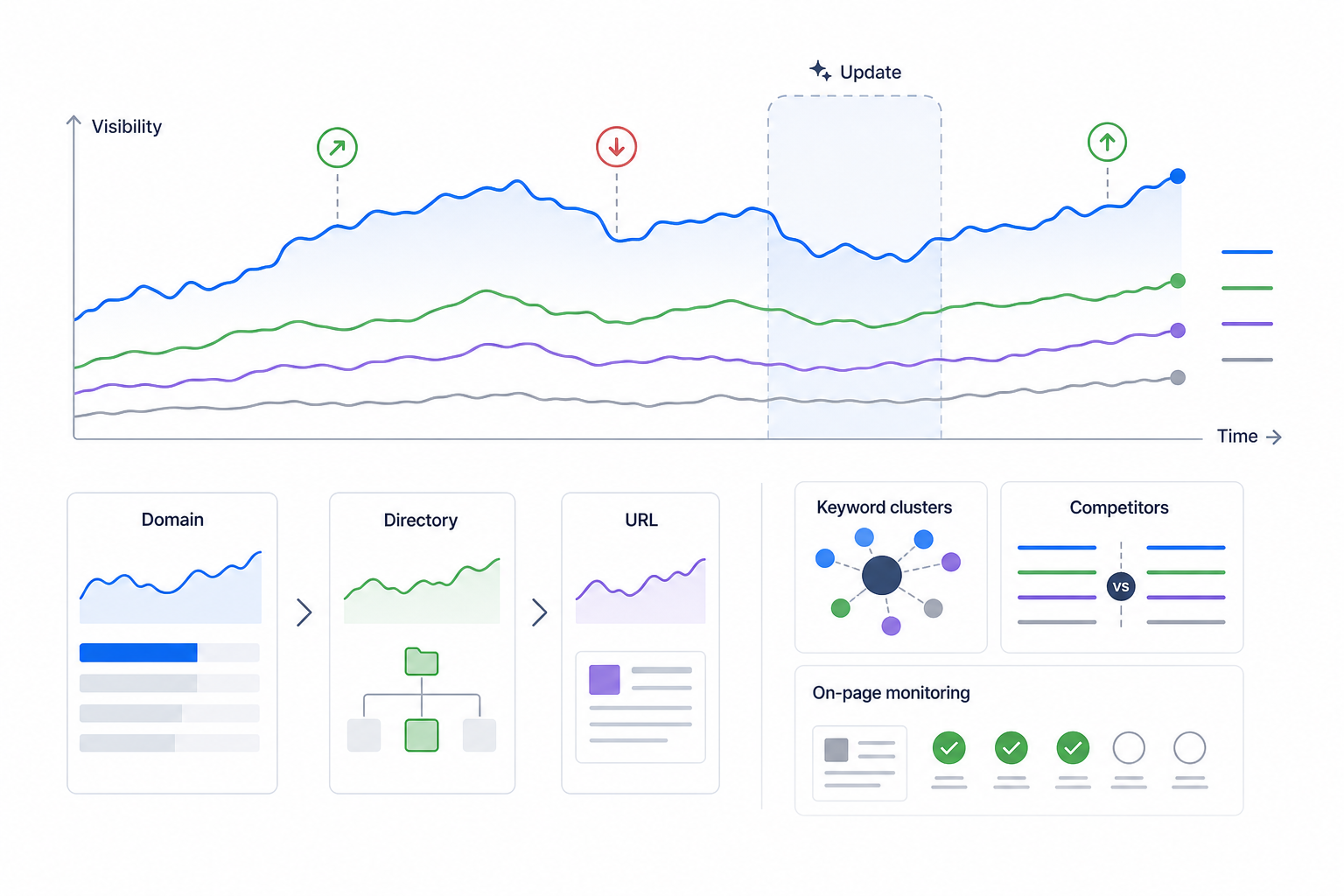
SISTRIX is an SEO intelligence platform primarily used for measuring and comparing organic search visibility, with supporting functionality for competitor analysis, keywords, content, links, technical SEO, and AI-search research.
Primary SEO Function: Historical search-visibility benchmarking.
Key SEO Features: Visibility Index; historical ranking data; competitor comparison; keyword analysis; site and directory analysis; on-page monitoring.
Best Use Cases: Visibility Benchmarking for comparing domains over time; Competitor Analysis for detecting gains and losses; Update Analysis for studying historical changes; Market Research for comparing search presence.
Distinguishing Capability: Its Visibility Index provides a long-running modeled view of domain, directory, and URL visibility. SISTRIX states that the metric is calculated from weighted organic rankings and updated regularly; the platform also added AI-search capabilities during 2026.
Pricing and Access: Paid; limited free checks and trials are available.
Main Strengths: Strong historical visibility analysis; effective competitor comparisons; useful segmentation.
Main Limitations: Visibility Index is proprietary rather than first-party traffic data; value can depend on the market and workflow.
Best For: SEO teams that need long-term visibility benchmarking and competitive trend analysis.
10. Mangools
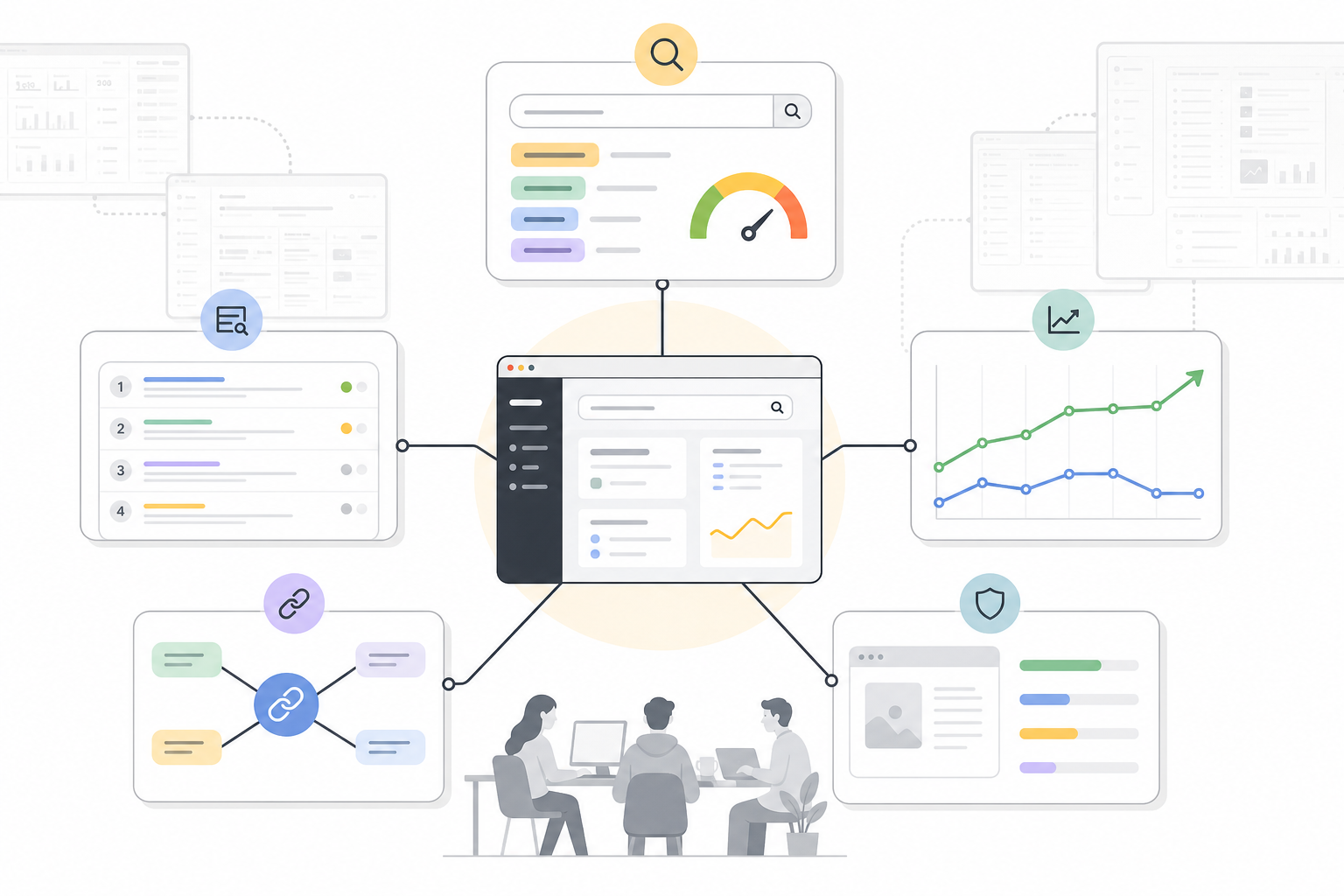
Mangools is a collection of SEO tools primarily used for keyword research and straightforward rank analysis, with supporting SERP, backlink, and website-authority research.
Primary SEO Function: Accessible keyword and ranking research.
Key SEO Features: KWFinder; SERPChecker; SERPWatcher; LinkMiner; SiteProfiler.
Best Use Cases: Keyword Discovery for finding realistic search opportunities; SERP Analysis for reviewing ranking difficulty; Rank Tracking for simple monitoring; Backlink Research for lightweight link analysis.
Distinguishing Capability: Separate focused tools provide common SEO research functions without the complexity of a larger enterprise suite.
Pricing and Access: Paid; pricing varies by plan.
Main Strengths: Accessible interface; focused keyword workflows; lower complexity.
Main Limitations: Less suitable for deep technical auditing or enterprise-scale data operations.
Best For: Freelancers, bloggers, and smaller businesses that need straightforward keyword and ranking research.
11. Serpstat
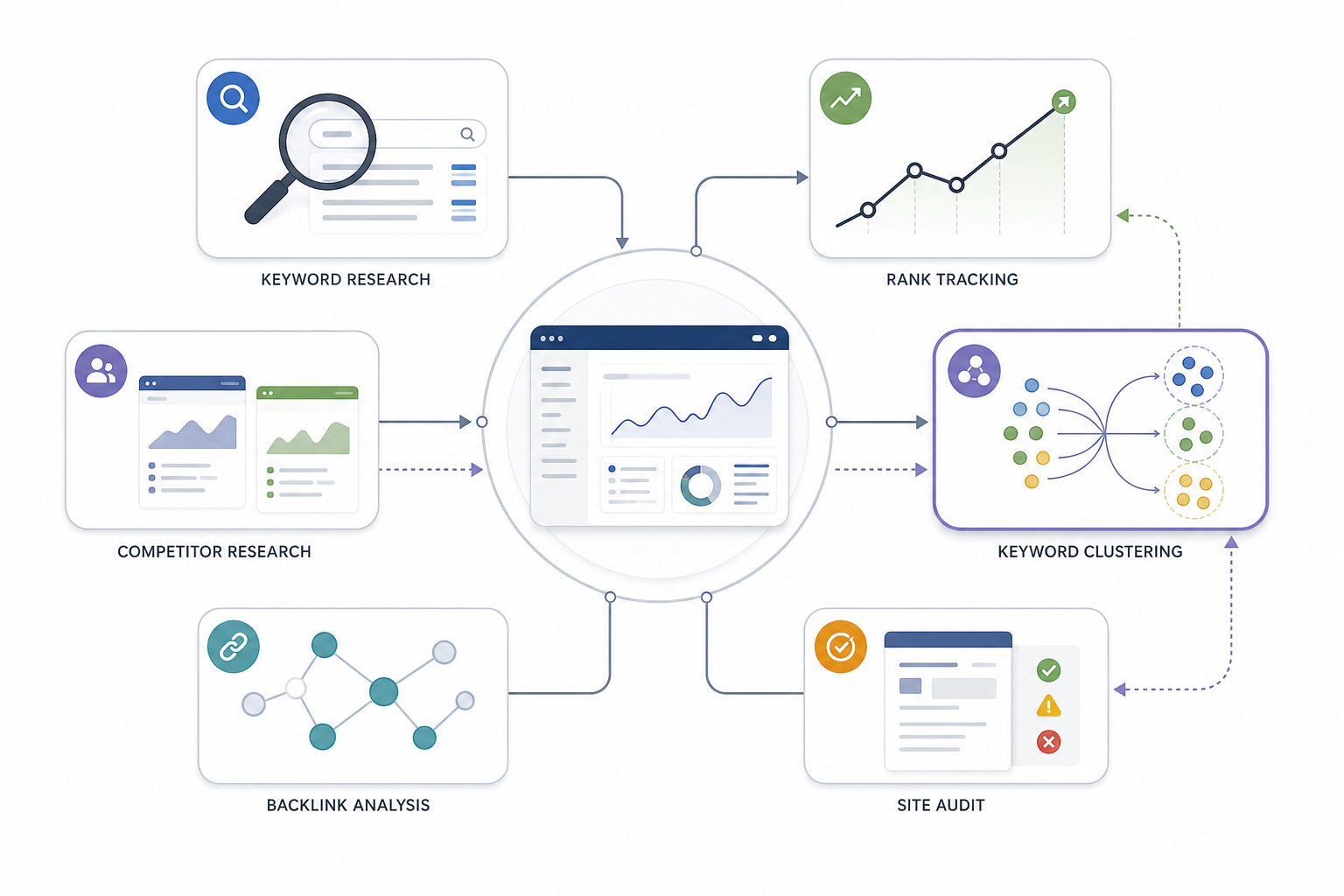
Serpstat is an all-in-one SEO platform primarily used for keyword, ranking, competitor, and website analysis, with supporting backlink, clustering, and audit functionality.
Primary SEO Function: Multi-function SEO research.
Key SEO Features: Keyword Research; Rank Tracking; Backlink Analysis; Site Audit; Competitor Research; keyword clustering.
Best Use Cases: Keyword Planning for expanding target sets; Rank Tracking for monitoring markets; Competitor Research for discovering gaps; Site Auditing for recurring diagnostics.
Distinguishing Capability: Keyword clustering and broad research functions are integrated with conventional ranking, backlink, and audit workflows.
Pricing and Access: Paid with limited access options; pricing varies by plan.
Main Strengths: Broad functionality; useful keyword grouping; integrated competitor research.
Main Limitations: Interface depth can require learning; third-party search metrics remain modeled.
Best For: SEO teams that want keyword research, clustering, rank tracking, and competitor data in one platform.
12. Ubersuggest
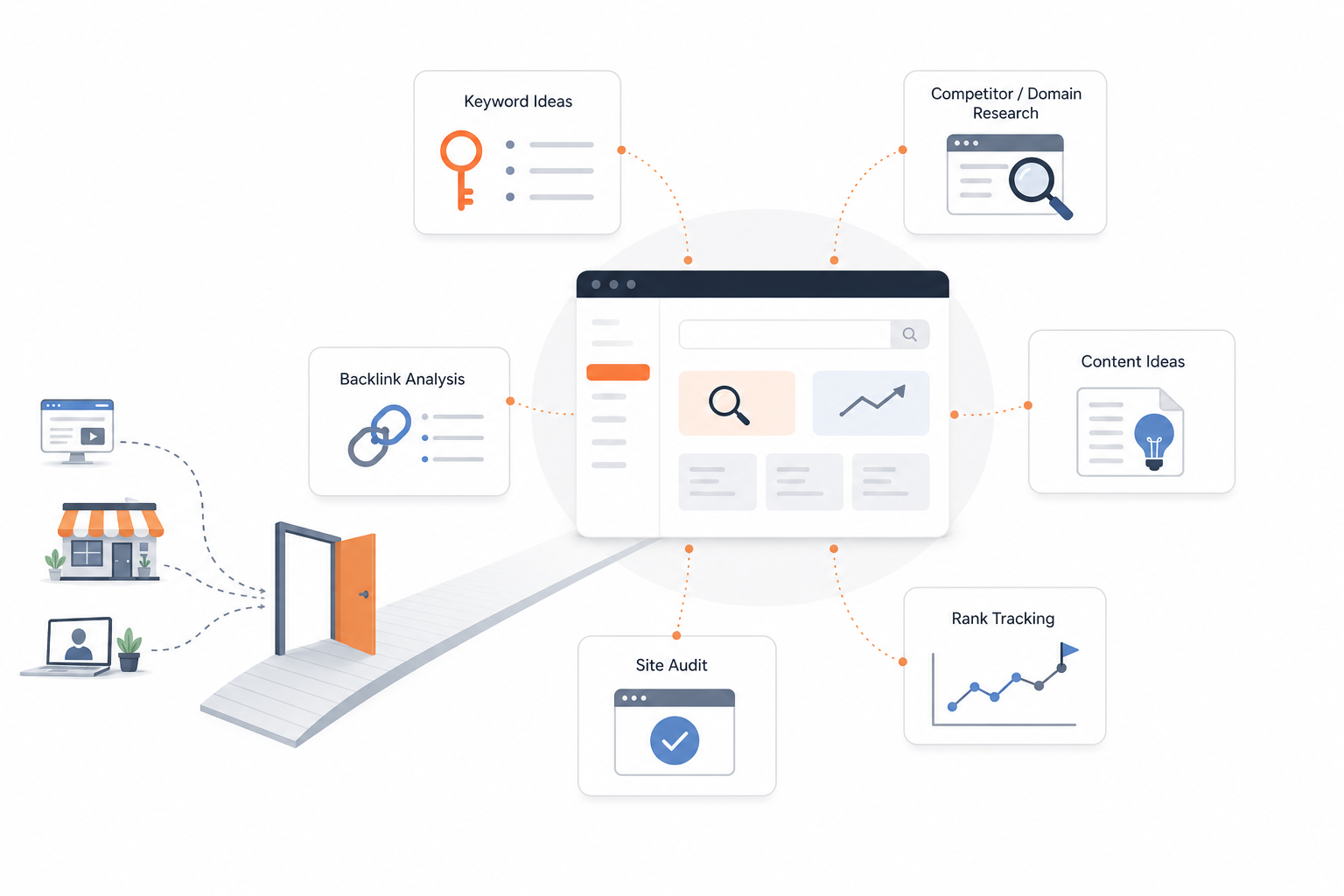
Ubersuggest is an SEO research platform primarily used for accessible keyword and competitor research, with supporting site-audit, backlink, content-idea, and rank-tracking functions.
Primary SEO Function: Budget-oriented SEO research.
Key SEO Features: Keyword ideas; domain research; content ideas; backlink data; site auditing; rank tracking.
Best Use Cases: Keyword Discovery for small sites; Competitor Research for initial benchmarking; Content Planning for finding topics; Basic SEO Auditing for identifying common problems.
Distinguishing Capability: It packages several common SEO research functions in a simpler, lower-cost environment than many comprehensive suites.
Pricing and Access: Freemium and paid access; limits vary by plan.
Main Strengths: Beginner accessibility; broad basic functionality; lower entry barrier.
Main Limitations: Dataset depth and advanced workflow controls can be lighter than specialist or enterprise platforms.
Best For: Small businesses, creators, and early-stage SEO programs that need affordable research tools.
13. SpyFu
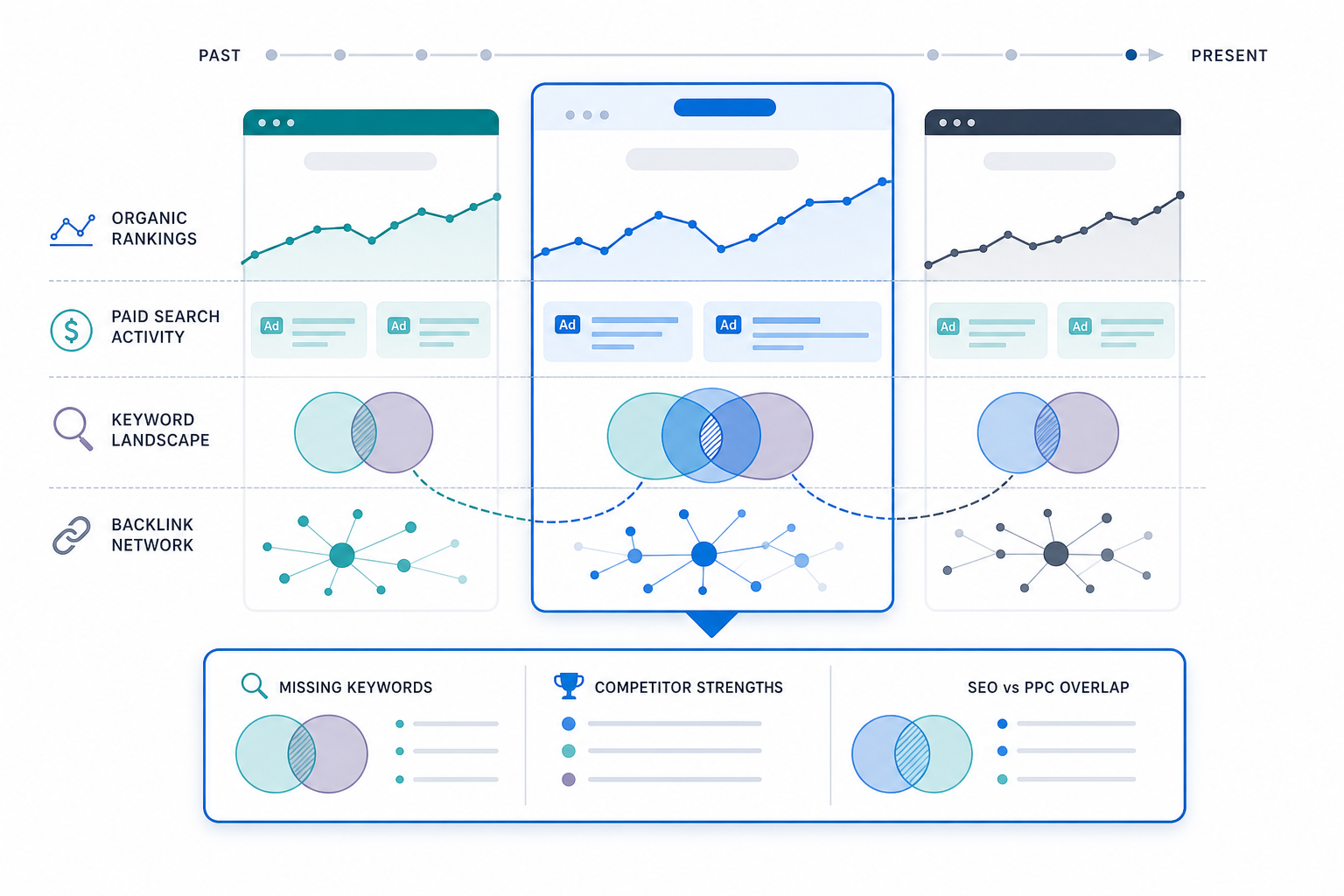
SpyFu is a competitive search-intelligence platform primarily used to research competitors' organic and paid-search activity, with additional keyword, backlink, ranking-history, and reporting functions.
Primary SEO Function: Historical competitor SEO and PPC research.
Key SEO Features: Competitor keywords; organic ranking history; keyword gaps; backlink research; domain comparison; rank tracking.
Best Use Cases: Competitor Research for examining established search strategies; Keyword Gap Analysis for finding missing terms; Ranking-History Analysis for reviewing past visibility; SEO/PPC Comparison where both channels matter.
Distinguishing Capability: SpyFu emphasizes historical SEO and advertising intelligence for competing domains. Current product documentation also highlights competitor keywords, ranking history, backlinks, and daily performance tracking.
Pricing and Access: Freemium and paid; current published membership pricing starts at $33 per month.
Main Strengths: Strong competitor history; combined SEO and PPC perspective; straightforward domain research.
Main Limitations: Modeled traffic and advertising estimates are not competitors' first-party data; technical SEO is not its central specialization.
Best For: Marketers that want deep historical competitor search intelligence.
14. Majestic
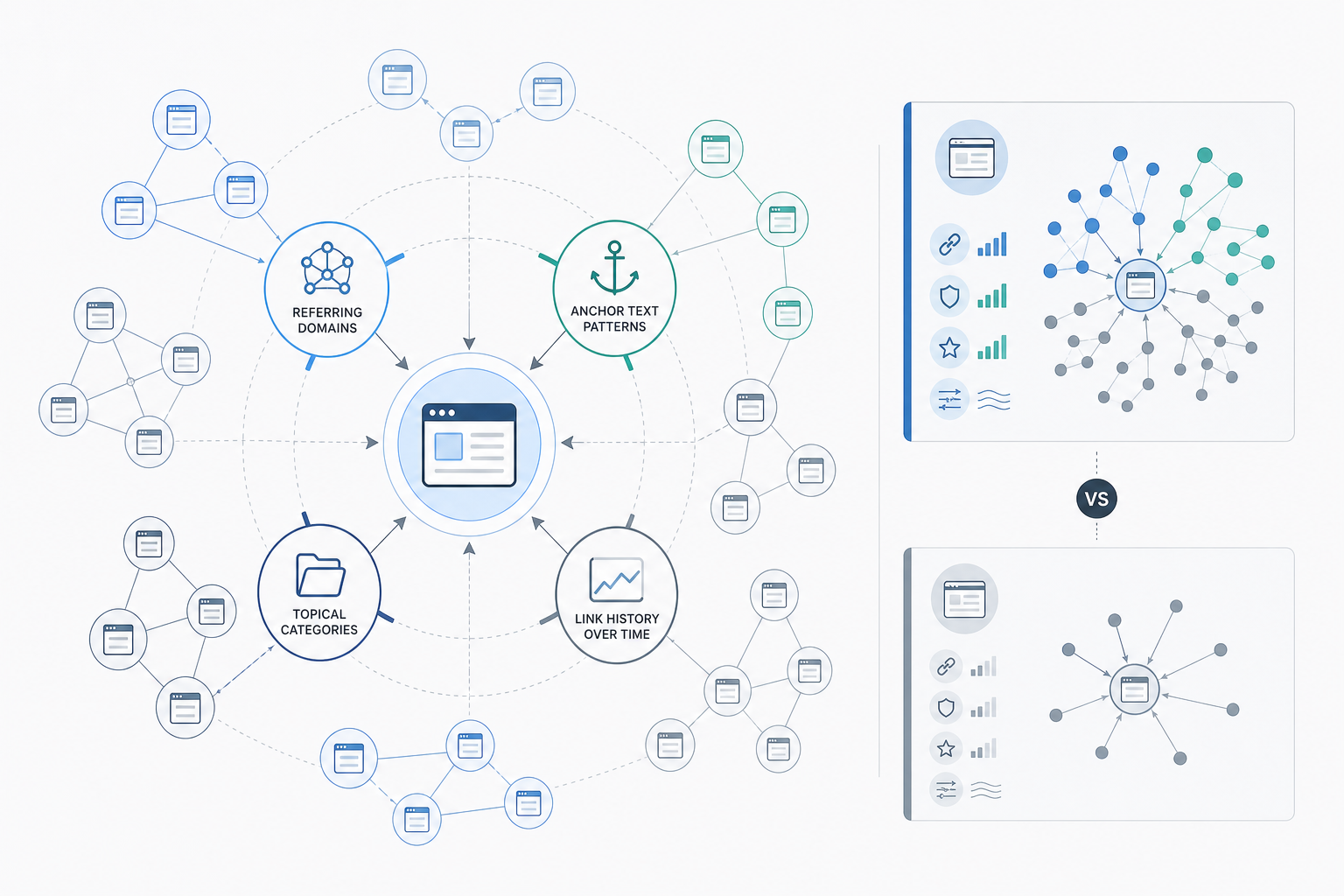
Majestic is a specialist link-intelligence platform primarily used for backlink and referring-domain analysis, with proprietary link metrics and network-relationship tools.
Primary SEO Function: Backlink research.
Key SEO Features: Backlink discovery; referring domains; anchor analysis; topical link categorization; historical link analysis; link-network visualization.
Best Use Cases: Link Audits for examining external references; Competitor Link Research for discovering sources; Prospect Evaluation for comparing link profiles; Historical Link Analysis for understanding profile changes.
Distinguishing Capability: The product concentrates heavily on link intelligence rather than trying to cover every SEO discipline.
Pricing and Access: Paid; limited public link information can be available.
Main Strengths: Specialist link dataset; topical link context; detailed historical analysis.
Main Limitations: Proprietary metrics such as Trust Flow and Citation Flow are not Google metrics; limited breadth outside off-page SEO.
Best For: Link-building and off-page SEO teams that require specialist backlink intelligence.
15. Similarweb
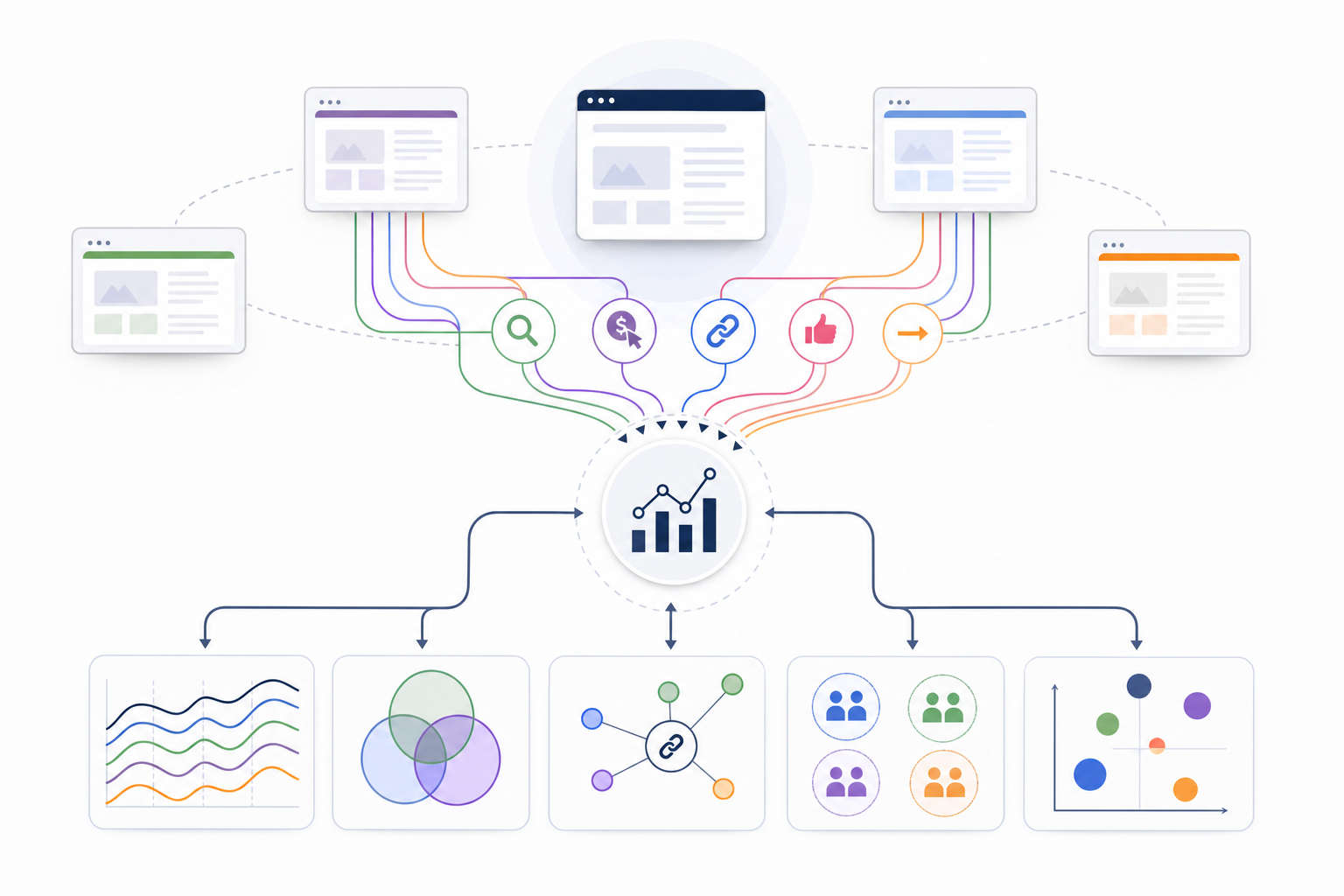
Similarweb is a digital intelligence platform primarily used for market and competitor traffic analysis, with SEO-related functionality for keyword, referral, audience, and competitive research.
Primary SEO Function: Digital-market and competitor benchmarking.
Key SEO Features: Estimated website traffic; traffic-source analysis; search keyword research; competitive benchmarking; referral analysis; audience and market insights.
Best Use Cases: Market Research for evaluating category leaders; Competitor Analysis for comparing estimated acquisition patterns; Search Opportunity Research for understanding keyword overlap; Strategic Benchmarking for broader digital visibility.
Distinguishing Capability: Similarweb places organic search inside a wider picture of competitor traffic, channels, audiences, and market behavior.
Pricing and Access: Freemium and paid; advanced plans can use custom or enterprise pricing.
Main Strengths: Broad market context; cross-channel competitor analysis; useful category benchmarking.
Main Limitations: Competitor traffic numbers are modeled estimates; specialist SEO platforms provide greater depth for some technical and backlink workflows.
Best For: Strategy teams that need SEO insights within broader digital-market intelligence.
16. seoClarity
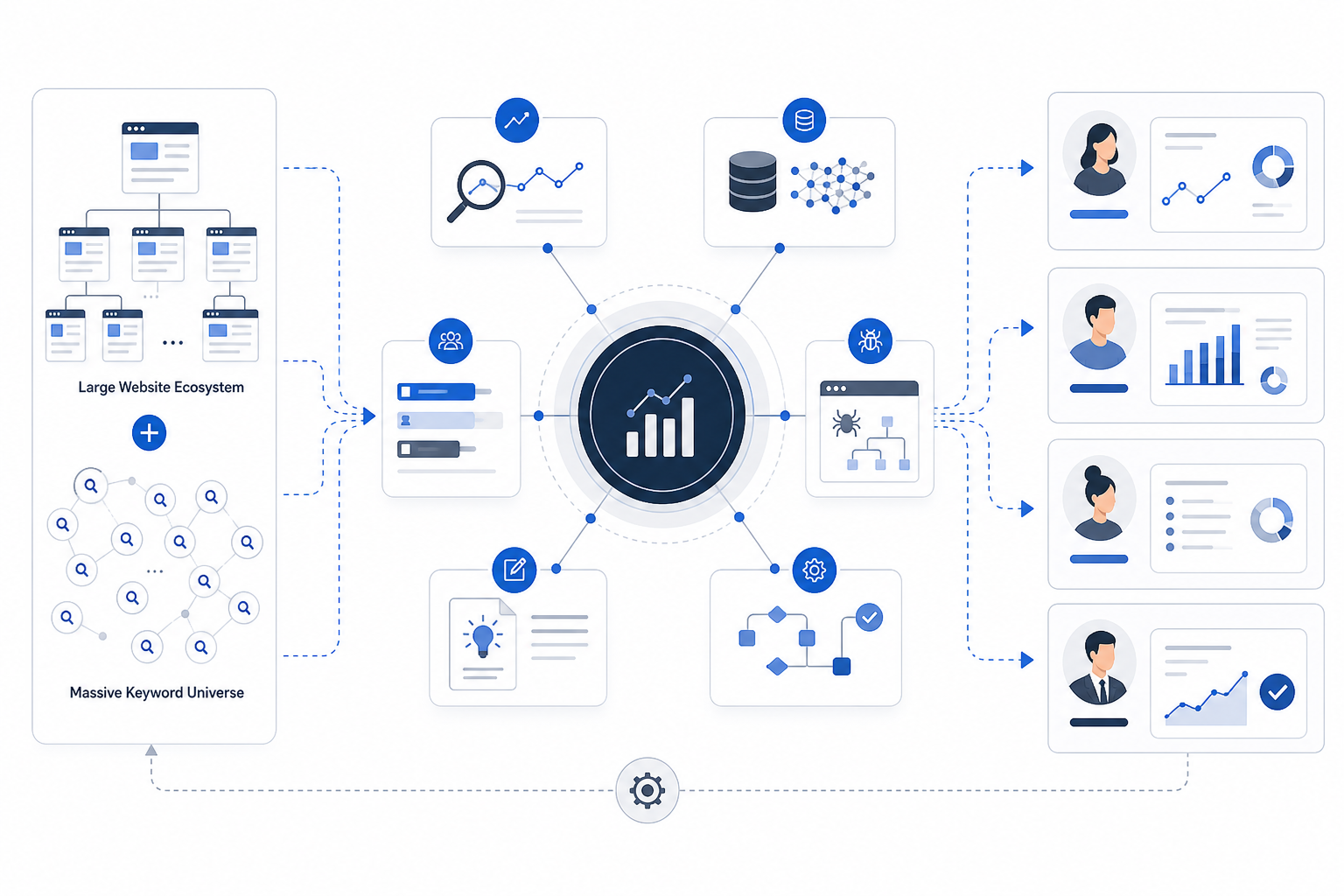
seoClarity is an enterprise SEO platform primarily used for large-scale search analytics, rankings, content, and technical SEO management, with automation and AI-assisted analysis.
Primary SEO Function: Enterprise SEO intelligence and workflow management.
Key SEO Features: Daily rankings; large-scale keyword data; competitor analysis; site auditing; content analysis; automated insights and reporting.
Best Use Cases: Enterprise Rank Monitoring; Large-Site SEO Analysis; Content Opportunity Research; Multi-Team SEO Reporting.
Distinguishing Capability: The platform is designed around large datasets, enterprise analysis, automation, and extensive competitive comparisons. seoClarity currently highlights daily rankings, real-time analysis, unlimited competitor comparisons, content-gap data, and technical crawling.
Pricing and Access: Enterprise-priced; typically custom.
Main Strengths: Scale; advanced analysis; enterprise reporting and workflow depth.
Main Limitations: More platform than most small websites require; implementation and cost suit larger SEO operations.
Best For: Enterprise SEO teams managing large websites, keyword sets, and reporting requirements.
17. BrightEdge
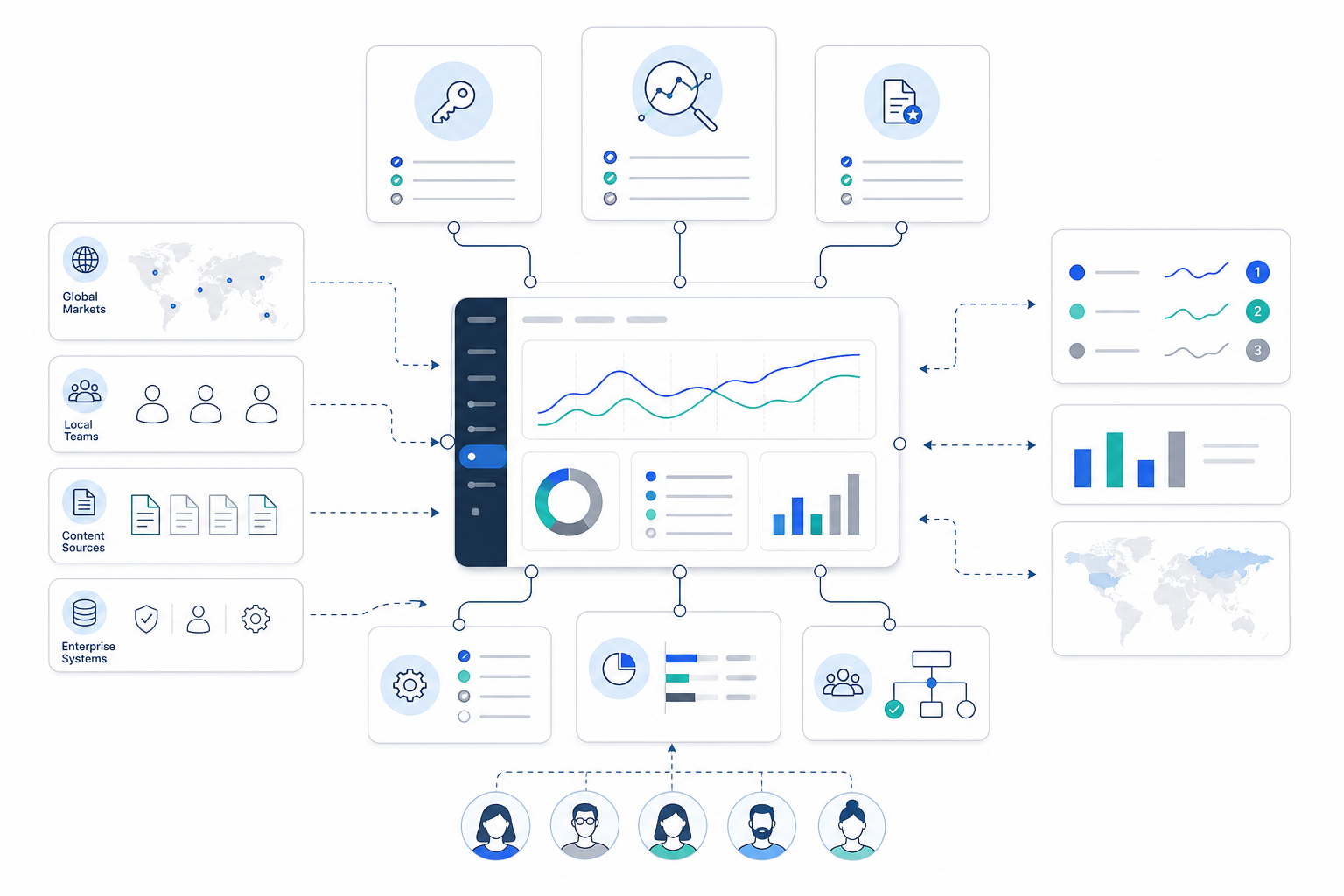
BrightEdge is an enterprise organic-search platform primarily used for search visibility, content performance, competitive intelligence, and SEO program management.
Primary SEO Function: Enterprise organic-search management.
Key SEO Features: Search visibility tracking; keyword and competitor analysis; content recommendations; performance reporting; technical insights; enterprise workflow support.
Best Use Cases: Enterprise Performance Monitoring; Content Strategy; Competitive Benchmarking; Executive SEO Reporting.
Distinguishing Capability: Strong integration of SEO performance, content, and enterprise-level reporting within a centralized platform.
Pricing and Access: Custom enterprise pricing.
Main Strengths: Enterprise scale; integrated content and search analytics; organizational reporting.
Main Limitations: High cost and complexity relative to smaller teams; proprietary visibility and recommendation metrics require interpretation.
Best For: Large organizations that need centralized SEO management across multiple teams and markets.
18. Conductor
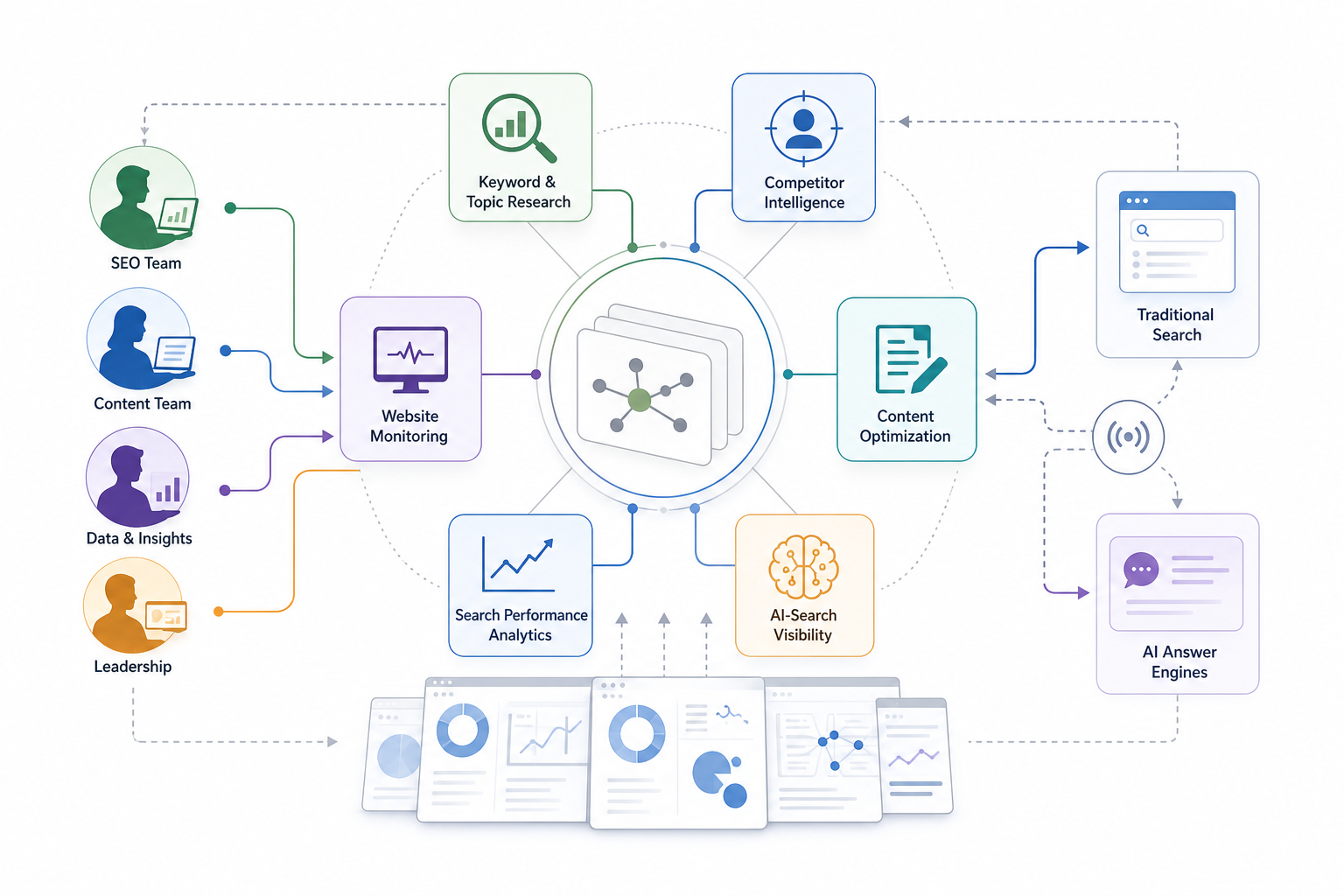
Conductor is an enterprise search and content platform primarily used for SEO, content intelligence, website monitoring, and AI-search visibility, with broader enterprise analytics and reporting.
Primary SEO Function: Enterprise search, content, and AI visibility management.
Key SEO Features: Topic and keyword research; competitor intelligence; website monitoring; content optimization; search performance analytics; AI-search visibility.
Best Use Cases: Enterprise Content Planning; AI-Search Monitoring; Competitive Search Analysis; Cross-Team SEO Management.
Distinguishing Capability: Conductor now combines traditional SEO with AI-answer-engine visibility, content creation, monitoring, and enterprise intelligence in connected products.
Pricing and Access: Custom enterprise pricing.
Main Strengths: Enterprise search intelligence; content integration; AI-search measurement; collaborative workflows.
Main Limitations: Enterprise scope and cost exceed the requirements of most small teams.
Best For: Large organizations that want SEO, content, and AI-search visibility managed within an enterprise platform.
19. Botify
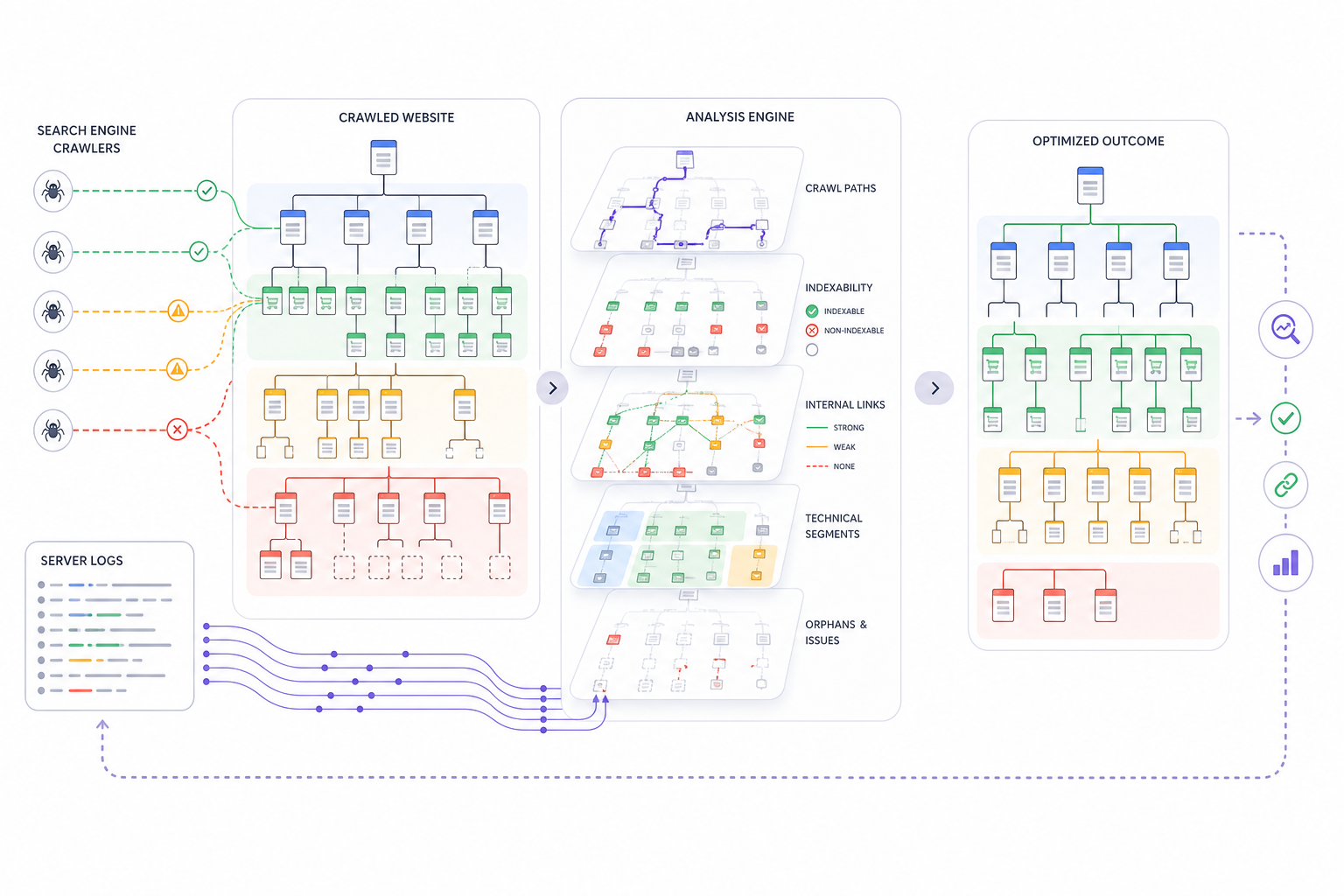
Botify is an enterprise technical SEO platform primarily used for large-scale crawling, search-engine behavior analysis, and organic-search optimization.
Primary SEO Function: Enterprise technical SEO and crawl optimization.
Key SEO Features: Large-scale crawling; log-file analysis; indexability analysis; internal-link and architecture insights; search-performance integration; automated monitoring.
Best Use Cases: Large-Site Auditing; Log Analysis; Crawl-Efficiency Investigation; Enterprise Technical Monitoring.
Distinguishing Capability: Botify concentrates on connecting large-site technical conditions with how search engines crawl and process those URLs.
Pricing and Access: Custom enterprise pricing.
Main Strengths: Enterprise crawl scale; log analysis; detailed technical segmentation.
Main Limitations: Requires technical expertise; unnecessary for most small or structurally simple sites.
Best For: Large ecommerce, publishing, marketplace, and enterprise websites with complex crawl and indexation requirements.
20. Lumar
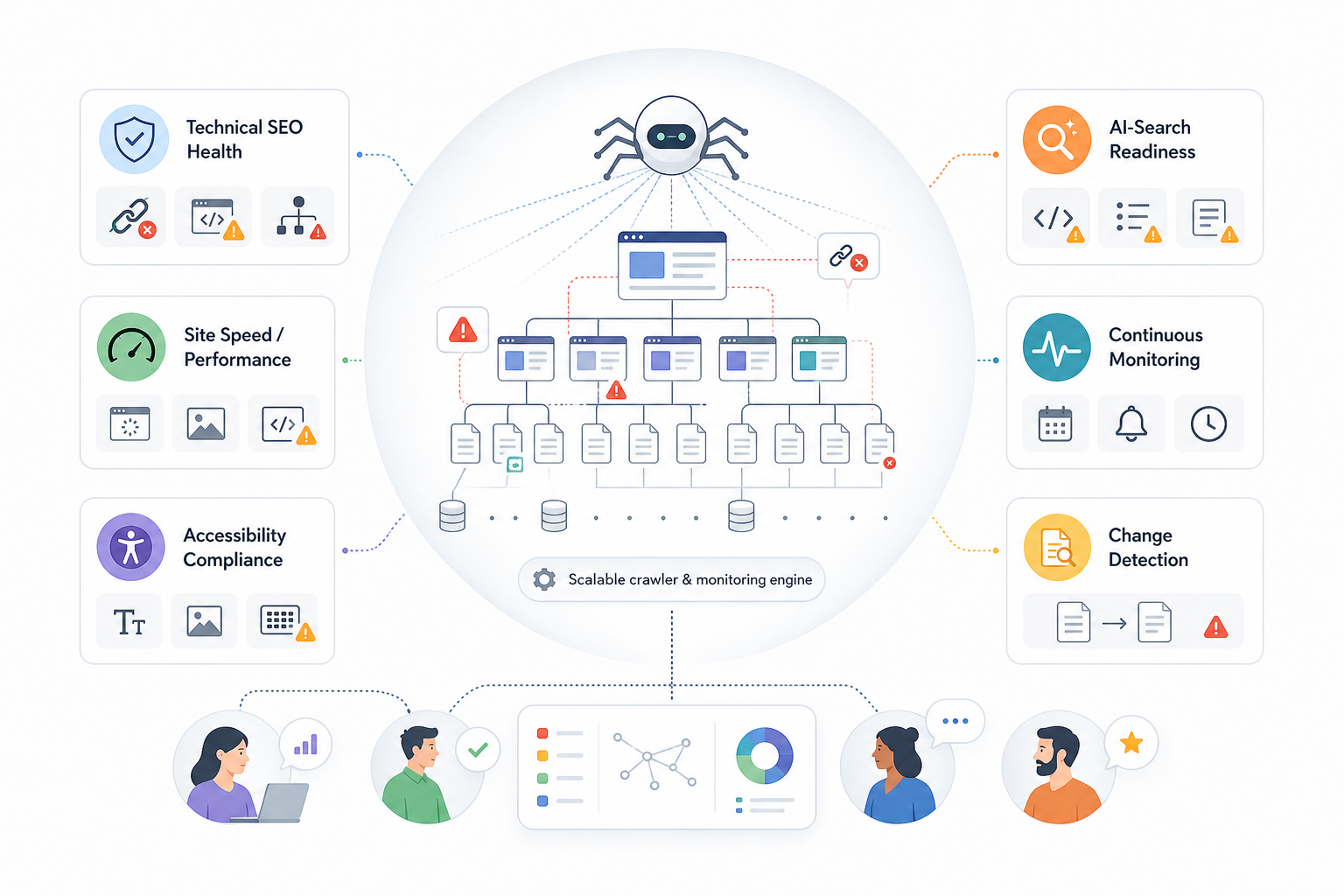
Lumar is an enterprise website optimization platform primarily used for technical SEO auditing and monitoring, with additional capabilities for site speed, accessibility, AI-search readiness, and custom website-quality metrics.
Primary SEO Function: Large-scale technical website health.
Key SEO Features: Enterprise crawling; technical SEO analysis; website monitoring; site-speed analysis; accessibility auditing; custom metrics.
Best Use Cases: Enterprise Technical Audits; Website-Health Monitoring; Large-Site Change Detection; Cross-Functional Website Quality.
Distinguishing Capability: Lumar combines technical SEO with broader website-quality areas in a platform built to operate at large scale. Its current platform covers SEO, AI-search optimization, site speed, accessibility, monitoring, and collaboration.
Pricing and Access: Custom enterprise pricing.
Main Strengths: Large-scale crawling; monitoring; cross-functional website-quality analysis.
Main Limitations: Enterprise implementation and pricing; requires specialist expertise to extract maximum value.
Best For: Large organizations where technical SEO is part of a broader website-quality program.
21. Oncrawl
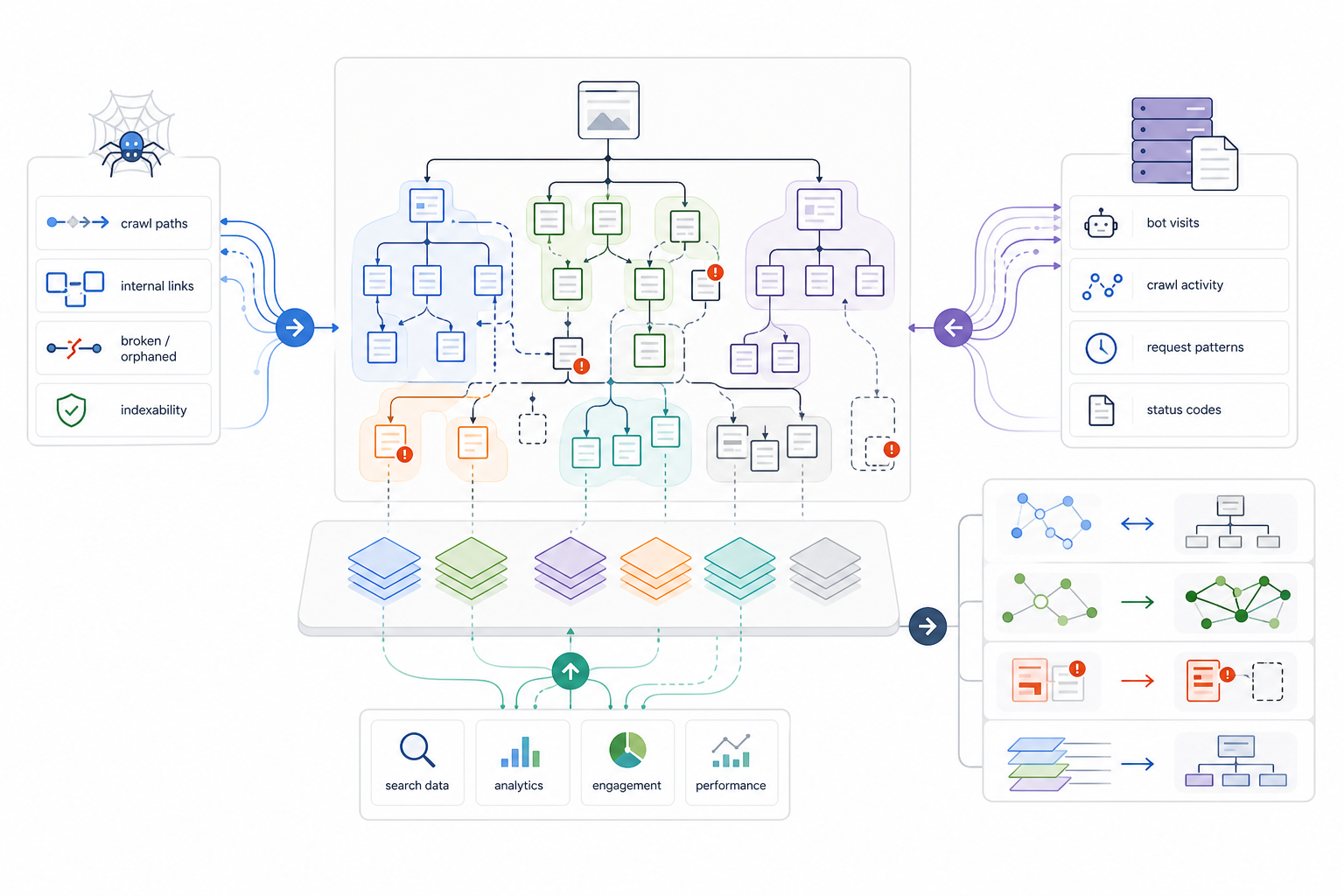
Oncrawl is a technical SEO platform primarily used for large-scale crawling and log-file analysis, with supporting data integration and segmentation for understanding search-engine behavior.
Primary SEO Function: Technical SEO diagnostics for large websites.
Key SEO Features: SEO crawling; log analysis; crawl segmentation; internal-link analysis; indexability data; analytics and search-data integrations.
Best Use Cases: Crawl Analysis; Log Investigation; Architecture Review; Large-Site Technical Monitoring.
Distinguishing Capability: Combines crawler-generated website data with log and performance datasets for deeper technical analysis.
Pricing and Access: Paid or custom depending on scale.
Main Strengths: Crawl and log integration; segmentation; suitability for large URL inventories.
Main Limitations: More technical and specialized than general-purpose SEO platforms.
Best For: Technical SEO teams working on complex and high-volume websites.
22. JetOctopus
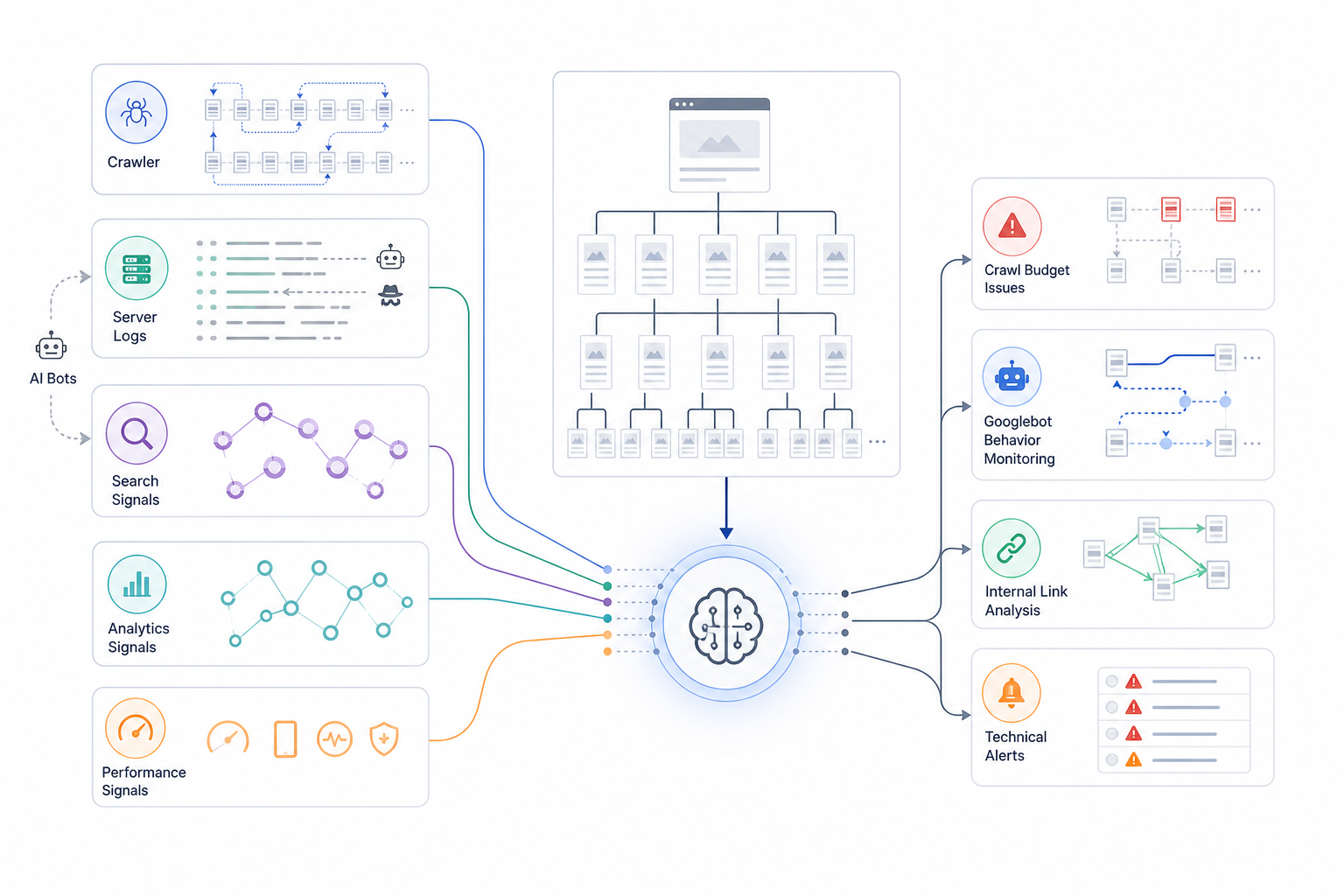
JetOctopus is a technical SEO platform primarily used for high-volume crawling and server-log analysis, with integrations for Search Console, analytics, Core Web Vitals, and internal-link analysis.
Primary SEO Function: Large-scale technical and bot-behavior analysis.
Key SEO Features: High-volume crawling; log analysis; Search Console integration; technical alerts; internal-link analysis; bot monitoring.
Best Use Cases: Crawl-Budget Investigation; Googlebot Analysis; Technical Diagnostics; Large-Site Internal-Link Auditing.
Distinguishing Capability: JetOctopus connects crawl, log, Search Console, analytics, and bot evidence. Its current platform also monitors AI-bot activity and includes internal-link and technical alerting features.
Pricing and Access: Paid; pricing varies with usage and data requirements.
Main Strengths: High crawl scale; log analysis; multi-source technical evidence.
Main Limitations: Primarily relevant to technically complex sites; not a substitute for broad content or backlink research.
Best For: Technical SEO teams managing large sites and requiring crawl plus bot-log analysis.
23. Sitebulb
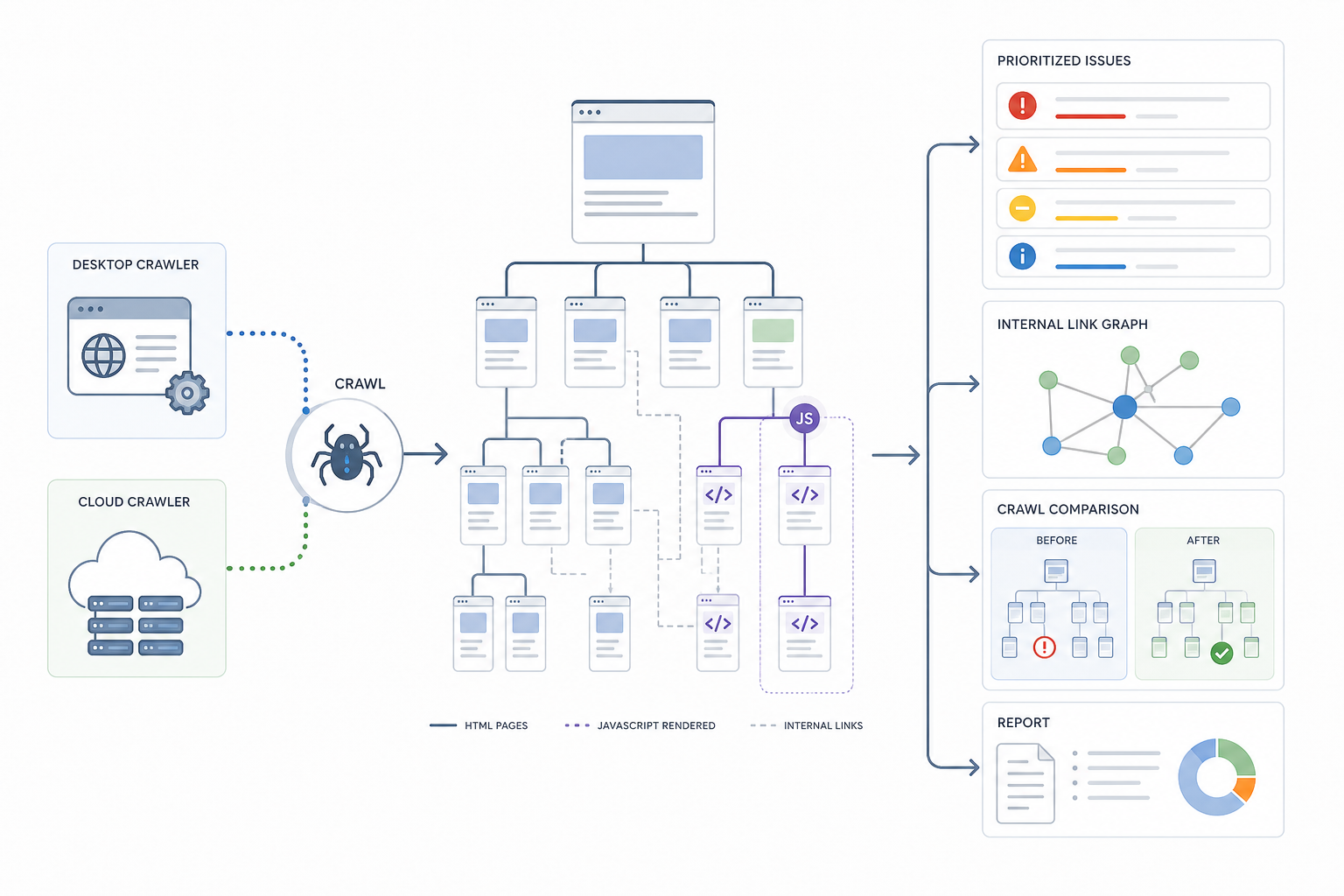
Sitebulb is a website crawler and audit platform primarily used for detailed technical SEO diagnostics, with visualizations, prioritized hints, JavaScript crawling, and audit comparison.
Primary SEO Function: Technical SEO auditing.
Key SEO Features: Desktop and cloud crawling; JavaScript rendering; audit comparison; internal-link visualization; prioritized issue explanations; reporting.
Best Use Cases: Technical Audits; JavaScript Site Analysis; Client Audit Reporting; Before-and-After Crawl Comparison.
Distinguishing Capability: Sitebulb combines detailed crawling with visual explanations and prioritized findings. Its current desktop product supports up to 500,000 URLs per audit, while Sitebulb Cloud supports much larger crawls.
Pricing and Access: Paid with trial access; desktop and cloud options differ.
Main Strengths: Strong audit visualization; detailed technical coverage; useful reporting.
Main Limitations: Specialist technical tool rather than a complete SEO research suite.
Best For: Technical SEOs and agencies that need detailed audits presented clearly to stakeholders.
24. Ryte
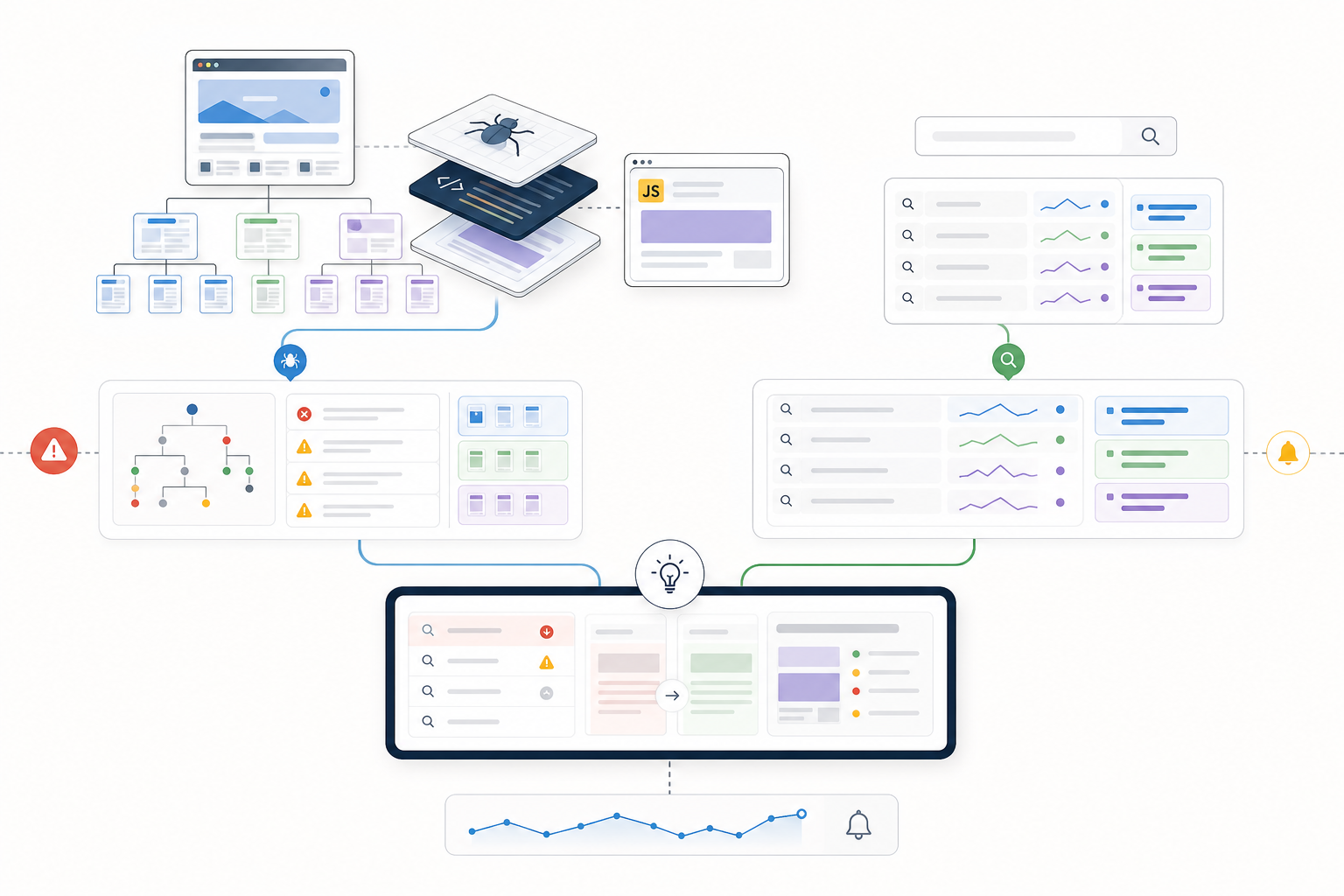
Ryte is a website-quality and SEO platform primarily used for technical auditing and organic performance monitoring, with crawling, Search Console analysis, alerts, segmentation, and testing capabilities.
Primary SEO Function: Technical website and organic-search monitoring.
Key SEO Features: Website crawling; JavaScript rendering; Search Console segmentation; keyword monitoring; issue reporting; alerts.
Best Use Cases: Technical Monitoring; Search Console Analysis; Site-Quality Auditing; SEO Change Investigation.
Distinguishing Capability: Ryte combines crawler evidence with organic-performance monitoring and Search Console-based opportunities. Its current product includes advanced crawling settings, segmentation, alerts, and underperforming-keyword analysis.
Pricing and Access: Paid; pricing varies by plan or organizational requirements.
Main Strengths: Technical plus search-performance context; useful monitoring; strong segmentation.
Main Limitations: Less focused on backlink or broad competitor intelligence than all-in-one SEO suites.
Best For: In-house SEO teams that want website-quality monitoring connected with organic performance.
25. WooRank
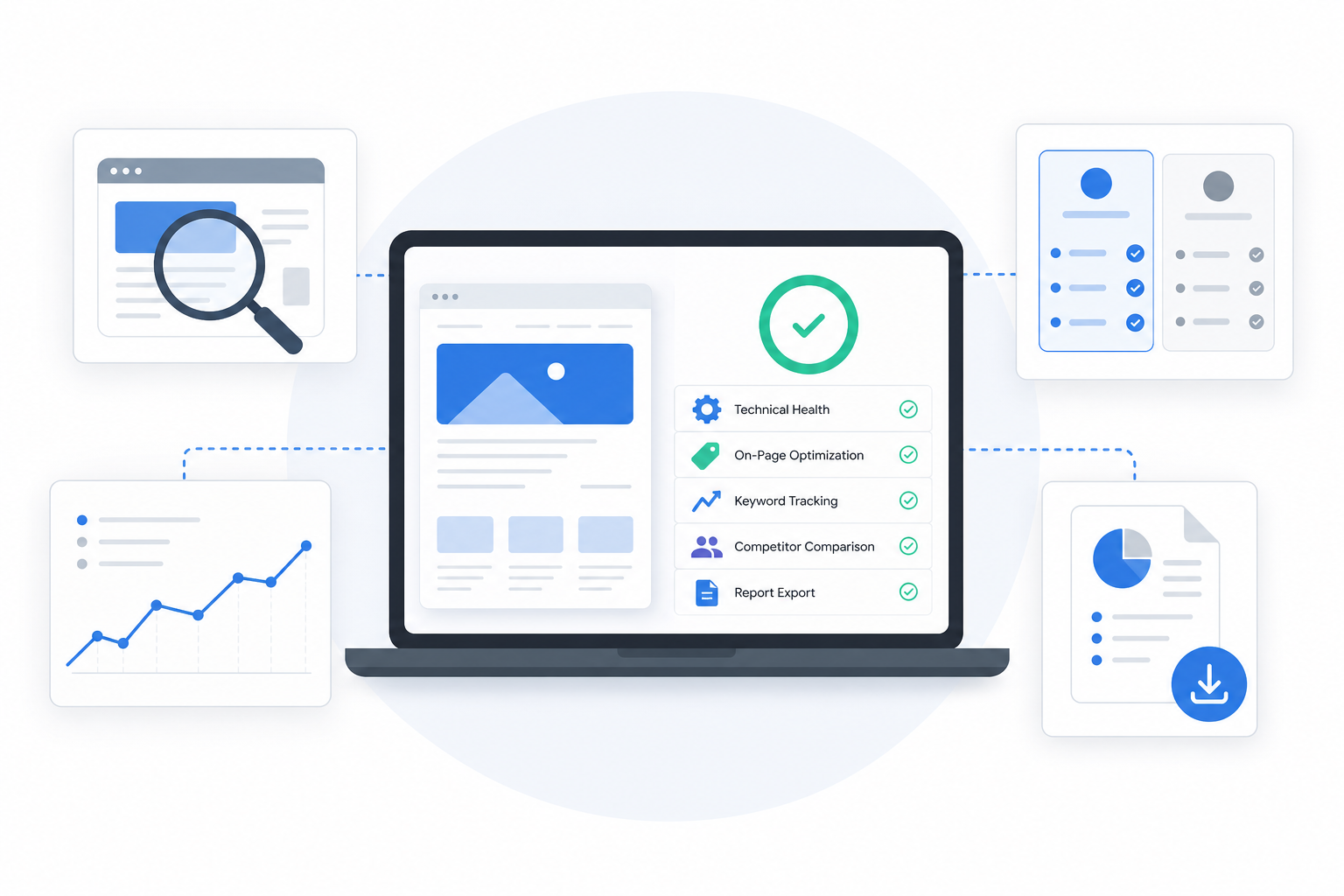
WooRank is a website analysis platform primarily used for simplified SEO auditing and website reviews, with keyword tracking, competitive analysis, and reporting functions.
Primary SEO Function: Accessible website auditing.
Key SEO Features: Site reviews; technical checks; on-page analysis; keyword tracking; competitive benchmarking; report generation.
Best Use Cases: Initial SEO Assessments; Small-Site Monitoring; Client Prospecting; Basic Optimization Reviews.
Distinguishing Capability: Presents website findings in a relatively accessible audit and reporting format.
Pricing and Access: Paid with trial or limited public analysis options.
Main Strengths: Accessible diagnostics; straightforward reports; broad basic coverage.
Main Limitations: Less granular than dedicated technical crawlers; automated recommendations still require validation.
Best For: Small businesses, marketers, and agencies needing simplified website assessments.
26. Seobility
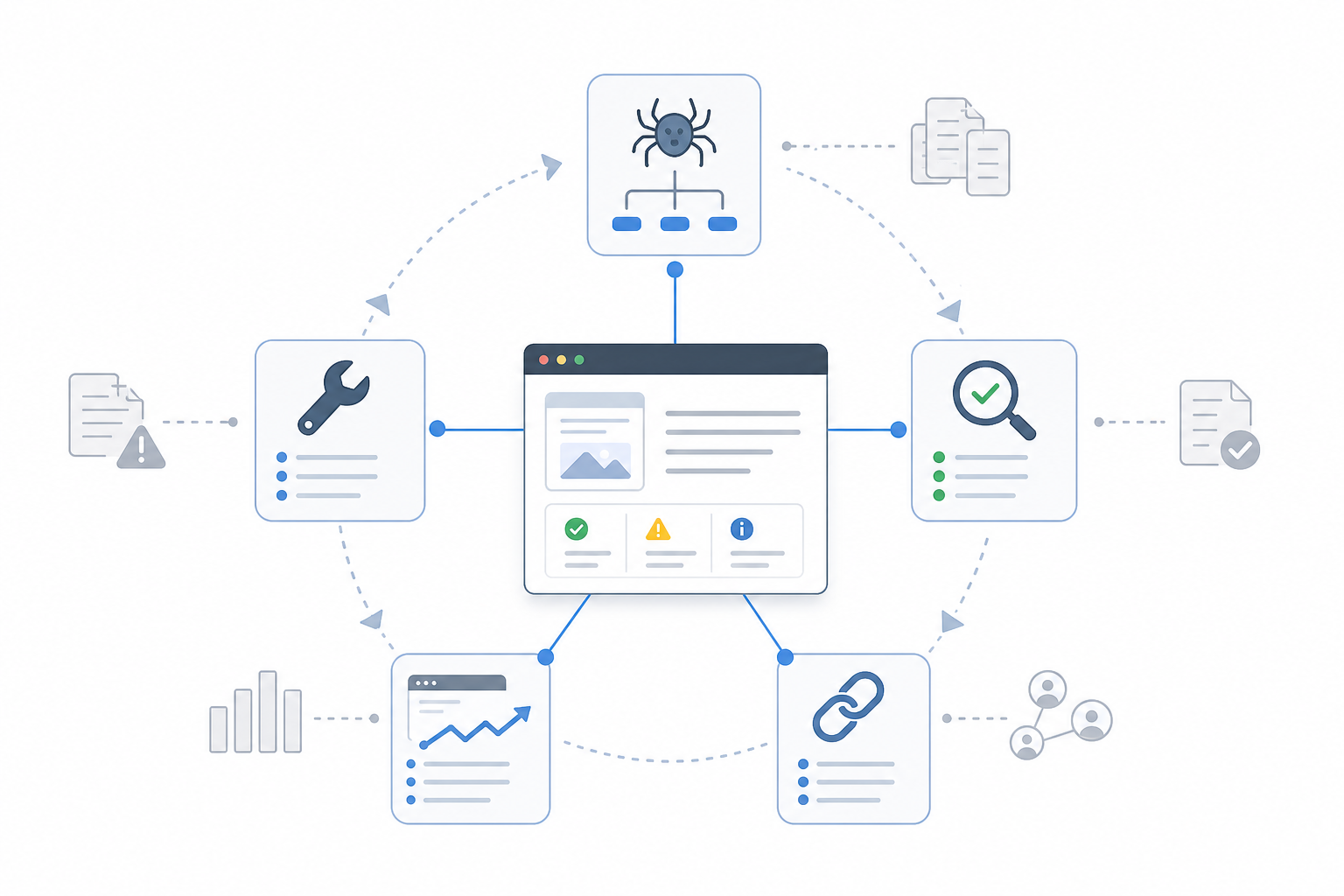
Seobility is an SEO platform primarily used for website auditing and monitoring, with rank tracking, backlink analysis, keyword tools, and on-page checks.
Primary SEO Function: Affordable recurring SEO health monitoring.
Key SEO Features: Site crawler; technical auditing; rank tracking; backlink analysis; on-page checks; monitoring.
Best Use Cases: Small-Site Auditing; Rank Monitoring; Basic Link Analysis; Ongoing Technical Checks.
Distinguishing Capability: Combines several essential SEO functions with an accessible freemium entry point.
Pricing and Access: Freemium and paid.
Main Strengths: Affordable; useful crawler; broad basic SEO coverage.
Main Limitations: Smaller datasets and advanced controls compared with premium specialist platforms.
Best For: Small businesses and solo SEOs that need affordable ongoing site monitoring.
27. Sitechecker
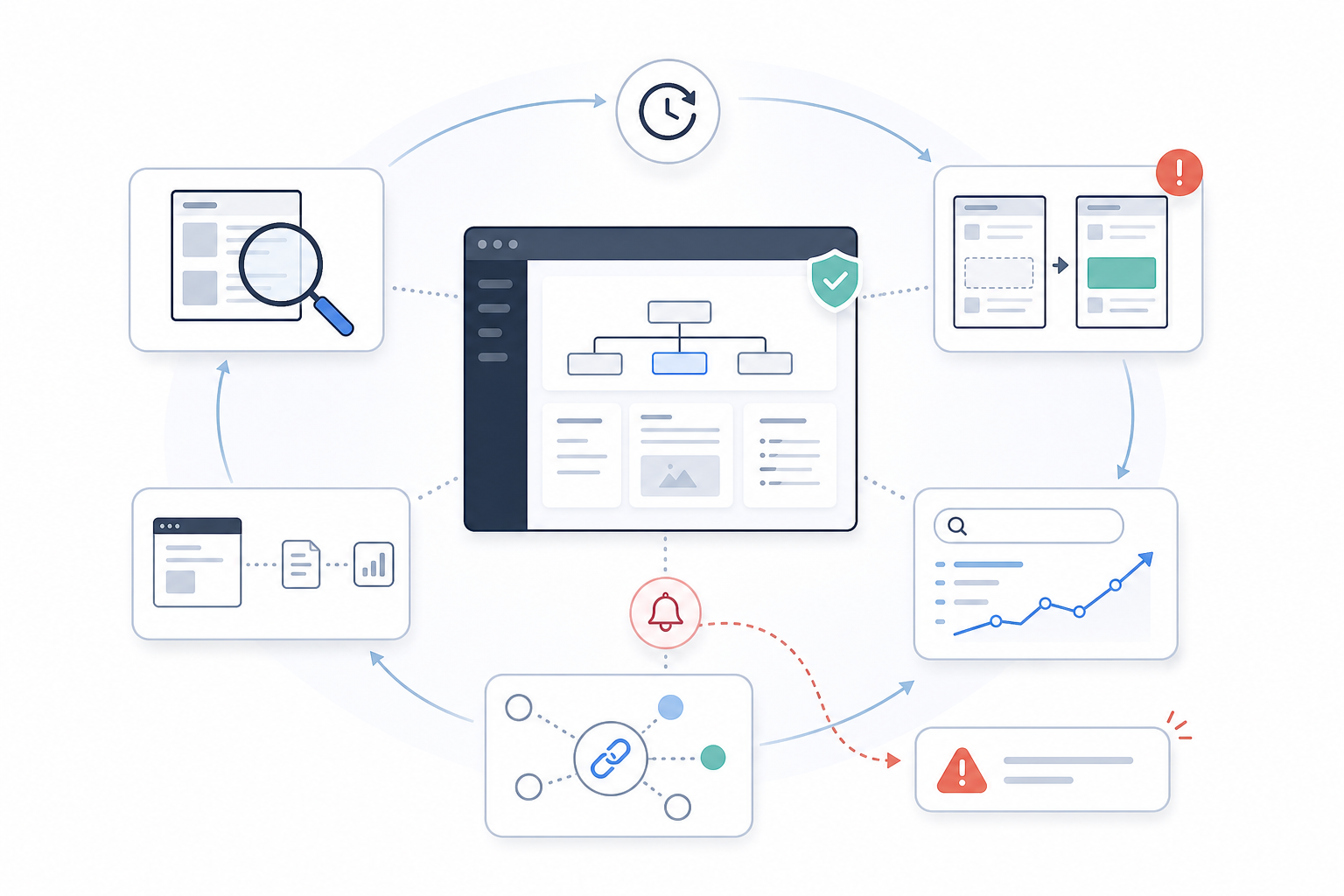
Sitechecker is an SEO monitoring platform primarily used for website auditing, change monitoring, and rank tracking, with additional backlink and technical monitoring.
Primary SEO Function: Continuous website and SEO monitoring.
Key SEO Features: Site Audit; Site Monitoring; Rank Tracker; backlink monitoring; Search Console integration; alerts.
Best Use Cases: Website Change Monitoring; Recurring Audits; Rank Tracking; Technical Issue Detection.
Distinguishing Capability: Combines scheduled monitoring of website changes with conventional site-audit and ranking data.
Pricing and Access: Paid; trial access and plan-based limits apply.
Main Strengths: Continuous monitoring; approachable dashboards; alerts.
Main Limitations: Specialist platforms offer deeper technical crawling or competitor intelligence.
Best For: Small and mid-sized teams that want ongoing website monitoring rather than occasional audits only.
28. AccuRanker
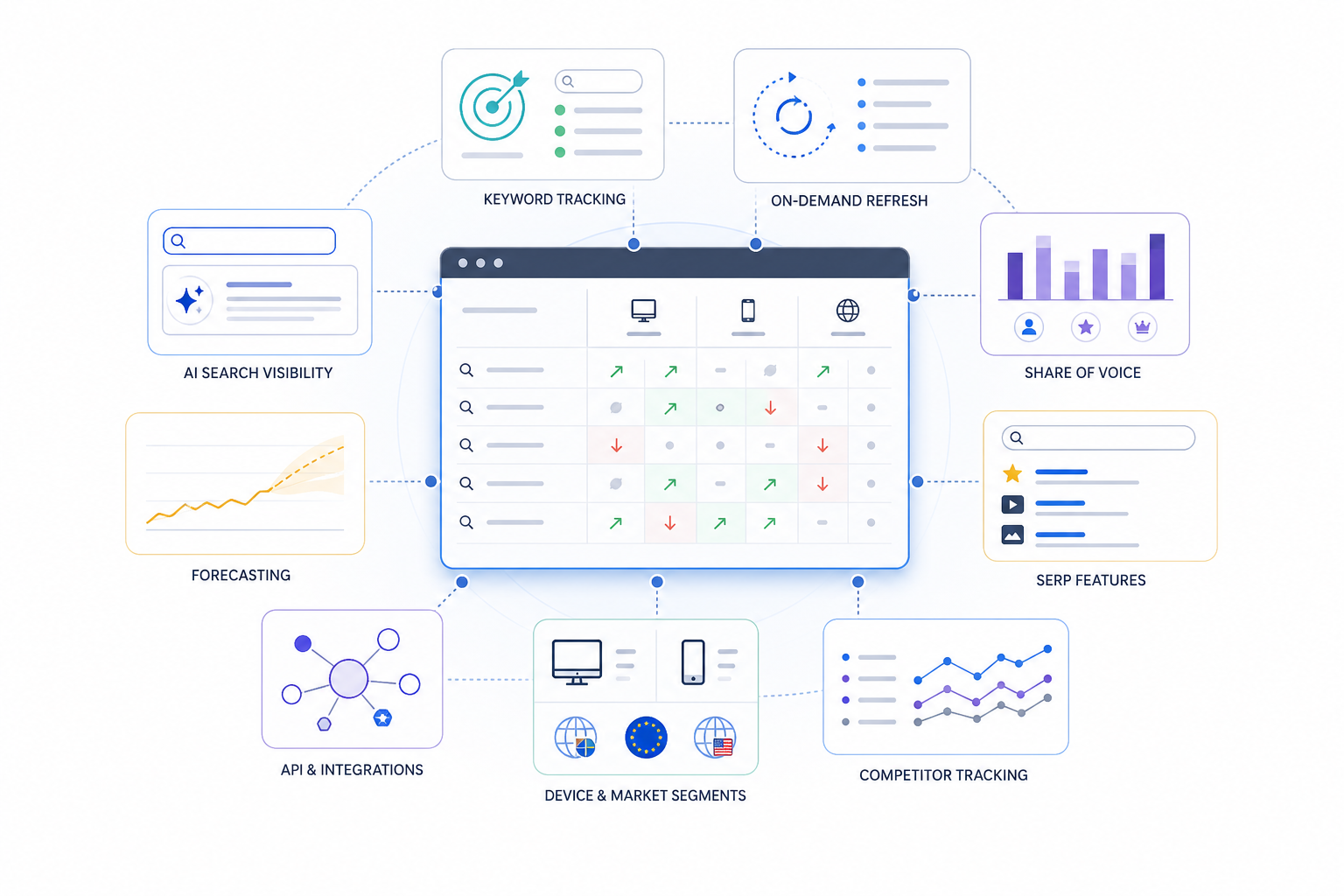
AccuRanker is a specialist rank-tracking platform primarily used for monitoring keyword and search visibility, with SERP analysis, Share of Voice, competitor tracking, reporting, API access, and newer AI-search monitoring.
Primary SEO Function: Dedicated rank and visibility tracking.
Key SEO Features: Keyword tracking; on-demand updates; Share of Voice; SERP-feature analysis; competitor tracking; reporting and integrations.
Best Use Cases: Large Keyword Tracking; Agency Rank Reporting; Search-Visibility Benchmarking; Market and Device Segmentation.
Distinguishing Capability: Rank tracking remains the center of the platform rather than one module inside a broader suite. Current features also include AI visibility, forecasting, keyword discovery, reporting, and API integrations.
Pricing and Access: Paid; pricing scales with tracked keywords and requirements.
Main Strengths: Specialized tracking; flexible segmentation; strong reporting.
Main Limitations: Does not replace comprehensive backlink, crawling, or content platforms.
Best For: Agencies and advanced SEO teams that need dedicated rank and search-visibility measurement.
29. Advanced Web Ranking
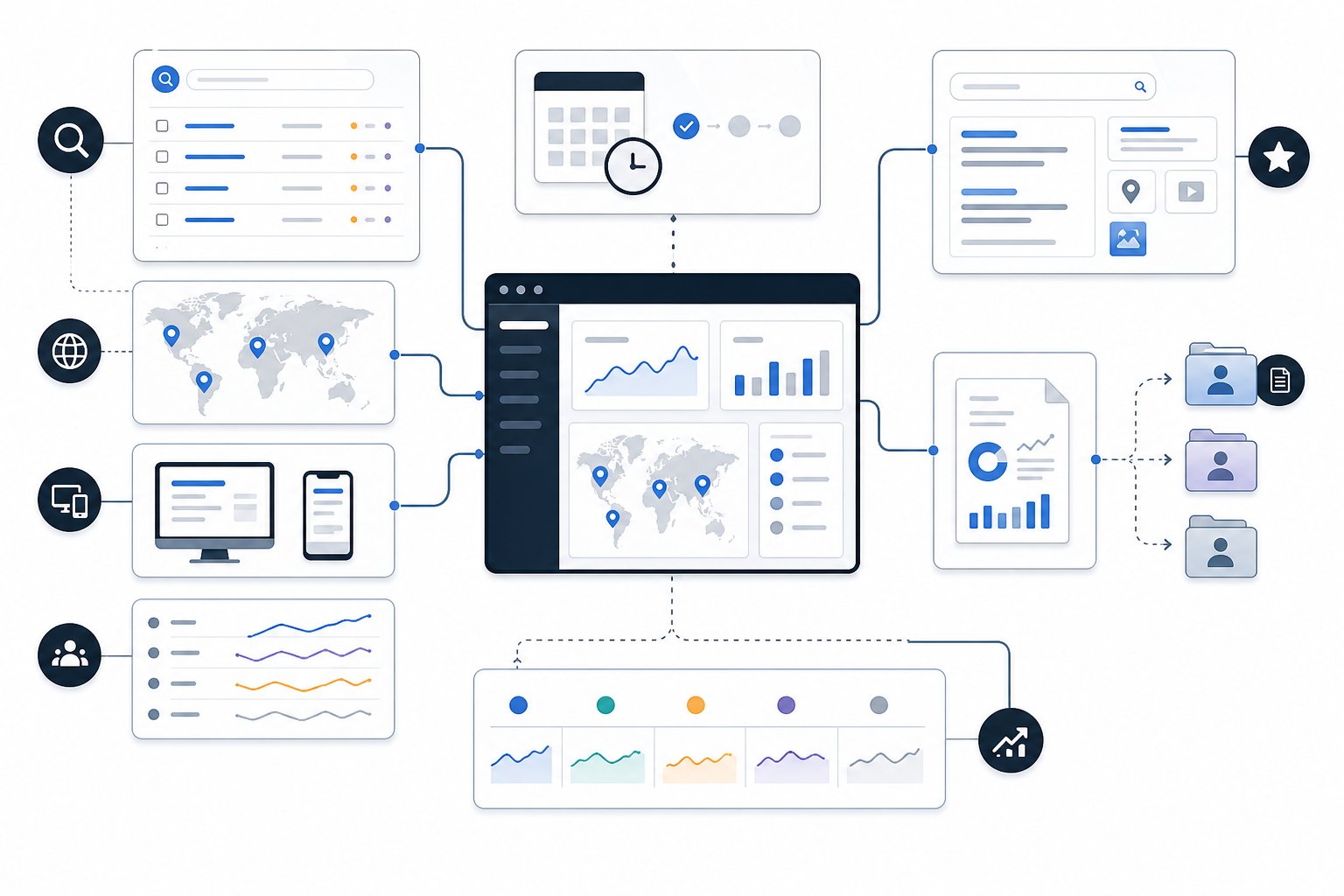
Advanced Web Ranking is a specialist rank-tracking platform primarily used for keyword-position monitoring and client reporting, with location, device, competitor, and visibility segmentation.
Primary SEO Function: Scalable rank tracking.
Key SEO Features: Keyword monitoring; local rank tracking; competitor comparison; SERP features; white-label reporting; scheduled updates.
Best Use Cases: Agency Reporting; Local and International Tracking; Competitor Visibility; Large Keyword Portfolios.
Distinguishing Capability: Strong emphasis on flexible ranking schedules, client reporting, and large keyword sets.
Pricing and Access: Paid; plans vary by keyword units and update frequency.
Main Strengths: Reporting flexibility; scalable tracking; localization options.
Main Limitations: Rank tracking is its primary specialization, so other SEO disciplines require additional tools.
Best For: Agencies and enterprise teams managing ranking reports across multiple markets.
30. Nightwatch
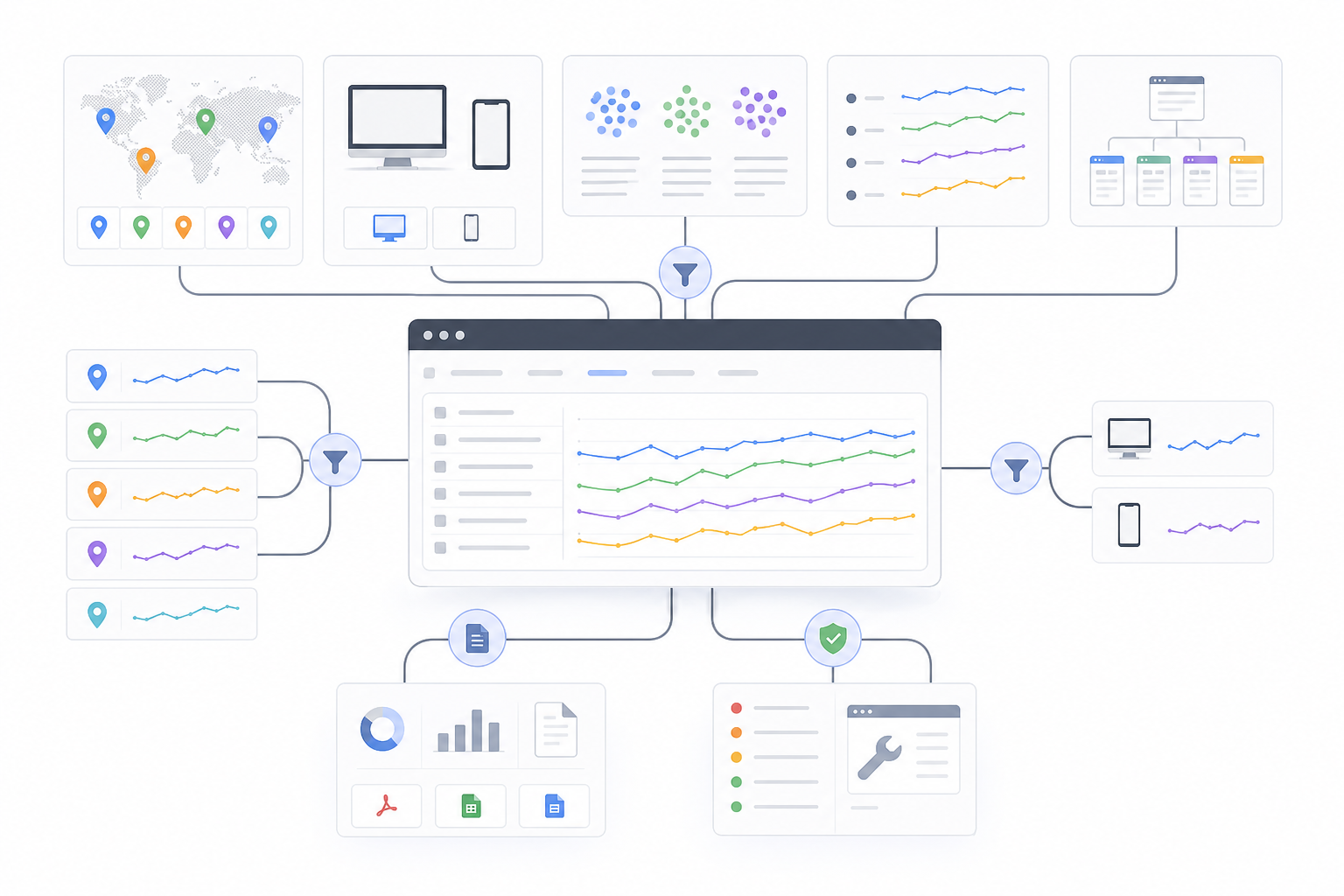
Nightwatch is a rank-tracking and SEO monitoring platform primarily used for highly segmented keyword tracking, with local tracking, dashboards, auditing, and reporting.
Primary SEO Function: Search ranking monitoring.
Key SEO Features: Location-specific rank tracking; device tracking; competitor monitoring; segmentation; site auditing; reports.
Best Use Cases: Local Rank Tracking; Segmented Keyword Monitoring; Agency Reporting; Search-Visibility Analysis.
Distinguishing Capability: Strong filtering and segmentation make it useful when ranking data needs to be broken down across locations, groups, or website sections.
Pricing and Access: Paid; pricing varies with keyword volume and plan.
Main Strengths: Flexible segmentation; location tracking; useful visualization.
Main Limitations: Broader competitor and backlink intelligence is not its central specialization.
Best For: SEO teams that need granular ranking segmentation across locations and projects.
31. Wincher
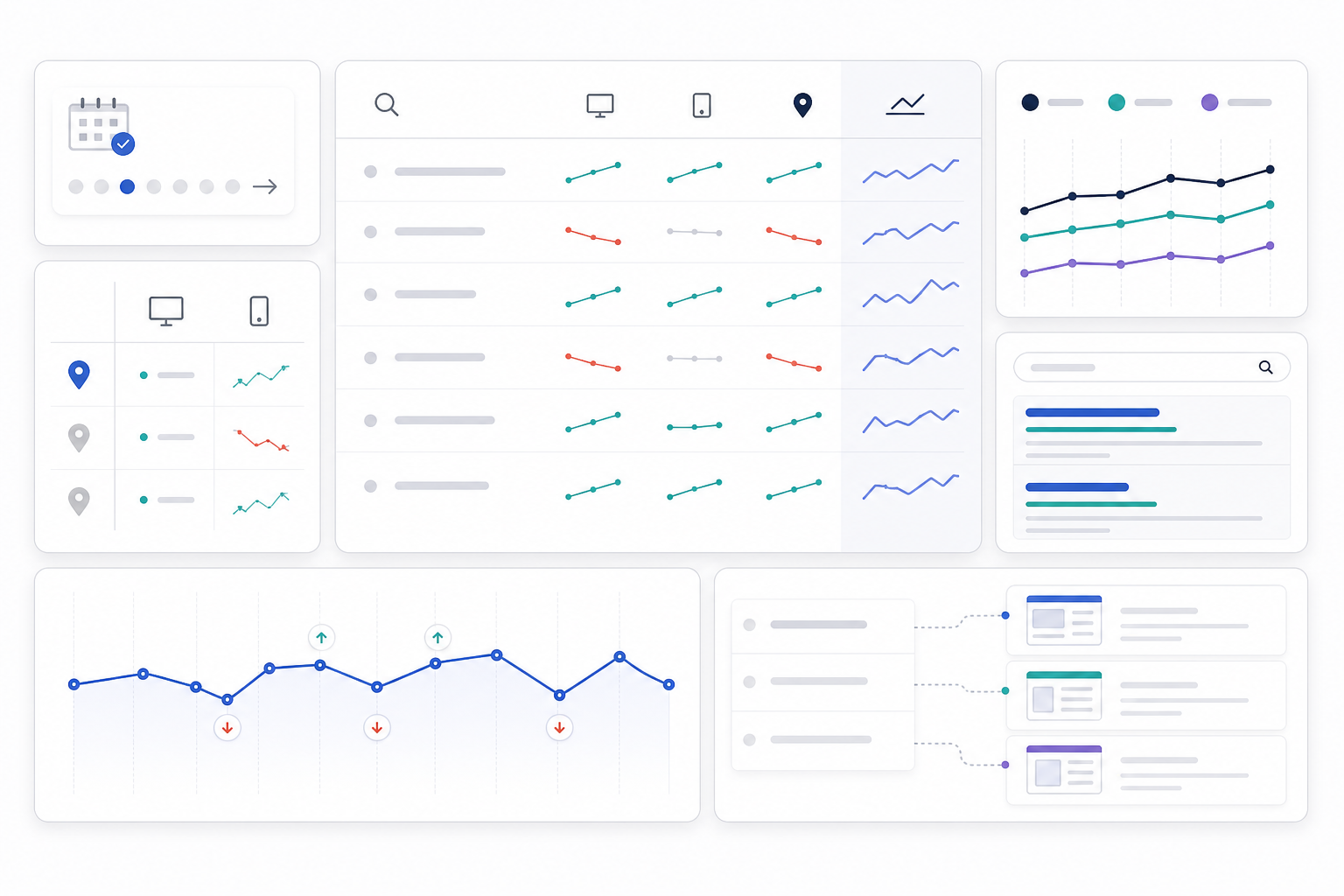
Wincher is a rank-tracking platform primarily used for straightforward daily keyword monitoring, with competitor tracking, landing-page analysis, historical rankings, and reporting.
Primary SEO Function: Simple rank tracking.
Key SEO Features: Daily ranking updates; ranking history; competitor tracking; landing-page reporting; SERP snapshots; location and device tracking.
Best Use Cases: Small-Team Rank Monitoring; Client Keyword Reporting; Competitor Position Tracking; Landing-Page Visibility Reviews.
Distinguishing Capability: Emphasizes a relatively simple rank-tracking experience rather than a complex all-in-one suite. Current product information highlights daily ranking updates, SERP snapshots, location/device tracking, and historical data.
Pricing and Access: Paid.
Main Strengths: Straightforward workflow; daily updates; accessible reporting.
Main Limitations: Limited technical, backlink, and deep keyword-research breadth compared with broader suites.
Best For: Small businesses and marketing teams that primarily need recurring keyword-position monitoring.
32. ProRankTracker
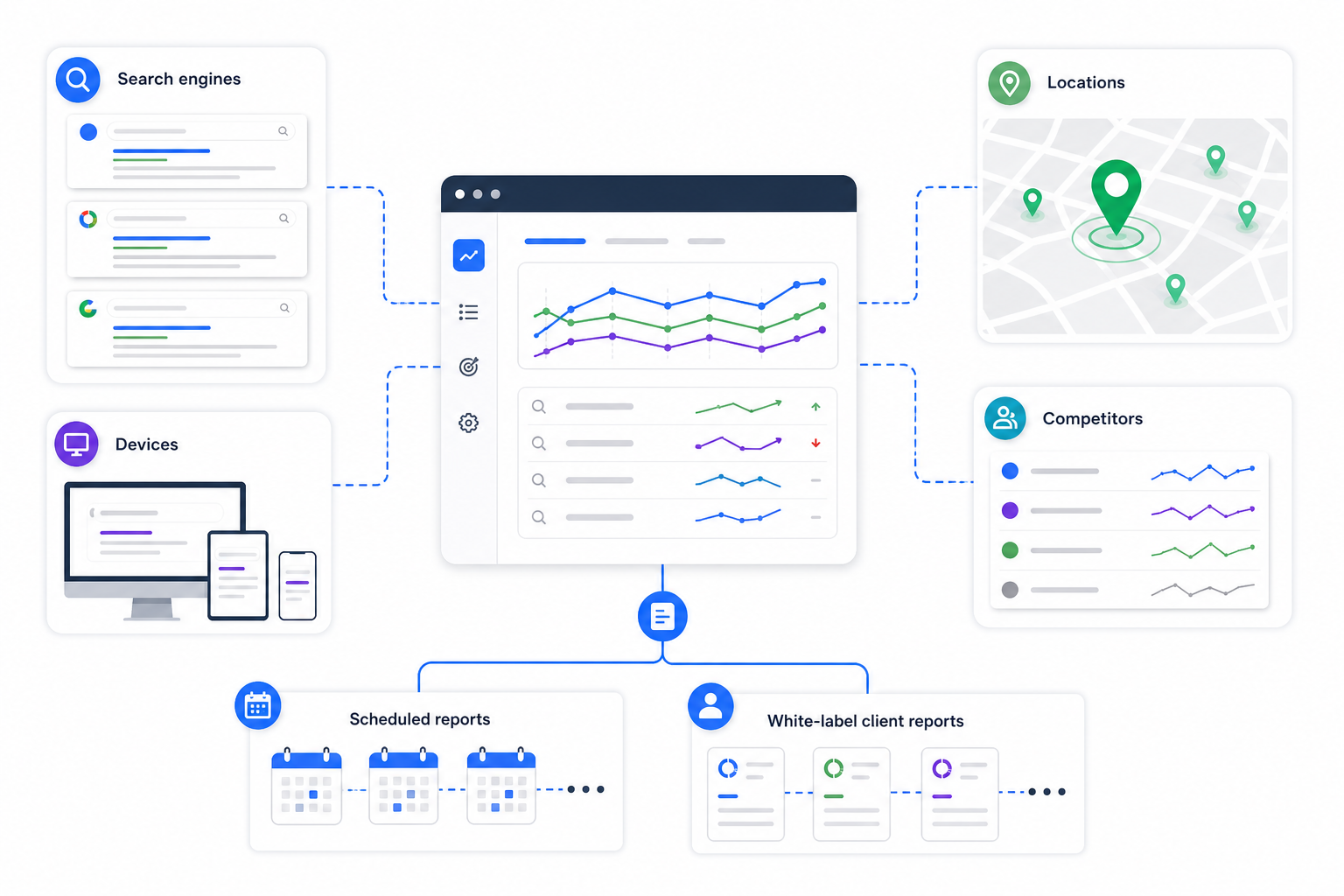
ProRankTracker is a dedicated rank-tracking platform primarily used to monitor keyword positions across search engines, locations, and devices, with reporting and agency-oriented functionality.
Primary SEO Function: Multi-environment rank tracking.
Key SEO Features: Keyword tracking; local tracking; device tracking; competitor monitoring; scheduled reports; white-label reporting.
Best Use Cases: Client Rank Tracking; Local SEO Monitoring; Multi-Device Analysis; Recurring Position Reports.
Distinguishing Capability: Strong specialization in tracking rankings across many search configurations.
Pricing and Access: Paid; plans vary by tracking volume.
Main Strengths: Focused ranking functionality; reporting; broad tracking configurations.
Main Limitations: Requires additional tools for deep crawling, content, and backlink research.
Best For: Agencies and specialists whose primary requirement is large-scale rank monitoring.
33. Keyword.com
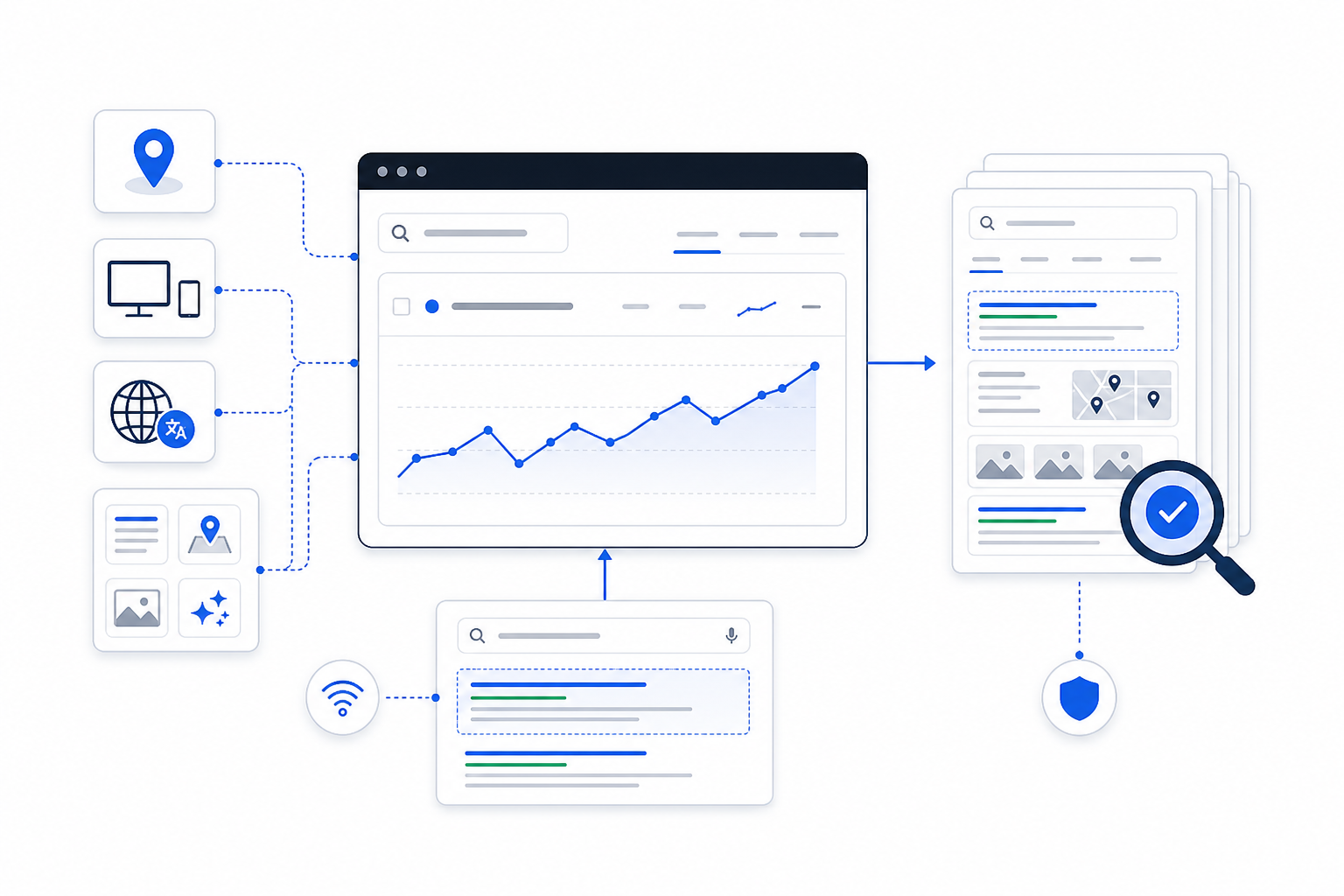
Keyword.com is a specialist rank-tracking platform primarily used for measuring keyword positions with detailed SERP context, including location, device, SERP features, and verification.
Primary SEO Function: Verifiable search ranking measurement.
Key SEO Features: Keyword tracking; location and device targeting; SERP-feature monitoring; AI Overview tracking; ranking history; saved SERP verification.
Best Use Cases: Rank Verification; Local Tracking; Client Reporting; SERP-Feature Monitoring.
Distinguishing Capability: Its Spyglass functionality provides saved SERP evidence that can be used to verify tracked results. Current documentation states that tracked keywords can include location, device, language, SERP features, AI Overviews, and stored SERP verification.
Pricing and Access: Paid; pricing scales with tracking requirements.
Main Strengths: Verifiable SERP context; granular tracking; useful reporting.
Main Limitations: Primarily a rank-tracking product rather than a broad SEO research suite.
Best For: Agencies and teams that require auditable ranking data.
34. Keyword Insights
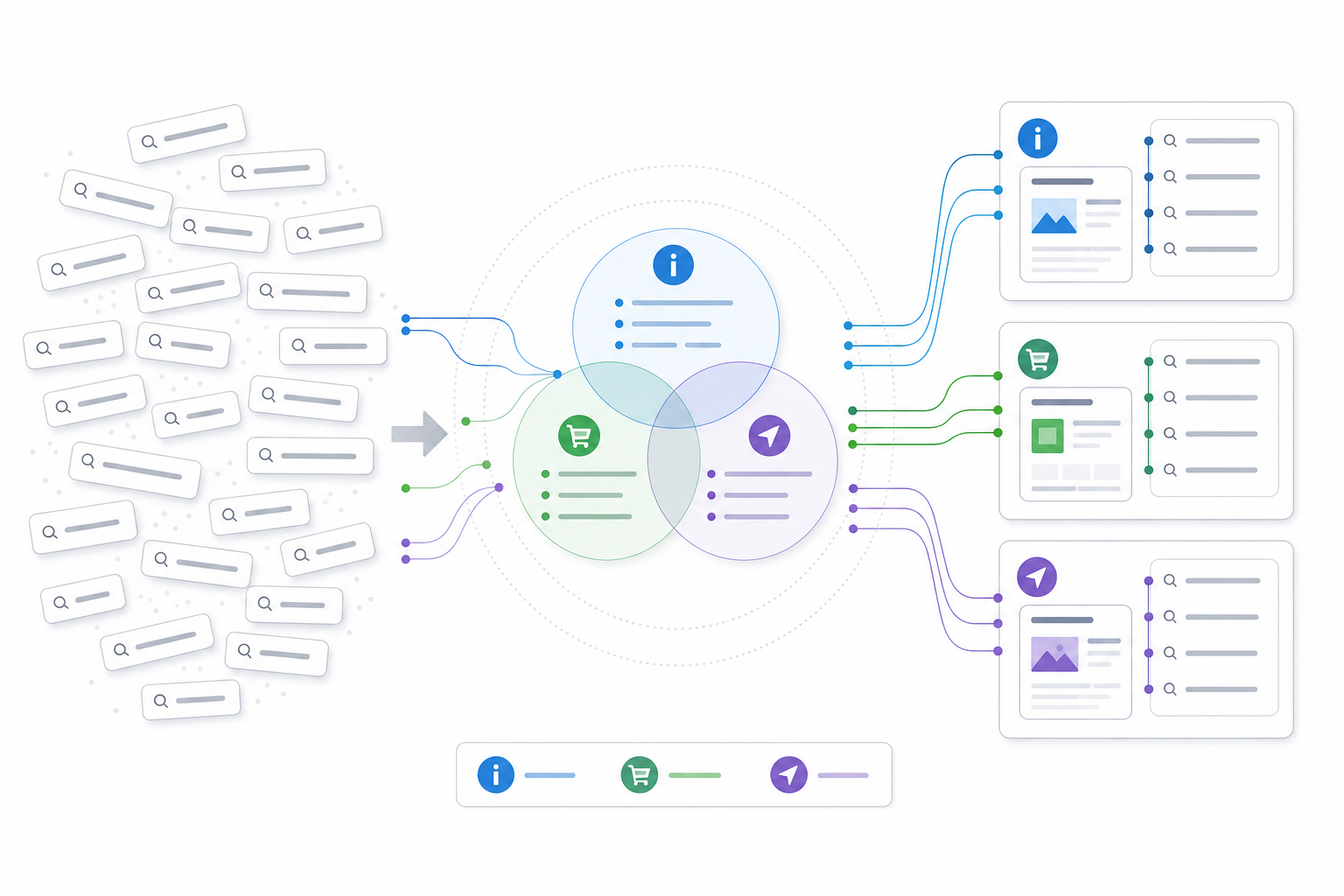
Keyword Insights is a keyword research and content-planning platform primarily used for clustering search terms according to shared SERP and intent relationships, with additional content briefing and research functionality.
Primary SEO Function: Keyword clustering and page mapping.
Key SEO Features: Keyword clustering; search-intent classification; content briefs; keyword discovery; SERP-based grouping; content planning.
Best Use Cases: Keyword Mapping for deciding which queries belong on one page; Topical Planning for organizing large keyword sets; Content Briefing; Intent-Based Clustering.
Distinguishing Capability: Clustering is central to the workflow. Its documentation describes keyword clusters as groups of terms that share meaning and intent and can often be targeted by one webpage.
Pricing and Access: Paid or usage-based depending on plan.
Main Strengths: Scalable clustering; strong content-planning fit; useful page-mapping support.
Main Limitations: Not a replacement for comprehensive technical, backlink, or rank-tracking platforms.
Best For: Content strategists and SEOs handling large keyword sets and page mapping.
35. LowFruits
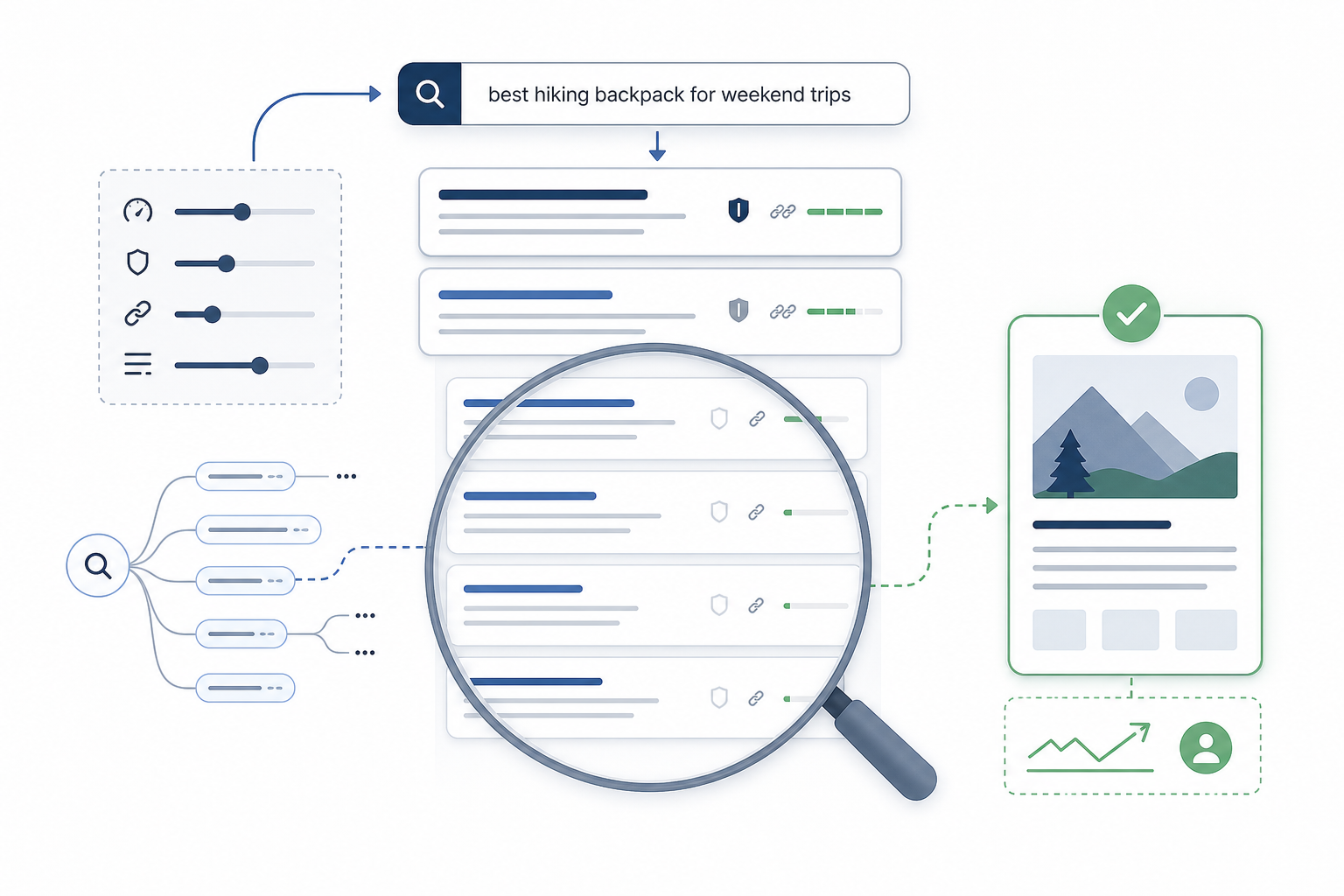
LowFruits is a keyword research tool primarily used to identify lower-competition search opportunities by analyzing weak or less-established results in the SERP.
Primary SEO Function: Low-competition keyword discovery.
Key SEO Features: Long-tail keyword discovery; SERP weakness analysis; keyword filtering; domain-authority pattern checks; related query research.
Best Use Cases: New-Site Keyword Research; Long-Tail Discovery; Niche Content Planning; Weak-SERP Identification.
Distinguishing Capability: Focuses on finding searches where the current result set contains signs of weaker competition rather than relying only on one conventional keyword-difficulty score.
Pricing and Access: Paid or credit-based depending on usage.
Main Strengths: Focused opportunity discovery; useful long-tail research; practical for lower-authority websites.
Main Limitations: A weak-looking SERP does not guarantee ranking feasibility; limited breadth outside keyword research.
Best For: Niche sites and newer websites looking for realistic long-tail opportunities.
36. KeywordTool.io
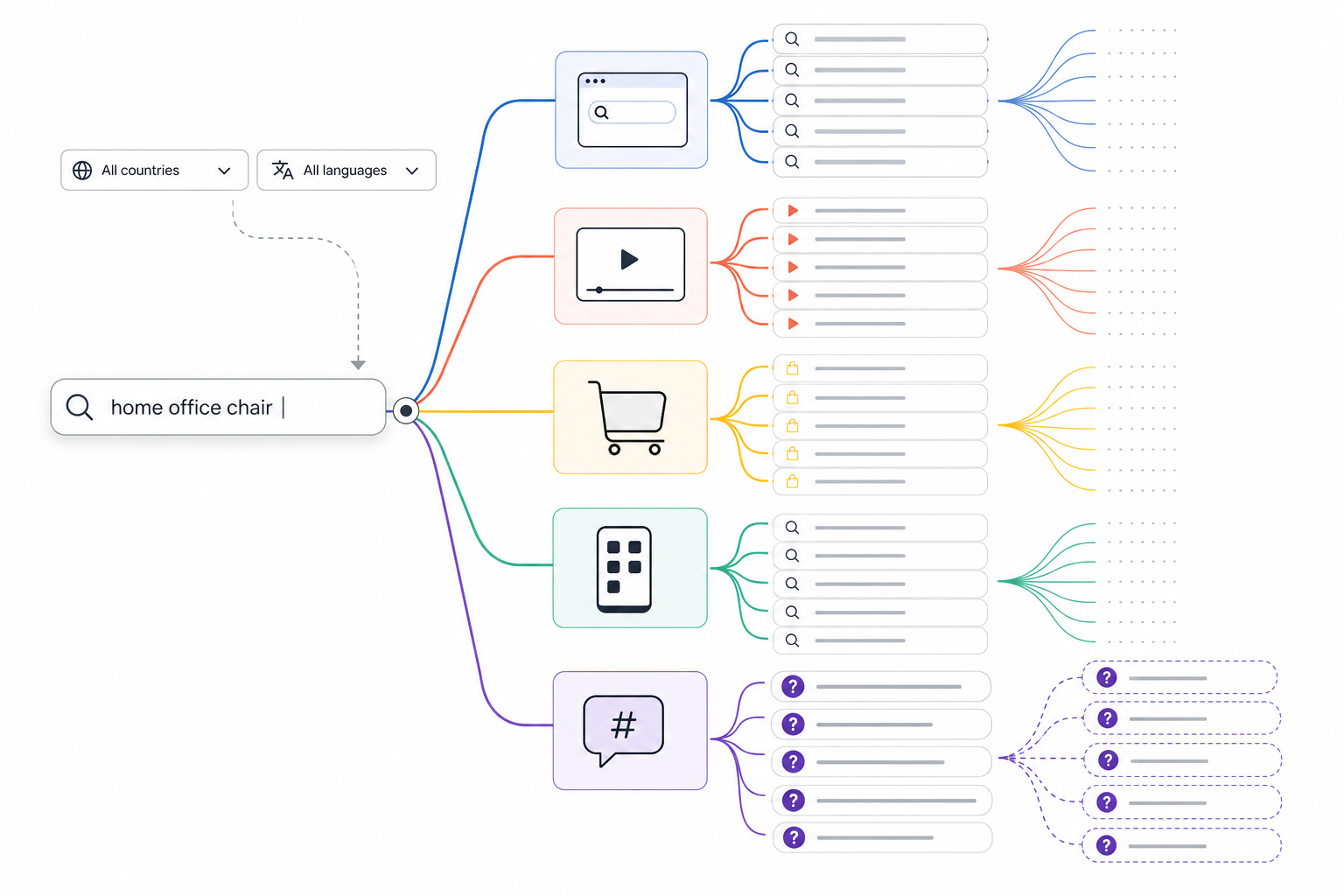
KeywordTool.io is a keyword discovery platform primarily used to generate autocomplete-based query ideas across search engines and other major platforms.
Primary SEO Function: Keyword expansion.
Key SEO Features: Autocomplete keyword generation; question discovery; country and language filtering; platform-specific keyword research; search-volume data on paid plans.
Best Use Cases: Long-Tail Discovery; Question Research; Multi-Platform Keyword Research; Seed-Keyword Expansion.
Distinguishing Capability: Generates large numbers of autocomplete-derived terms beyond conventional Google keyword databases.
Pricing and Access: Freemium and paid.
Main Strengths: Broad query expansion; multiple platforms; useful long-tail discovery.
Main Limitations: Many deeper metrics require paid access; autocomplete suggestions are discovery signals rather than proof that each term deserves its own page.
Best For: Content and SEO teams that need rapid keyword expansion from seed topics.
37. AnswerThePublic
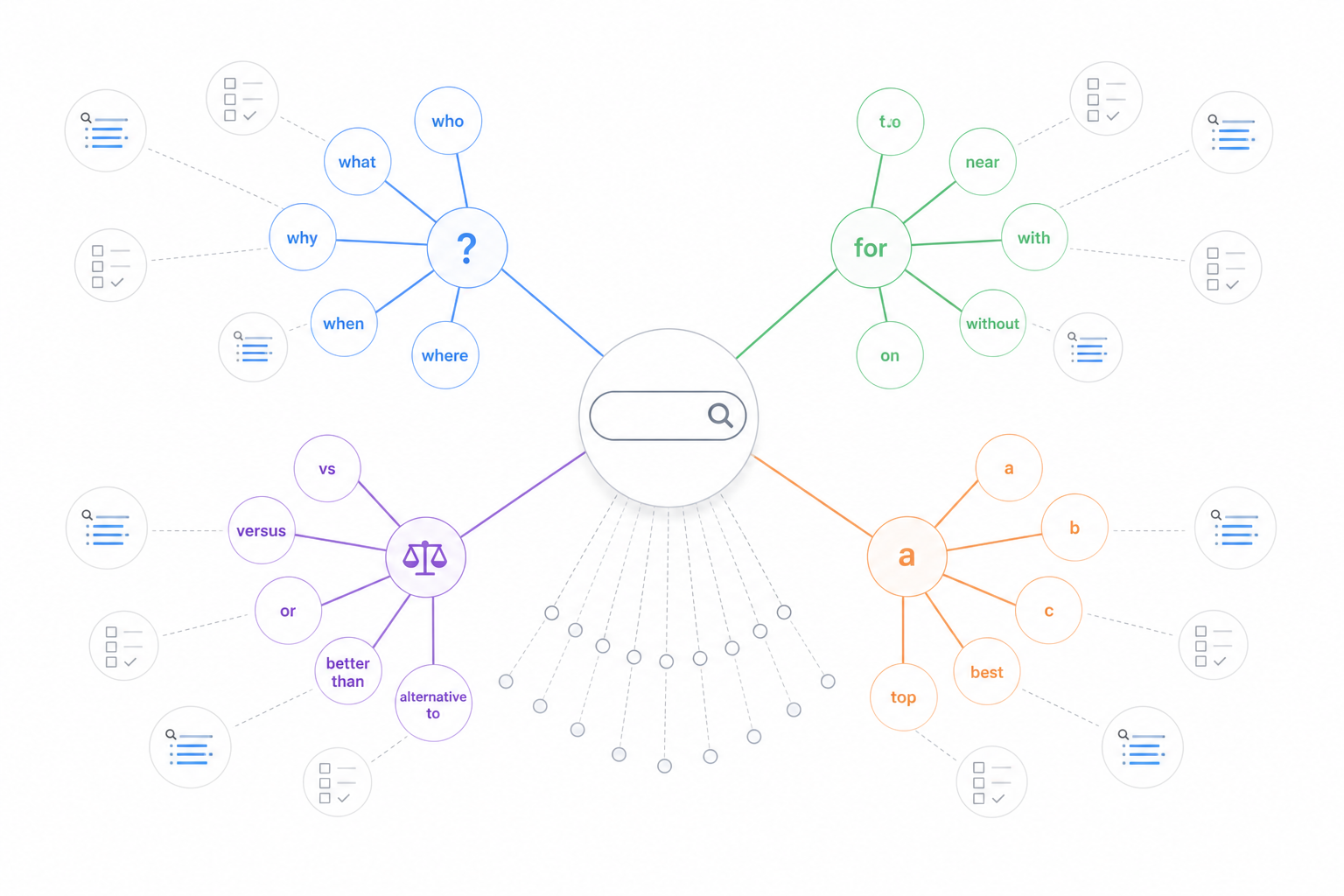
AnswerThePublic is a search-listening and keyword-ideation tool primarily used to discover questions and language patterns associated with a topic.
Primary SEO Function: Question and topic discovery.
Key SEO Features: Question research; preposition-based queries; comparison ideas; alphabetical suggestions; visualization; search-demand exploration.
Best Use Cases: Audience Question Research; Content Ideation; FAQ Research where FAQs are genuinely useful; Early Topic Exploration.
Distinguishing Capability: Organizes keyword ideas around the forms in which people phrase questions and related searches.
Pricing and Access: Limited free access with paid plans.
Main Strengths: Fast ideation; intuitive visualization; useful question discovery.
Main Limitations: Idea generation still requires validation through search intent, demand, relevance, and SERPs.
Best For: Writers and strategists seeking audience-language and question ideas around a topic.
38. AlsoAsked
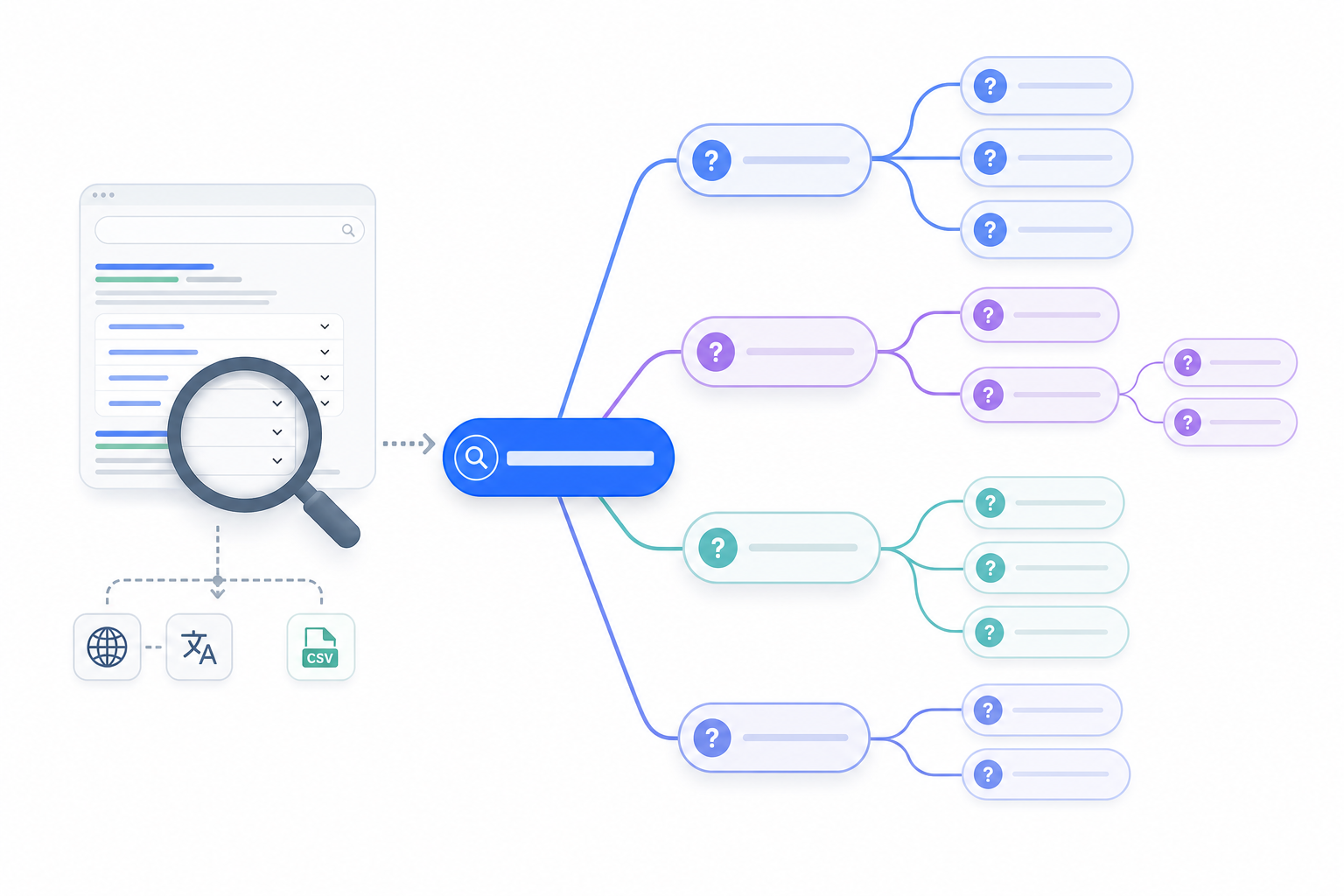
AlsoAsked is a keyword research tool primarily used to explore Google's People Also Ask relationships, showing how related questions connect around a search topic.
Primary SEO Function: People Also Ask research.
Key SEO Features: Live PAA retrieval; question trees; location and language selection; CSV input; question relationship visualization.
Best Use Cases: Supporting Question Research; Topic Expansion; Intent Exploration; Content-Brief Development.
Distinguishing Capability: It emphasizes the relationships between People Also Ask questions rather than presenting them as a flat keyword list.
Pricing and Access: Limited/free usage and paid subscription options vary.
Main Strengths: Clear question relationships; useful content research; live SERP-derived evidence.
Main Limitations: PAA data does not represent the complete keyword universe and does not mean every question deserves a section or URL.
Best For: Content strategists researching follow-up questions and informational relationships.
39. Google Keyword Planner
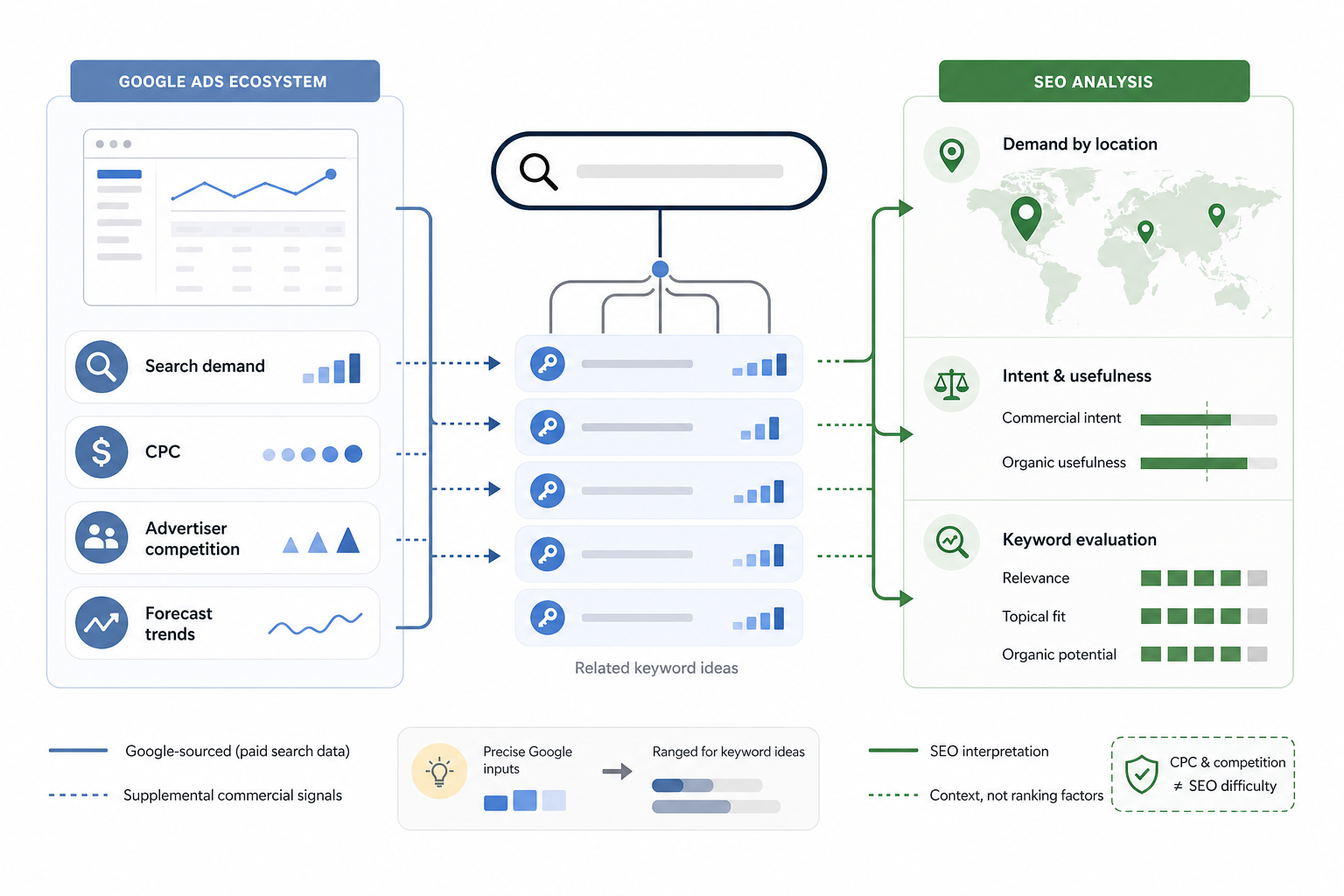
Google Keyword Planner is a Google Ads planning tool primarily used for paid-search keyword research and demand estimates, but its keyword ideas and geographic demand information can also support SEO research.
Primary SEO Function: Supporting keyword-demand research.
Key SEO Features: Keyword ideas; historical search estimates; geographic targeting; CPC estimates; advertiser competition; forecasting for Google Ads.
Best Use Cases: Seed-Keyword Expansion; Geographic Demand Research; Commercial Context Analysis; Cross-Checking Third-Party Keyword Data.
Distinguishing Capability: Keyword data originates from Google's advertising ecosystem rather than a third-party SEO database.
Pricing and Access: Free with Google Ads access.
Main Strengths: Google-sourced keyword ideas; location filtering; useful commercial context.
Main Limitations: Advertising competition is not SEO difficulty; volume presentation can be broader or less granular depending on account conditions.
Best For: SEO teams that want a Google-sourced supplemental keyword dataset alongside dedicated SEO tools.
40. Google Trends
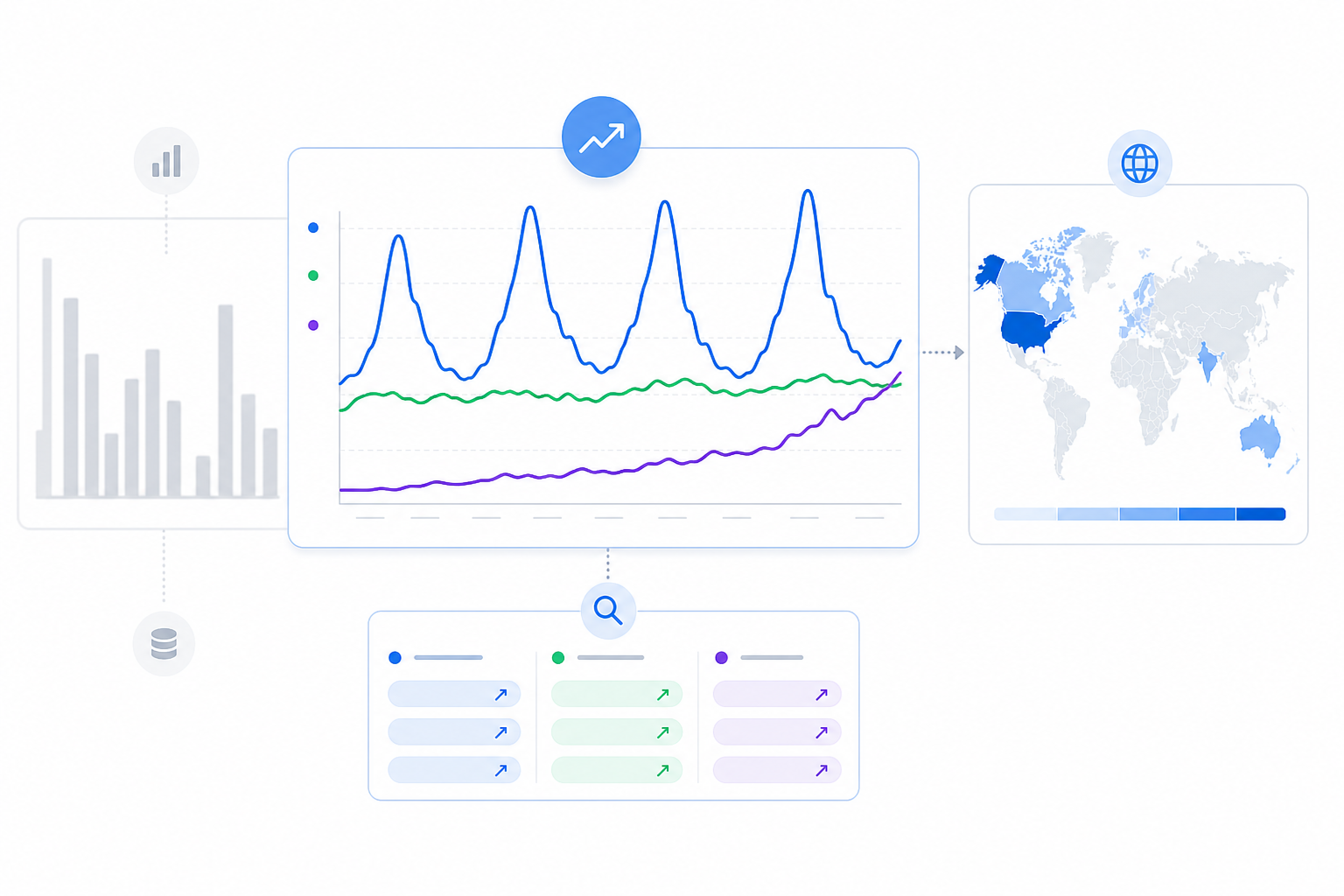
Google Trends is a free Google tool primarily used to measure relative search interest over time and across locations, rather than absolute keyword search volume.
Primary SEO Function: Search-demand trend analysis.
Key SEO Features: Interest over time; geographic interest; related topics; related queries; query comparison; category filtering.
Best Use Cases: Seasonality Analysis; Topic Comparison; Emerging-Trend Research; Geographic Interest Analysis.
Distinguishing Capability: Shows normalized relative search interest, making it useful for identifying directional changes that static monthly-volume estimates can hide.
Pricing and Access: Free.
Main Strengths: Trend analysis; geographic comparison; near-current demand signals.
Main Limitations: Values are relative indexes rather than absolute search counts; low-volume queries can provide limited data.
Best For: SEO and content teams deciding when and where search interest is changing.
41. Google Analytics 4
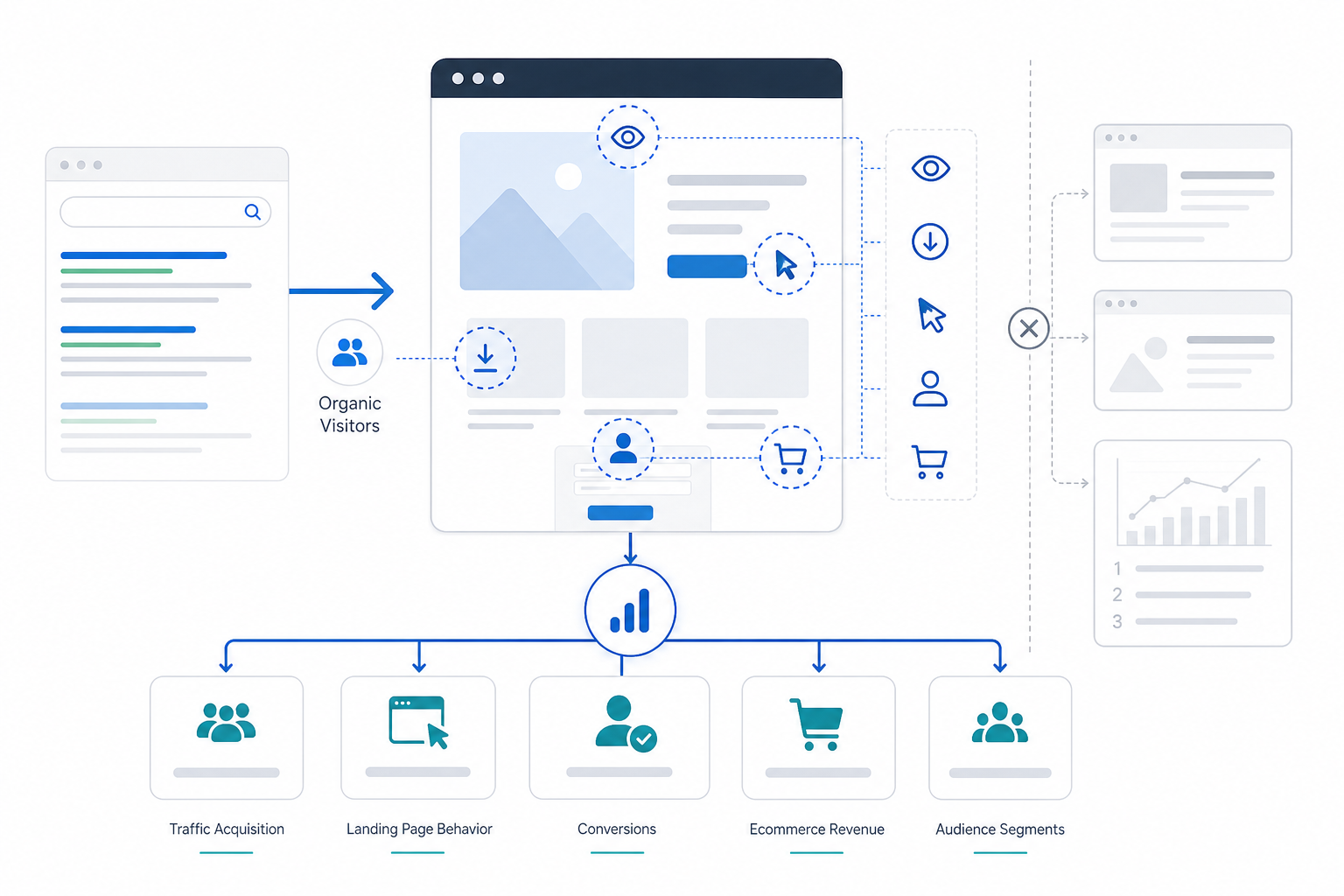
Google Analytics 4 is a website analytics platform primarily used to measure user activity after people reach a website, including organic traffic, landing-page behavior, events, conversions, and revenue where configured.
Primary SEO Function: Post-click performance measurement.
Key SEO Features: Traffic acquisition; landing-page analysis; events; conversions; ecommerce measurement; audience segmentation.
Best Use Cases: Organic Traffic Analysis; Conversion Measurement; Landing-Page Evaluation; Revenue Attribution where implementation allows.
Distinguishing Capability: Measures activity on the website rather than estimating competitor search performance.
Pricing and Access: Standard GA4 is free; enterprise organizations can use paid Google Analytics 360.
Main Strengths: First-party website data; event-based measurement; conversion and ecommerce analysis.
Main Limitations: Does not provide comprehensive keyword rankings or competitor data; tracking configuration strongly affects data quality.
Best For: Every SEO program that needs to connect organic visits with on-site and business outcomes.
42. Looker Studio
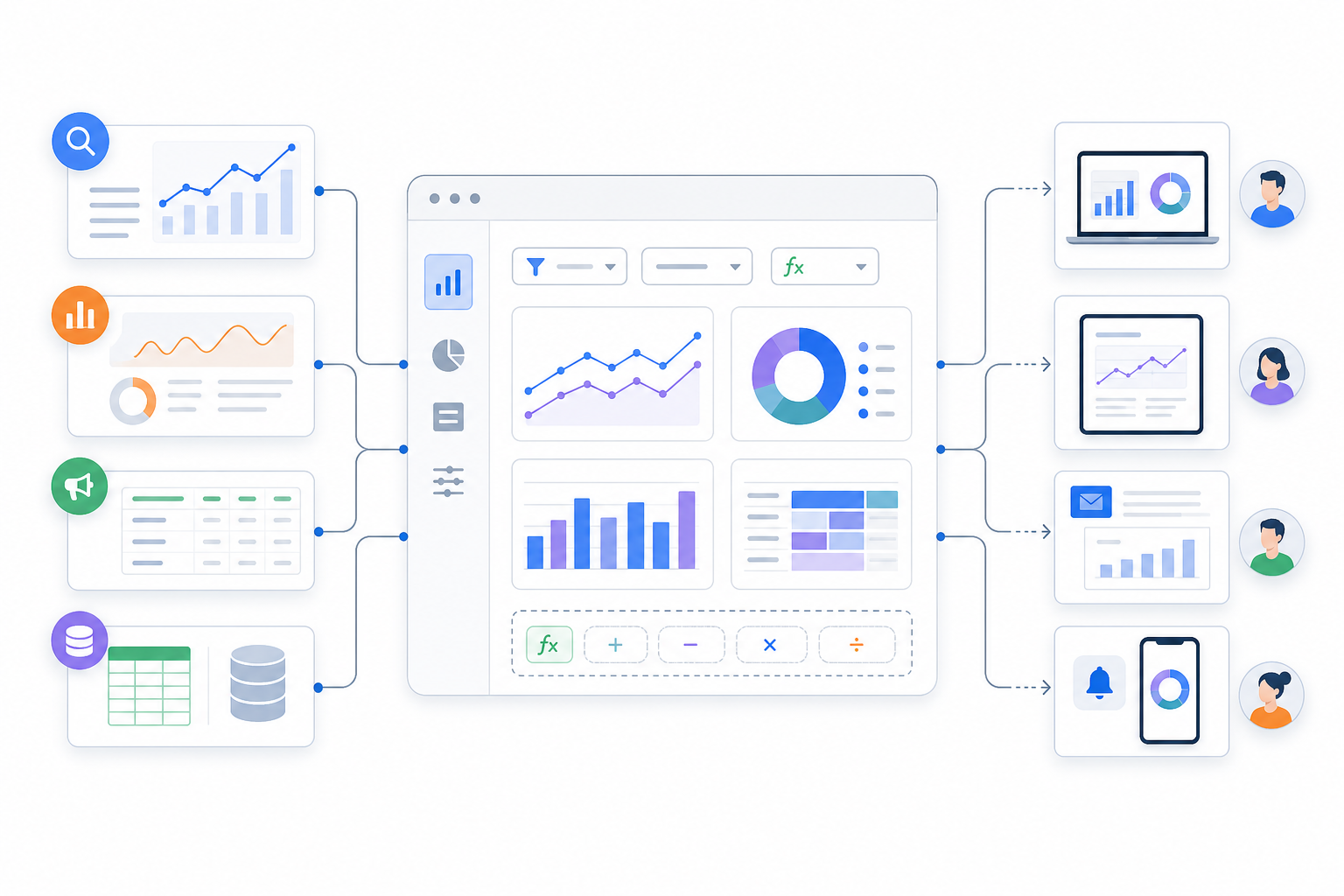
Looker Studio is a data-visualization and reporting platform primarily used to combine SEO, analytics, advertising, and business data into dashboards.
Primary SEO Function: SEO reporting and visualization.
Key SEO Features: Data-source connectors; calculated fields; charts; filters; dashboard sharing; blended reporting.
Best Use Cases: Search Console Dashboards; GA4 Reporting; Multi-Source SEO Reporting; Stakeholder Performance Dashboards.
Distinguishing Capability: It acts as a presentation and data-combination layer rather than generating its own SEO ranking or backlink database.
Pricing and Access: Free standard product; paid organizational options are available through Looker Studio Pro.
Main Strengths: Flexible visualization; Google data integrations; customizable dashboards.
Main Limitations: Dashboard quality depends on source data and report design; it does not perform SEO analysis automatically.
Best For: SEO teams that need customizable recurring reporting from several data sources.
43. Bing Webmaster Tools
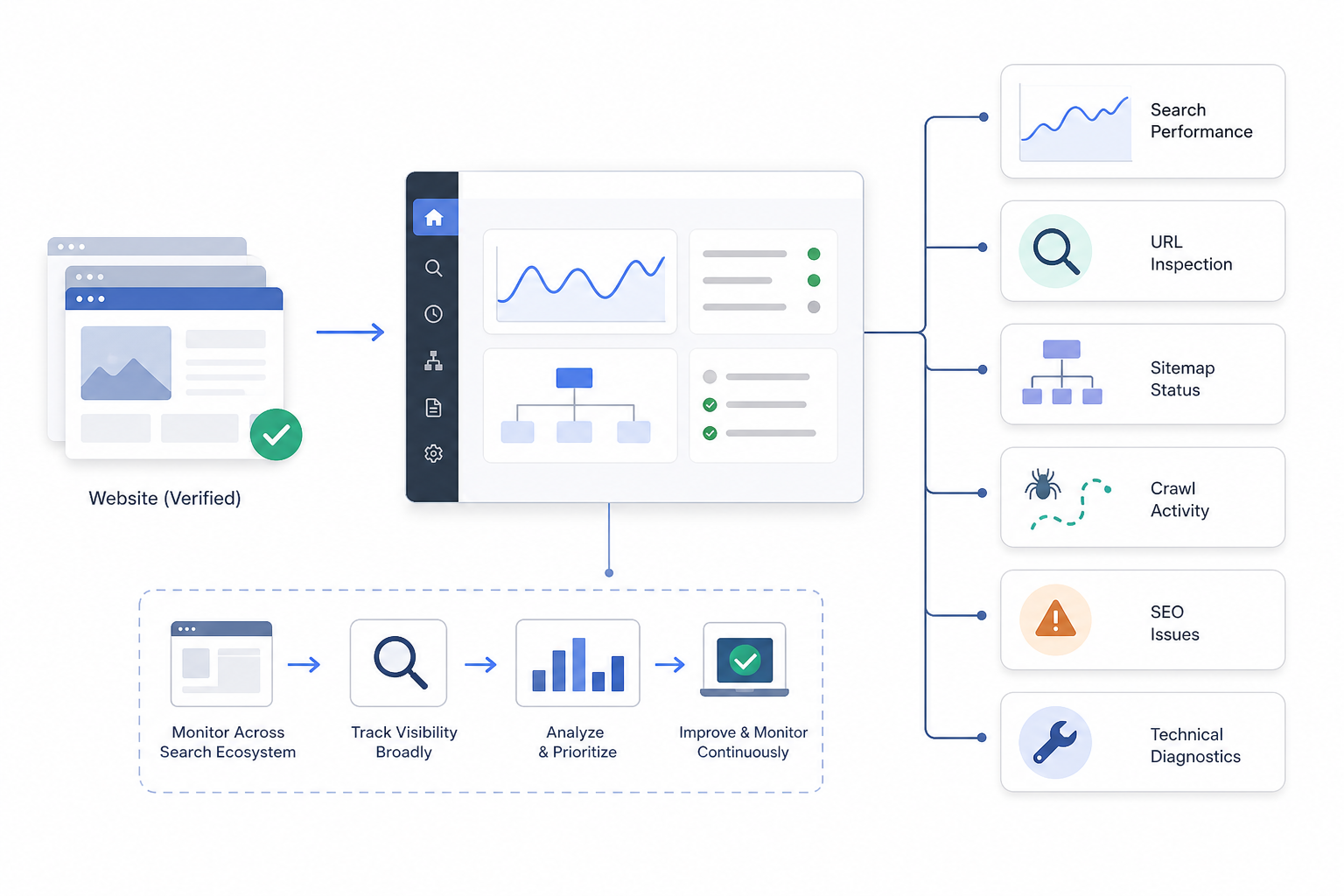
Bing Webmaster Tools is a free first-party platform primarily used to monitor a verified website's performance and technical presence in Bing Search.
Primary SEO Function: Bing search performance and indexation monitoring.
Key SEO Features: Search performance; URL inspection; sitemap submission; crawl information; SEO reports; site diagnostics.
Best Use Cases: Bing Visibility Monitoring; Indexation Checks; Technical Validation; Search-Performance Comparison.
Distinguishing Capability: Provides direct evidence from Bing for the verified website. Current Bing documentation includes search-performance reporting and site-management tools within the refreshed portal.
Pricing and Access: Free.
Main Strengths: First-party Bing data; technical and performance evidence; useful supplement to Search Console.
Main Limitations: Limited competitor research and less central for websites whose search traffic is overwhelmingly Google-based.
Best For: Websites that want first-party visibility and indexing data from Bing.
44. PageSpeed Insights
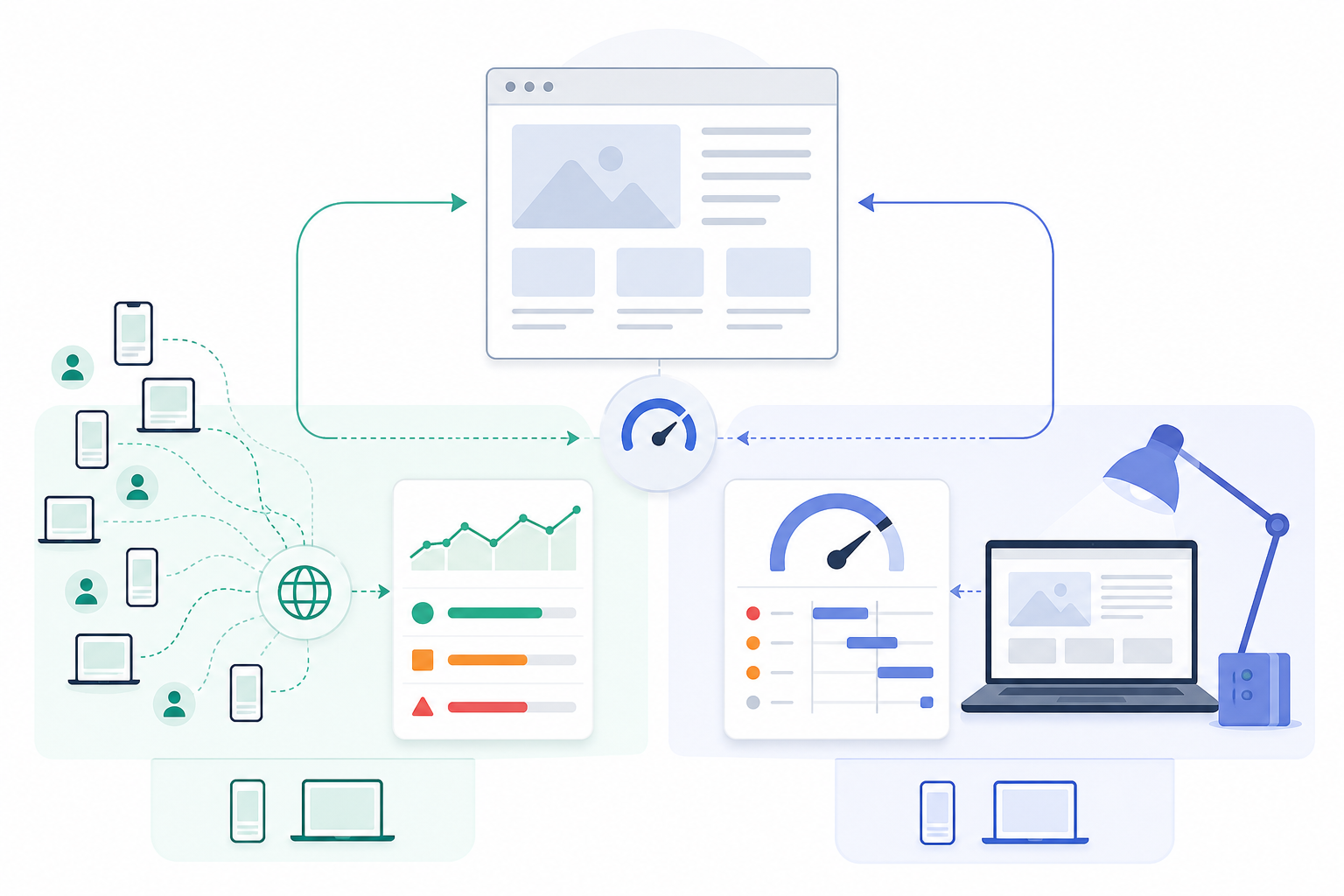
PageSpeed Insights is a Google performance-analysis tool primarily used to evaluate page experience and loading performance, combining Lighthouse-based laboratory diagnostics with field data where available.
Primary SEO Function: Page-performance diagnostics.
Key SEO Features: Core Web Vitals; field performance data; lab diagnostics; performance opportunities; mobile and desktop analysis.
Best Use Cases: Core Web Vitals Investigation; Page-Speed Diagnosis; Template Comparison; Performance Validation.
Distinguishing Capability: Combines user-experience field evidence with controlled lab analysis in one URL-level report.
Pricing and Access: Free.
Main Strengths: Google-aligned performance metrics; easy URL testing; actionable diagnostics.
Main Limitations: One tested URL does not represent an entire site; performance findings do not evaluate content relevance or authority.
Best For: Developers and technical SEOs investigating page-performance problems.
45. Lighthouse
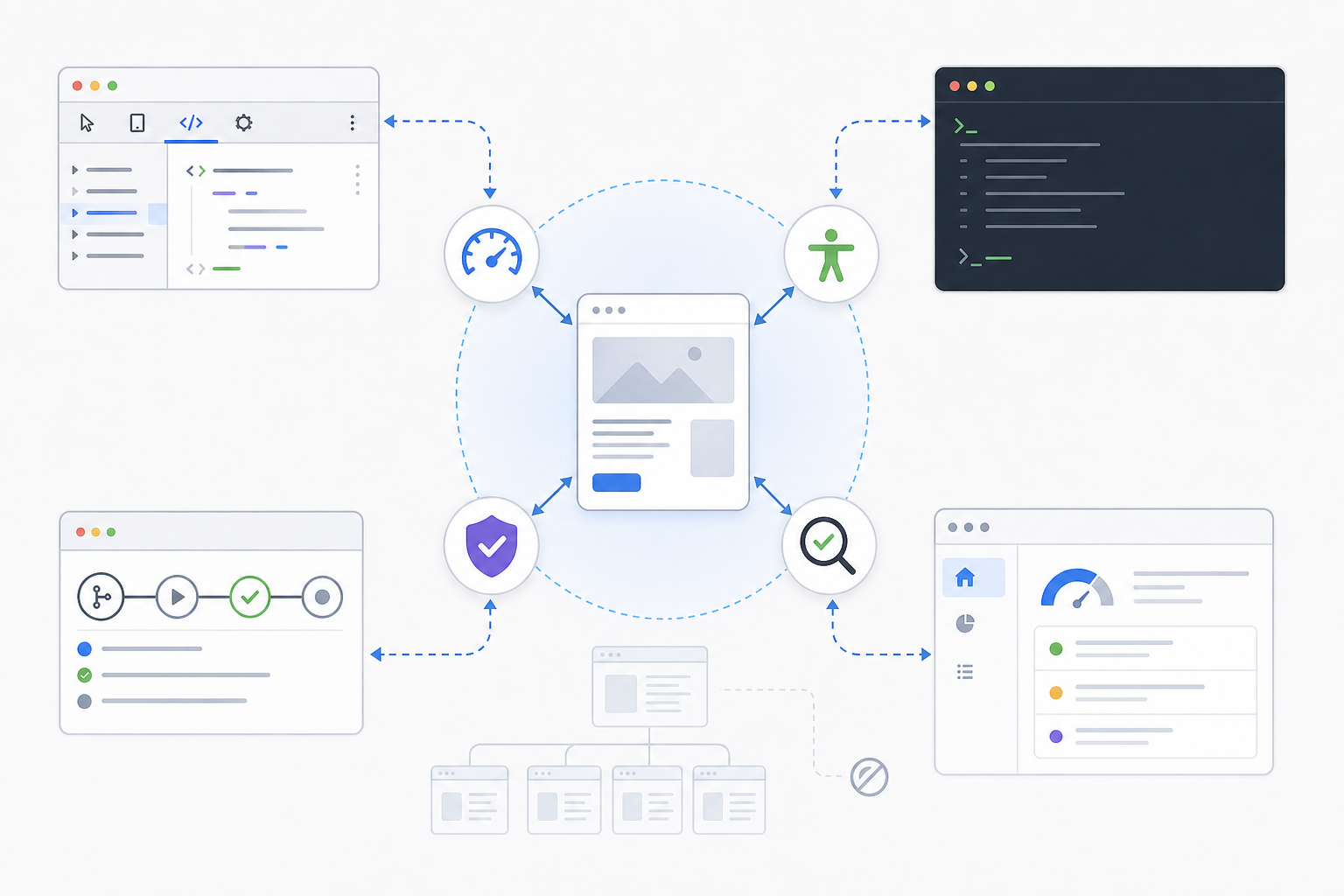
Lighthouse is an open-source automated auditing tool primarily used to evaluate individual webpages for performance, accessibility, best practices, and selected SEO fundamentals.
Primary SEO Function: Repeatable page-level technical auditing.
Key SEO Features: Performance audits; accessibility checks; best-practice checks; SEO audits; command-line and DevTools execution; automated testing support.
Best Use Cases: Development QA; Performance Investigation; Accessibility Screening; Automated Page Checks.
Distinguishing Capability: Lighthouse can run in Chrome DevTools, PageSpeed Insights, the command line, or automated development workflows.
Pricing and Access: Free and open source.
Main Strengths: Developer-friendly; repeatable; broad page-quality checks.
Main Limitations: SEO audit coverage is intentionally limited; passing Lighthouse does not mean a page is fully optimized for search.
Best For: Developers and technical SEOs that need automated page-quality testing.
46. GTmetrix
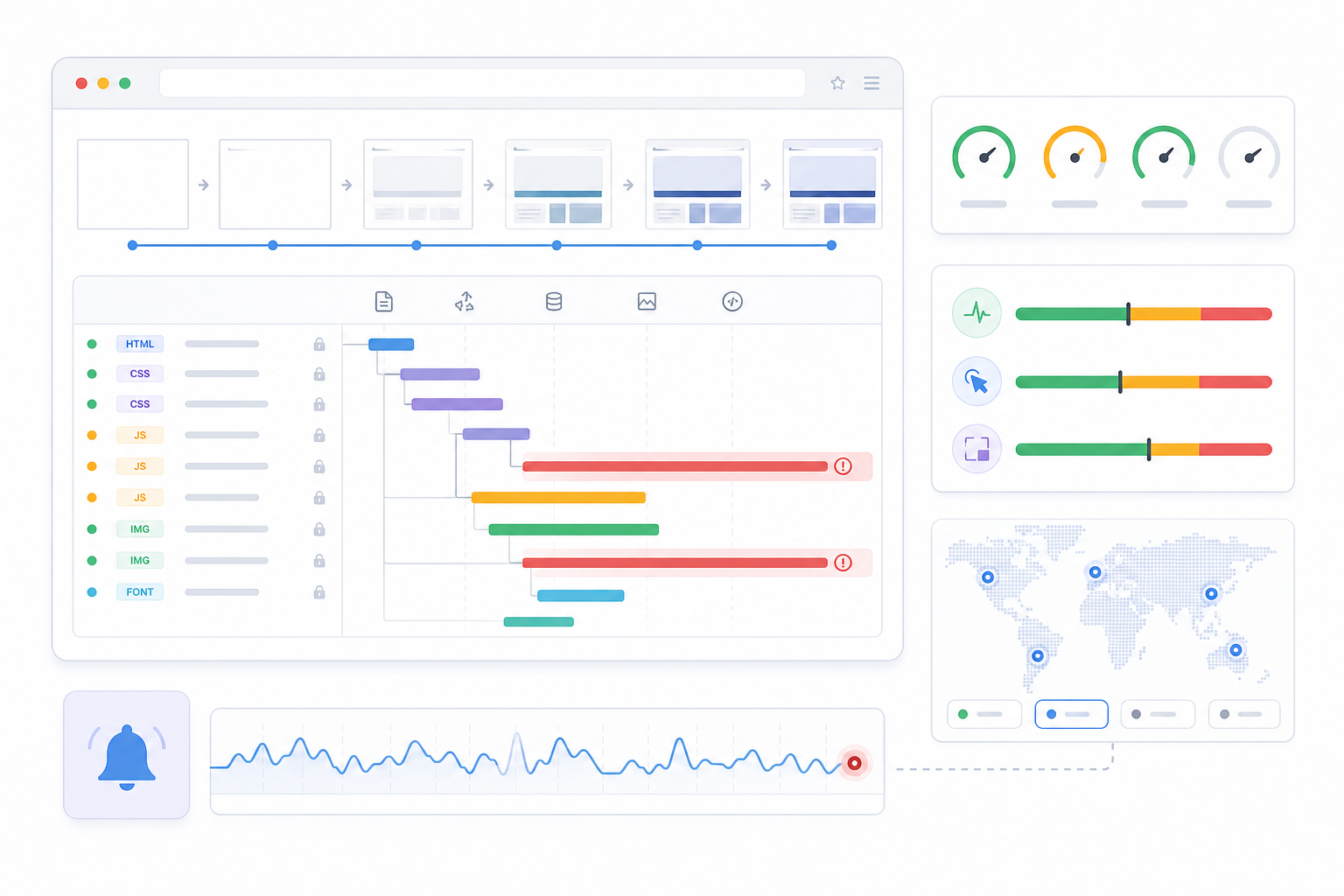
GTmetrix is a web-performance testing platform primarily used to diagnose how pages load and identify speed-related problems, with monitoring, waterfall analysis, Lighthouse metrics, and field data.
Primary SEO Function: Detailed website-performance analysis.
Key SEO Features: Lighthouse performance audits; Core Web Vitals; waterfall charts; performance video; monitoring; global test locations.
Best Use Cases: Speed Diagnosis; Resource-Level Investigation; Performance Monitoring; Regional Page Testing.
Distinguishing Capability: Detailed waterfall and load-sequence analysis complements headline performance metrics. GTmetrix also supports CrUX data, performance monitoring, multiple locations, alerts, and page-load visualization.
Pricing and Access: Freemium and paid.
Main Strengths: Detailed request analysis; monitoring; useful visual diagnostics.
Main Limitations: Performance specialization means it does not replace a full technical SEO crawler or search-performance platform.
Best For: Technical teams investigating page-loading and resource-delivery problems.
47. Clearscope
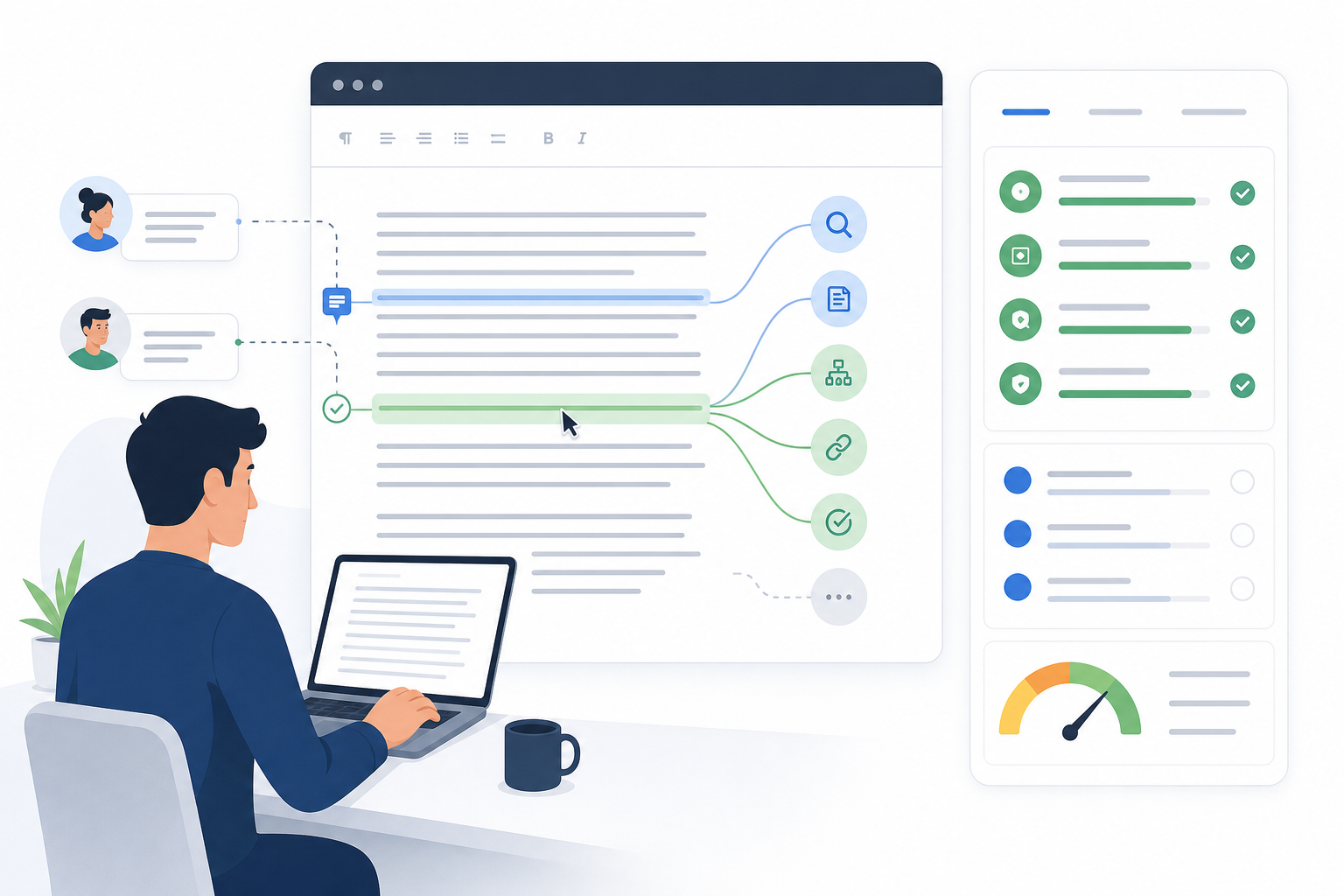
Clearscope is a content optimization platform primarily used to improve topical coverage and editorial relevance for search-focused content.
Primary SEO Function: Content optimization.
Key SEO Features: Content reports; topic recommendations; term coverage; content grading; keyword discovery; writer integrations.
Best Use Cases: New Content Briefing; Existing-Content Optimization; Editorial QA; Topic-Coverage Review.
Distinguishing Capability: Provides real-time topical coverage recommendations while writers work. Its current product emphasizes keyword coverage, content quality, and real-time optimization feedback.
Pricing and Access: Paid; plans vary by usage and team requirements.
Main Strengths: Editorial usability; focused recommendations; clean writer workflow.
Main Limitations: Content grades are proprietary indicators, not Google ranking scores; limited technical and backlink functionality.
Best For: Editorial and SEO teams that regularly optimize high-value written content.
48. MarketMuse
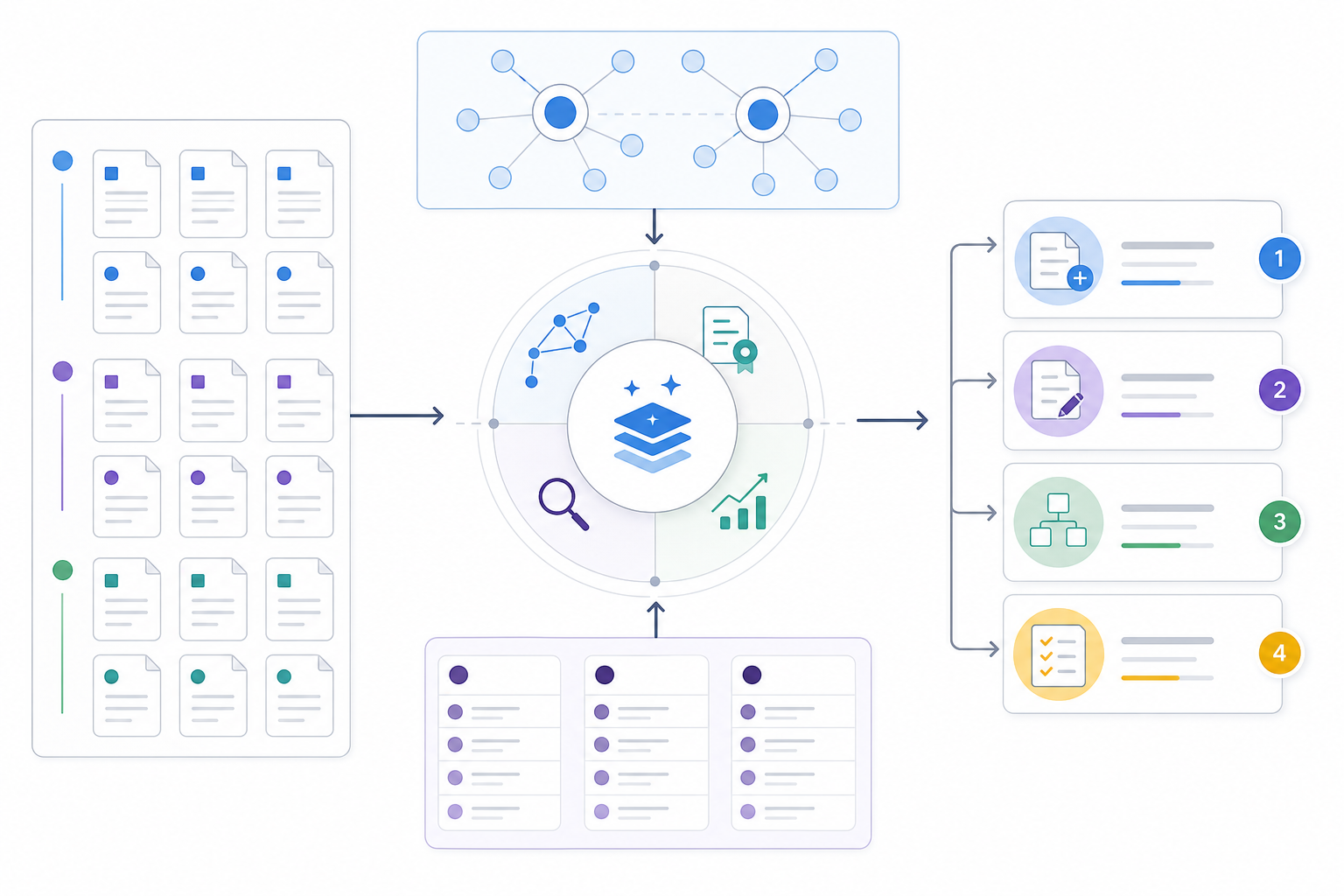
MarketMuse is a content strategy and optimization platform primarily used to decide what content to create, update, and prioritize, with cluster analysis, briefs, content-quality analysis, and competitive research.
Primary SEO Function: Content strategy and topical planning.
Key SEO Features: Content inventory analysis; topic clusters; competitive content analysis; personalized difficulty; content briefs; planning recommendations.
Best Use Cases: Topic-Cluster Planning; Content Inventory Prioritization; Content Briefing; Gap Analysis.
Distinguishing Capability: MarketMuse evaluates a site's existing topical position when prioritizing what to create or improve. Its current product includes content plans, cluster analysis, content briefs, intent analysis, and content-quality analysis.
Pricing and Access: Freemium or paid depending on current plan availability and organizational needs.
Main Strengths: Strategy-level content planning; inventory awareness; topic analysis.
Main Limitations: Requires editorial judgment; proprietary scores and recommendations are not direct Google metrics.
Best For: Content-heavy organizations that need strategic prioritization rather than isolated keyword optimization.
49. Frase
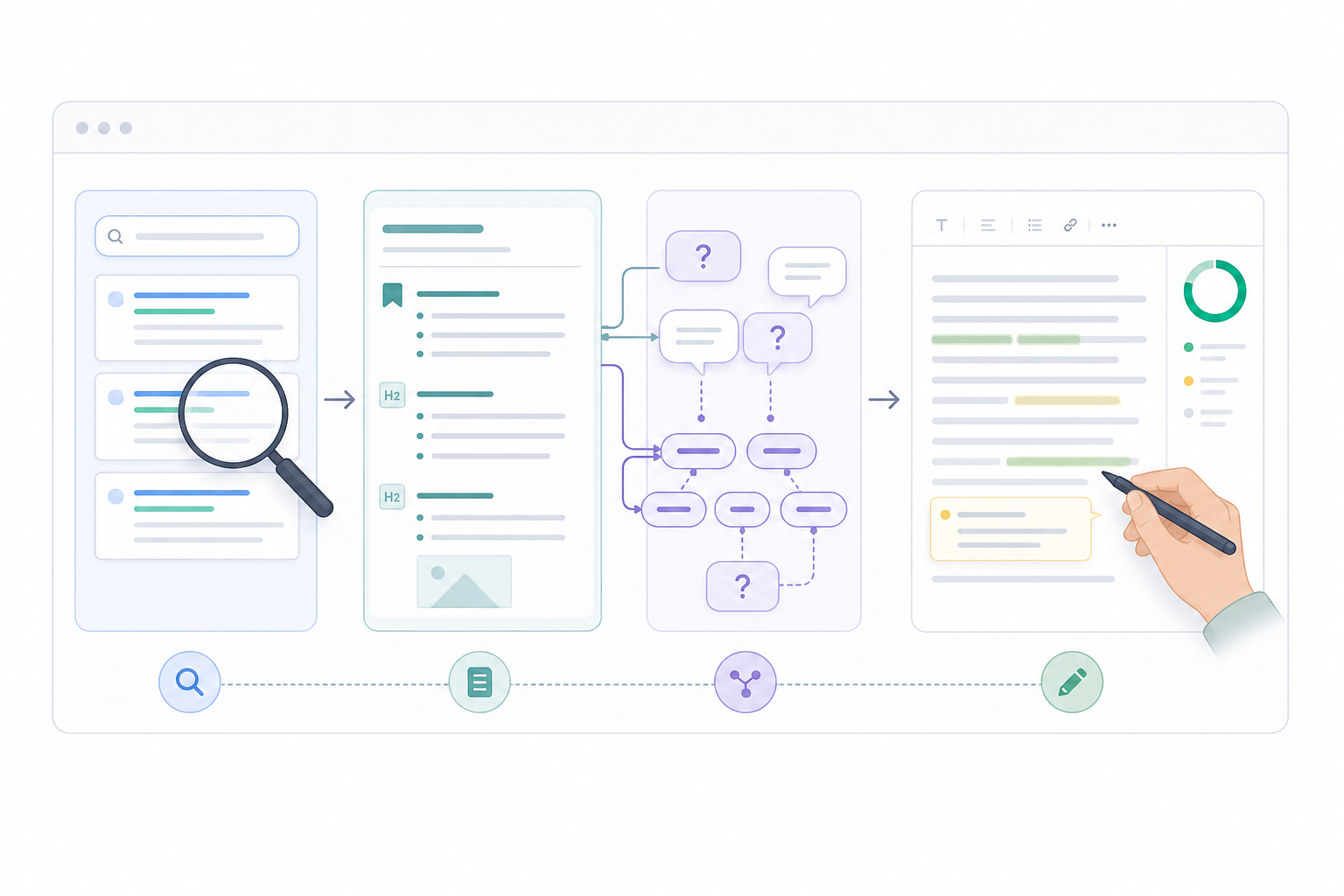
Frase is a content research and optimization platform primarily used to create SERP-informed briefs and optimize written content, with AI-assisted drafting and question research.
Primary SEO Function: Content briefing and optimization.
Key SEO Features: SERP analysis; content briefs; topic recommendations; question research; optimization scoring; AI writing assistance.
Best Use Cases: Brief Creation; Content Research; Existing-Page Optimization; Writer Workflows.
Distinguishing Capability: Combines SERP research, brief creation, and AI-assisted content production in one editorial environment.
Pricing and Access: Paid; pricing varies by plan.
Main Strengths: Fast brief generation; integrated writing workflow; SERP-based research.
Main Limitations: AI and optimization scores require editorial verification; not designed for deep technical or backlink analysis.
Best For: Content teams that need efficient research-to-draft workflows.
50. PageOptimizer Pro
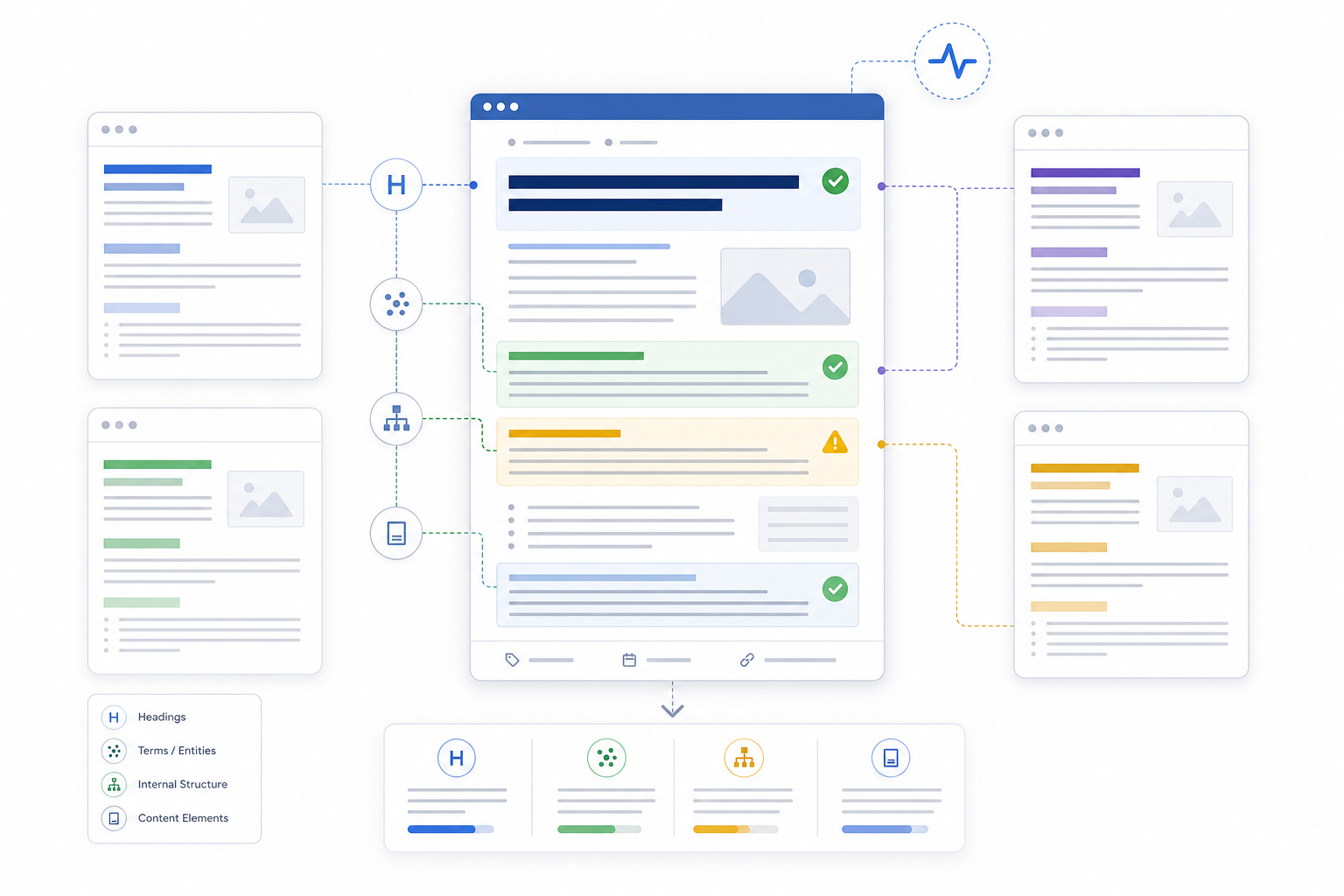
PageOptimizer Pro is an on-page SEO platform primarily used to compare page-level signals with competing search results and generate optimization recommendations.
Primary SEO Function: Detailed on-page optimization.
Key SEO Features: On-page reports; structural signal analysis; term and entity recommendations; content optimization; page monitoring; AI-assisted writing tools.
Best Use Cases: Existing-Page Optimization; Competitive On-Page Review; Content QA; Page-Level Monitoring.
Distinguishing Capability: Maintains a narrower emphasis on page-level structural and content signals rather than broader campaign management.
Pricing and Access: Paid. Its current published Basic plan starts at $40 per month, with higher plans providing additional or unlimited usage.
Main Strengths: Detailed page-level recommendations; focused optimization workflow; monitoring options.
Main Limitations: Recommendations remain modeled analysis rather than direct ranking requirements; limited off-page and broad competitor functionality.
Best For: SEOs that want a specialist tool for detailed on-page optimization.
51. Yoast SEO
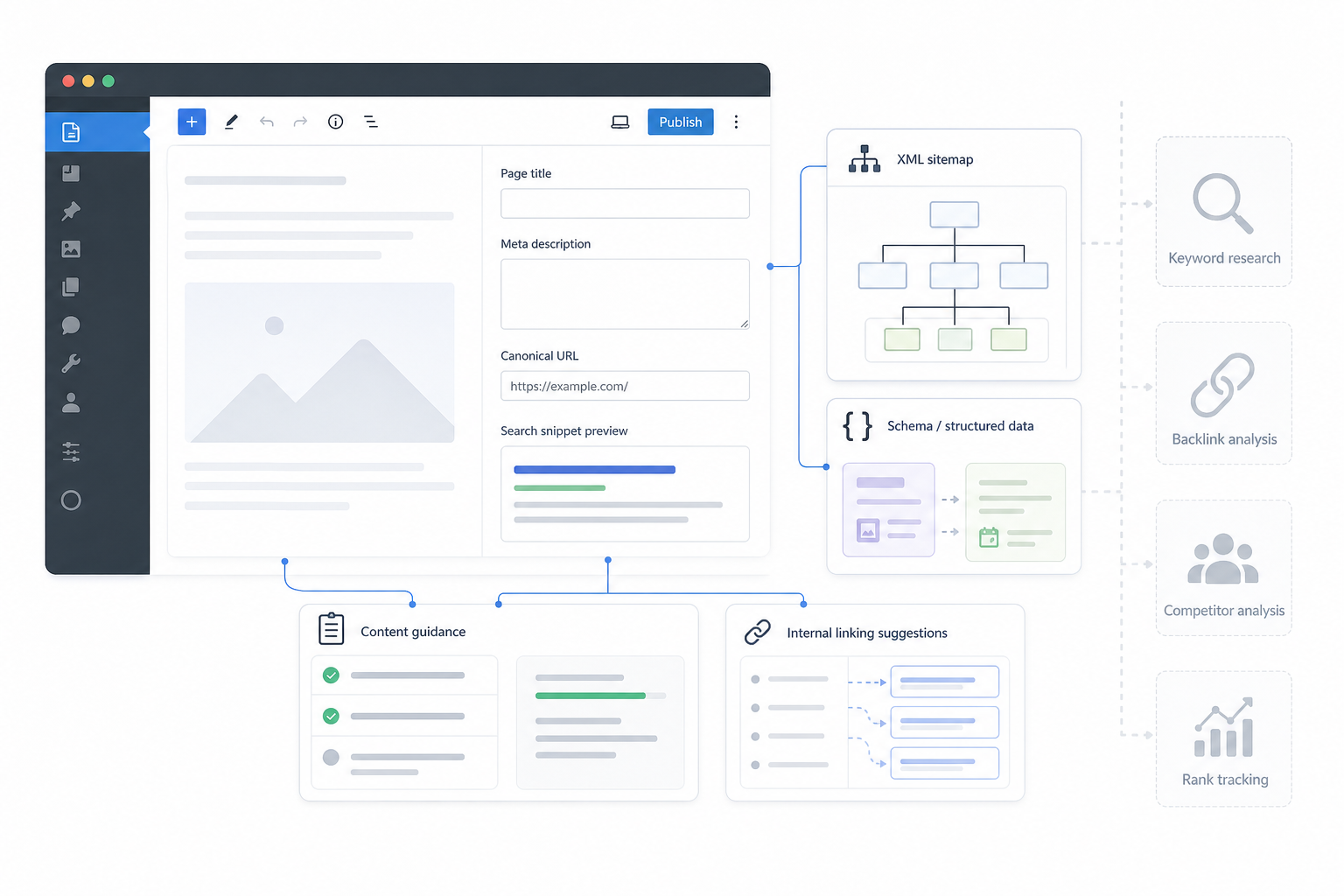
Yoast SEO is a WordPress SEO plugin primarily used to implement page-level metadata and technical SEO settings inside the CMS, with sitemap, schema, content-assistance, and premium internal-link features.
Primary SEO Function: WordPress SEO implementation.
Key SEO Features: Title and meta controls; XML sitemaps; canonical settings; schema output; content checks; premium internal-link assistance.
Best Use Cases: Metadata Management; Basic Technical Configuration; WordPress Sitemap Management; Editorial SEO Guidance.
Distinguishing Capability: Deep WordPress integration with a long-established CMS workflow for editors and site owners.
Pricing and Access: Freemium and paid Premium edition.
Main Strengths: Strong WordPress compatibility; approachable implementation; broad ecosystem.
Main Limitations: Plugin scores are not Google ranking factors; keyword, backlink, competitor, and advanced rank data require other tools.
Best For: WordPress websites that need reliable SEO implementation controls inside the CMS.
52. Rank Math
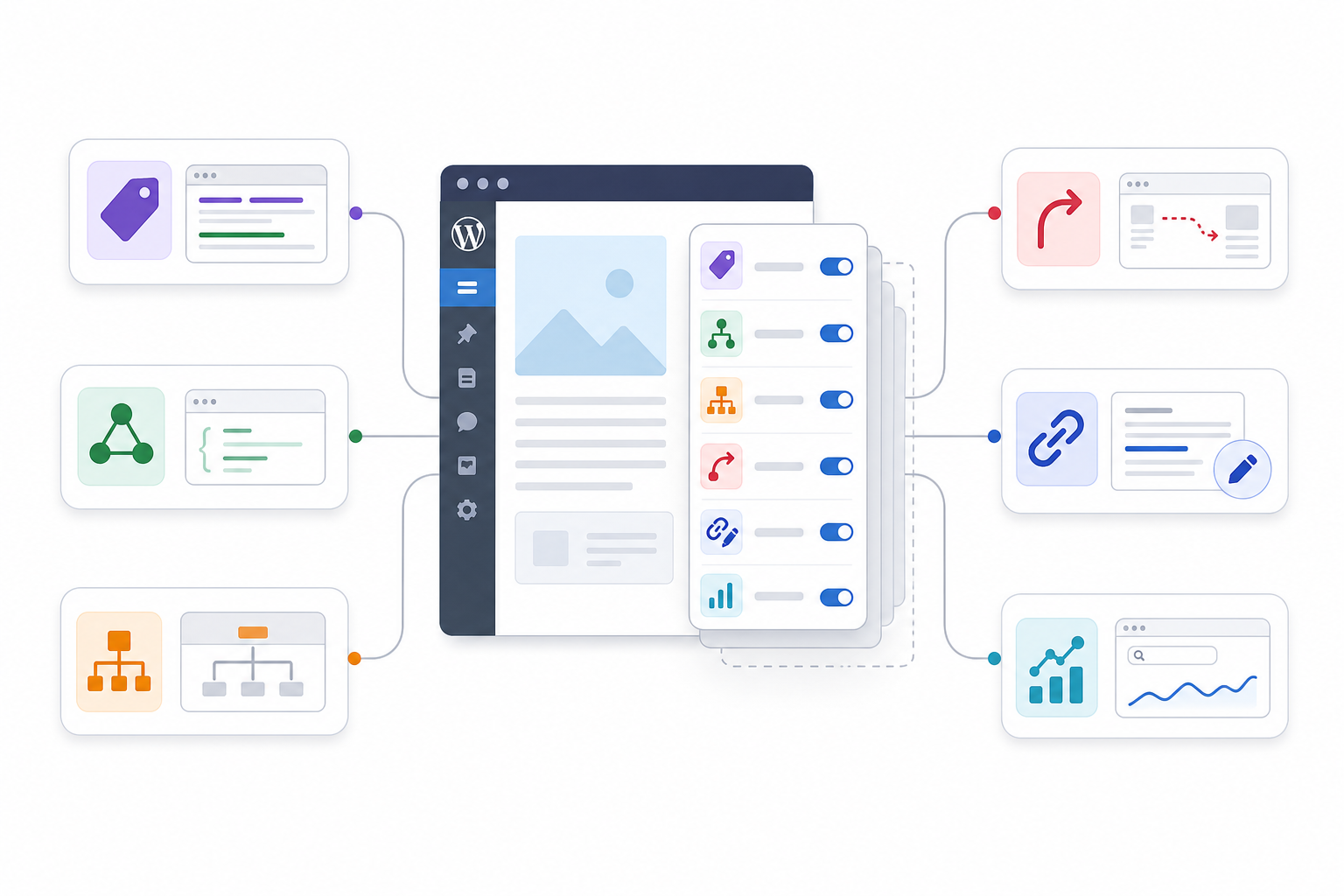
Rank Math is a WordPress SEO plugin primarily used for page-level and technical SEO configuration, with schema, redirects, sitemaps, analytics integrations, content assistance, and modular functionality.
Primary SEO Function: Feature-rich WordPress SEO implementation.
Key SEO Features: Metadata controls; schema generation; XML sitemaps; redirects; internal-link and content assistance; Search Console and analytics integrations.
Best Use Cases: WordPress On-Page Management; Schema Implementation; Redirect Management; Multi-Feature CMS SEO.
Distinguishing Capability: Provides a large collection of WordPress SEO functions within a modular plugin structure.
Pricing and Access: Freemium and paid.
Main Strengths: Broad CMS functionality; extensive schema options; modular feature set.
Main Limitations: The number of options can increase configuration complexity; scoring systems remain advisory rather than ranking signals.
Best For: WordPress users that want broad SEO configuration from one plugin.
53. All in One SEO
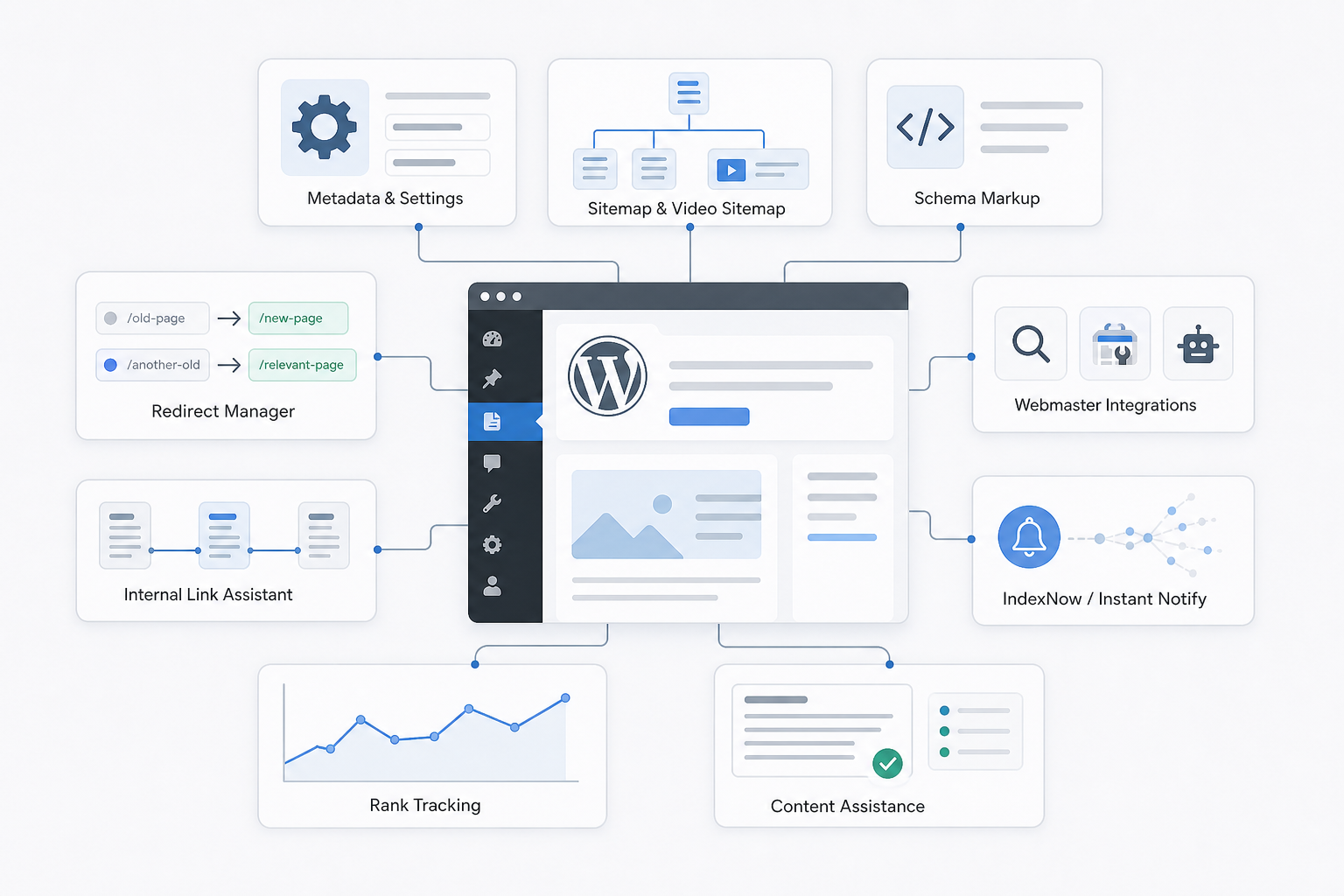
All in One SEO is a WordPress SEO plugin primarily used to manage metadata, sitemaps, schema, redirects, and other search-related CMS settings, with additional link, ranking, and editorial tools.
Primary SEO Function: WordPress SEO configuration and implementation.
Key SEO Features: XML and video sitemaps; schema; Redirection Manager; Link Assistant; webmaster integrations; rank tracking and content-assistance features.
Best Use Cases: WordPress Technical Setup; Sitemap Management; Internal-Link Assistance; Redirect Management.
Distinguishing Capability: AIOSEO combines core WordPress SEO configuration with additional implementation features such as Link Assistant, redirects, IndexNow, rank tracking, and specialized sitemaps.
Pricing and Access: Freemium and paid.
Main Strengths: Broad WordPress feature set; implementation-focused workflow; useful site-management modules.
Main Limitations: Commercial SEO research and backlink intelligence remain outside the plugin's central purpose; automated suggestions require review.
Best For: WordPress businesses that want an integrated CMS SEO toolkit.
54. AgencyAnalytics
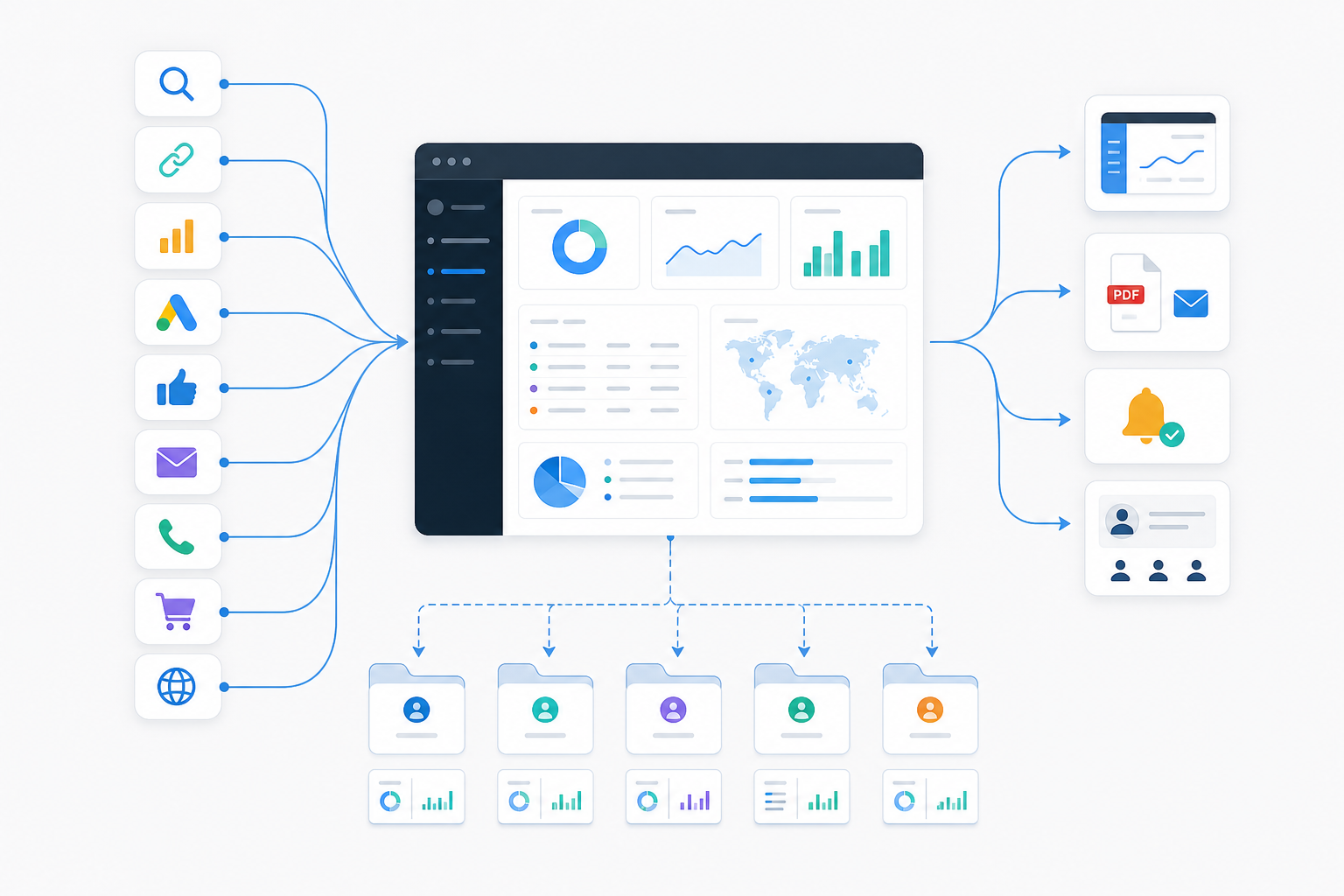
AgencyAnalytics is a marketing reporting platform primarily used to consolidate SEO and other marketing data into client dashboards and scheduled reports.
Primary SEO Function: Agency reporting.
Key SEO Features: Multi-source integrations; custom dashboards; automated reports; rank tracking; backlink reporting; client management.
Best Use Cases: Client Reporting; Multi-Channel Dashboards; Automated Monthly Reports; Agency Performance Monitoring.
Distinguishing Capability: AgencyAnalytics is built around multi-client reporting rather than acting as the original source of every metric. Its current platform supports more than 85 data sources, SEO dashboards, recurring reports, goals, alerts, and client-management functions.
Pricing and Access: Paid with trial access.
Main Strengths: Reporting automation; agency workflows; large integration ecosystem.
Main Limitations: Underlying data quality depends on connected sources; it does not replace specialist SEO research tools.
Best For: Agencies that need repeatable client dashboards and reporting at scale.
55. Respona
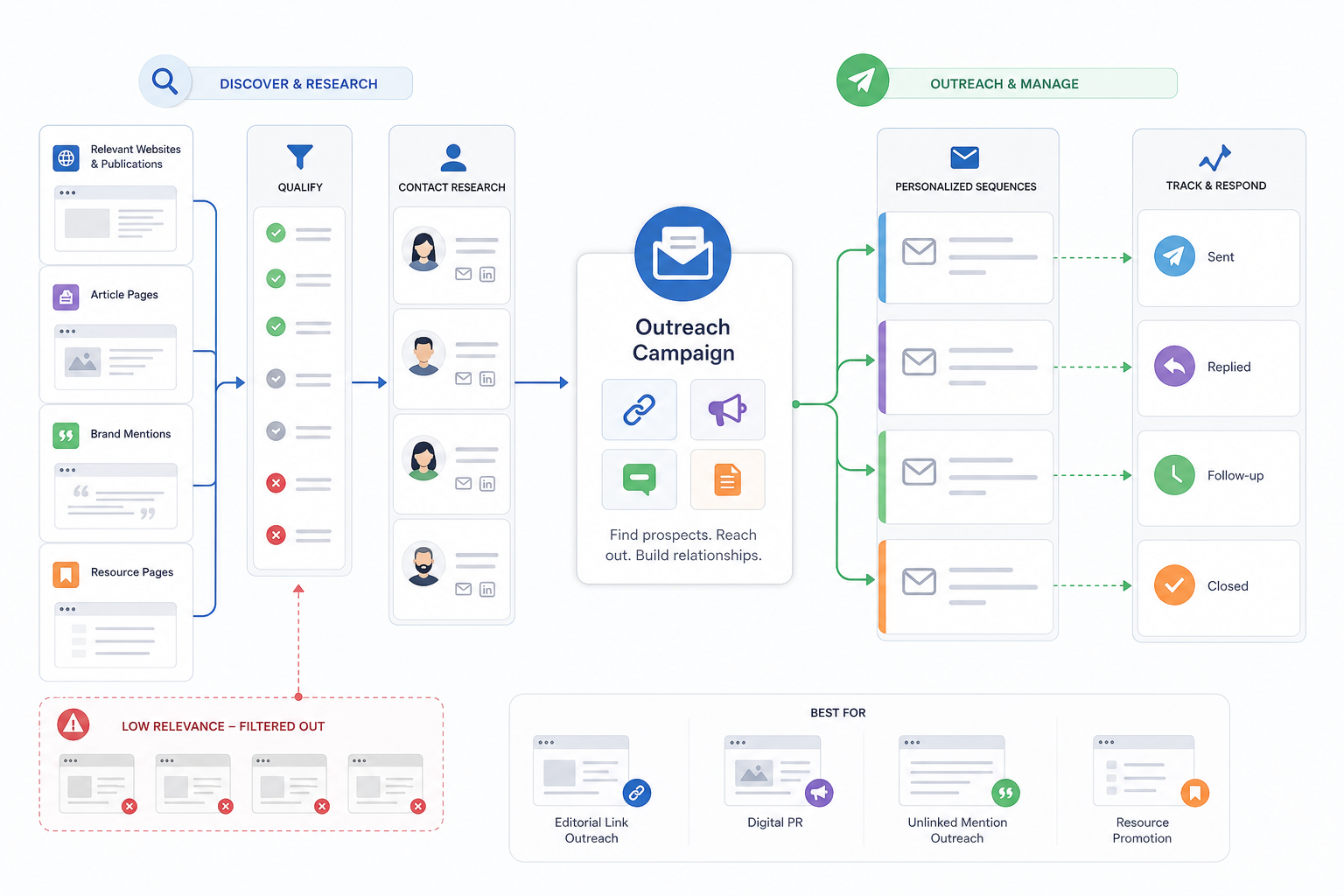
Respona is an outreach platform primarily used for link building, digital PR, prospect research, and campaign communication.
Primary SEO Function: Off-page outreach management.
Key SEO Features: Prospect discovery; contact research; email sequences; personalization; campaign management; outreach tracking.
Best Use Cases: Editorial Link Outreach; Digital PR Campaigns; Unlinked Mention Outreach; Resource Promotion.
Distinguishing Capability: Combines prospect discovery with outreach workflow management rather than functioning only as a backlink database.
Pricing and Access: Paid; pricing varies by plan.
Main Strengths: Integrated prospecting; structured outreach campaigns; useful personalization workflow.
Main Limitations: Outreach software cannot create editorial fit or guarantee responses; poor prospect selection still produces poor campaigns.
Best For: Link-building and PR teams managing repeatable outreach campaigns.
56. BuzzSumo
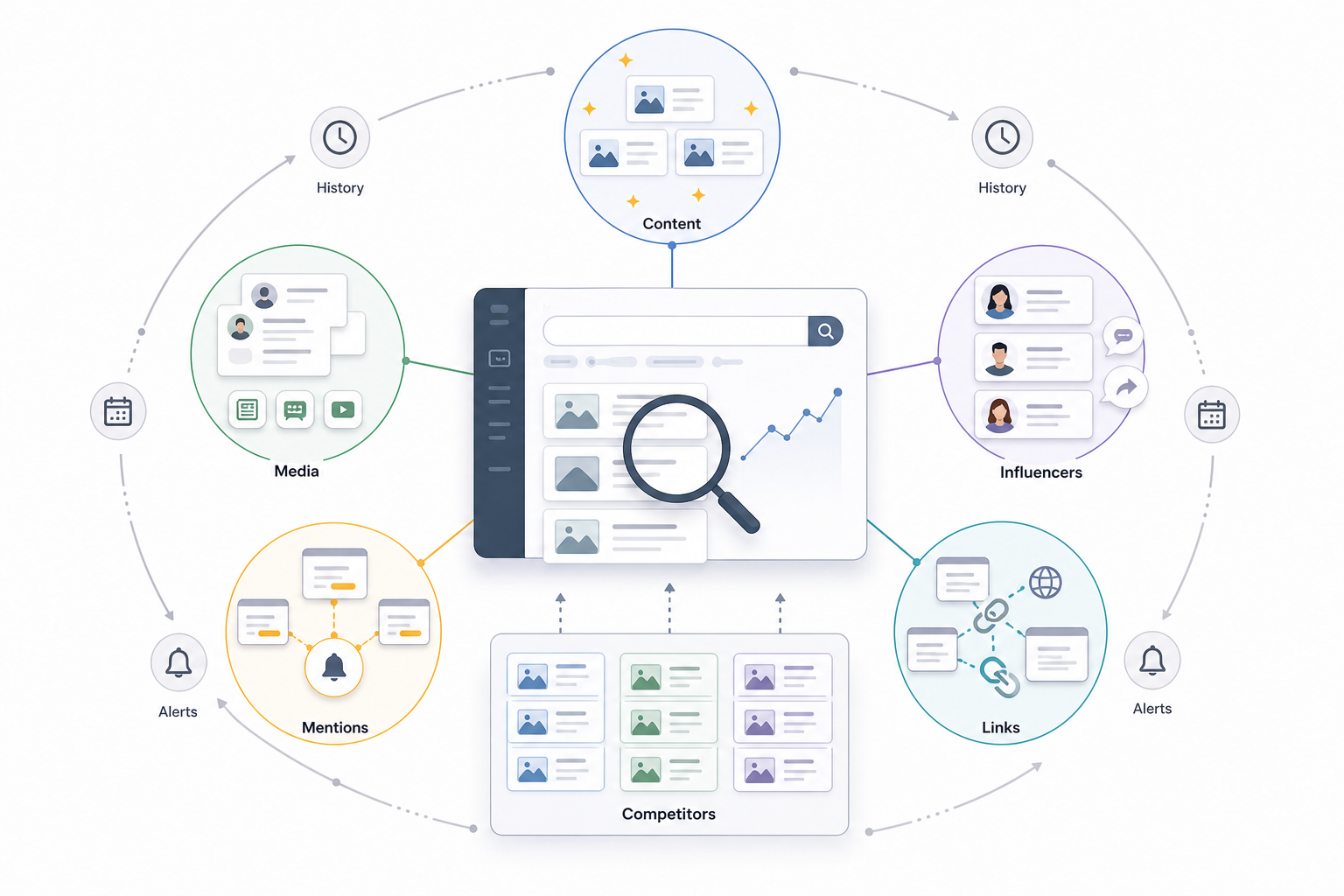
BuzzSumo is a content and media research platform primarily used to discover popular content, journalists, publishers, influencers, and external mentions.
Primary SEO Function: Content discovery and digital PR research.
Key SEO Features: Content Research; Content Discovery; journalist and influencer discovery; mention monitoring; backlink discovery; alerts.
Best Use Cases: Digital PR Research; Content Ideation; Publisher Discovery; Competitor Content Monitoring.
Distinguishing Capability: Combines large-scale content-performance data with media and monitoring workflows. BuzzSumo currently provides content research, journalist discovery, monitoring, backlink alerts, and multi-year content-performance analysis.
Pricing and Access: Paid with free trial or limited public research functionality.
Main Strengths: Content discovery; media research; monitoring; historical engagement data.
Main Limitations: Social engagement does not directly equal SEO value; backlink functionality is not as deep as specialist link platforms.
Best For: Content marketing and digital PR teams researching what earns attention and external coverage.
57. LinkResearchTools
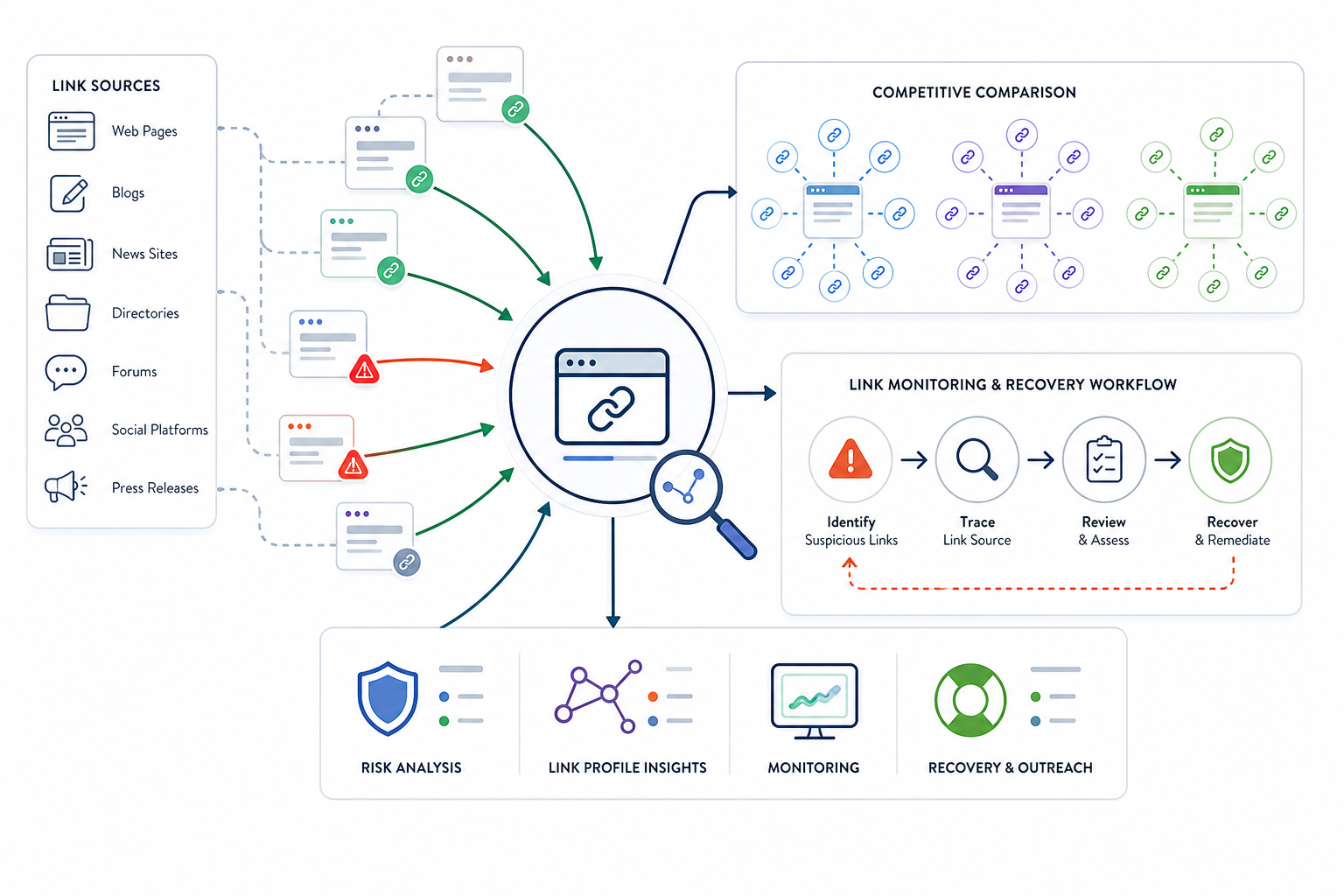
LinkResearchTools is a specialist backlink-analysis platform primarily used for detailed link auditing, risk investigation, competitive link research, and link-recovery work.
Primary SEO Function: Advanced backlink auditing.
Key SEO Features: Link-profile analysis; link-risk indicators; competitive link research; link monitoring; recovery workflows; multi-source link data.
Best Use Cases: Complex Link Audits; Manual-Action Investigation; Competitive Link Analysis; Link Recovery and Monitoring.
Distinguishing Capability: Concentrates heavily on forensic link-profile analysis rather than general SEO management.
Pricing and Access: Paid; pricing varies by package and requirements.
Main Strengths: Deep backlink analysis; link-risk workflows; specialist off-page diagnostics.
Main Limitations: Third-party risk scores are not definitive evidence that Google considers a link harmful; specialized complexity exceeds ordinary link-monitoring needs.
Best For: Experienced off-page and technical SEO teams handling complicated backlink investigations.
58. Search Atlas
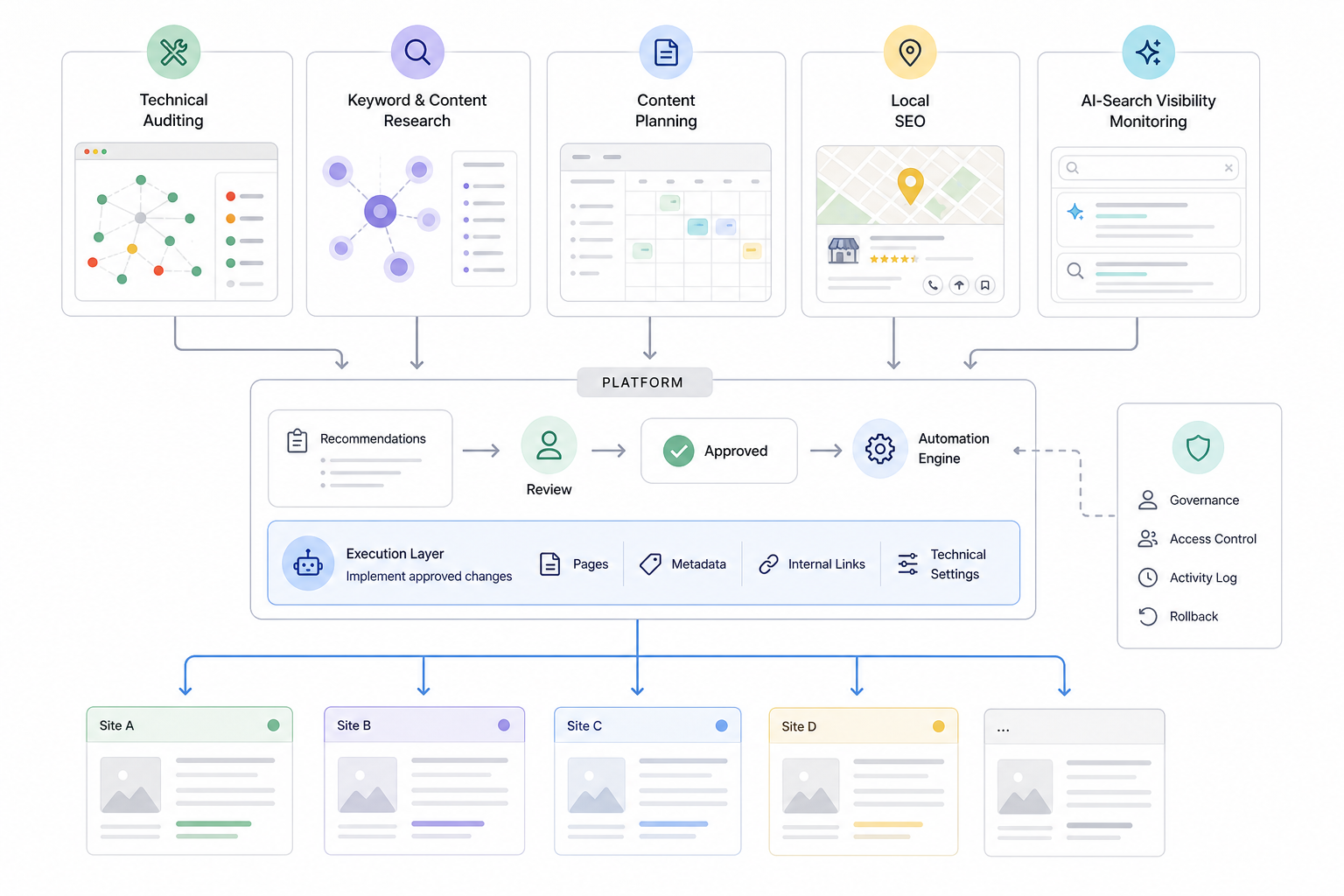
Search Atlas is an all-in-one SEO and AI marketing platform primarily used for SEO research, content, technical auditing, local SEO, and automated implementation.
Primary SEO Function: Integrated SEO analysis and automation.
Key SEO Features: OTTO SEO automation; Site Auditor; keyword and content research; content planning; local SEO; AI-search visibility monitoring.
Best Use Cases: Multi-Site SEO Management; Automated On-Page and Technical Implementation; Agency Workflows; AI-Search Monitoring.
Distinguishing Capability: Its OTTO system is positioned as an execution layer that can deploy selected SEO changes rather than only recommending them. The current platform also includes site auditing, content tools, local functions, AI-search visibility, and agency white labeling.
Pricing and Access: Paid; current published platform pricing starts at $99 per month for the referenced plan.
Main Strengths: Broad functionality; implementation automation; agency features.
Main Limitations: Automated changes require governance and validation; one platform's proprietary recommendations should not replace SEO judgment.
Best For: Agencies and teams that want broad SEO functionality with a strong automation layer.
59. SEOquake
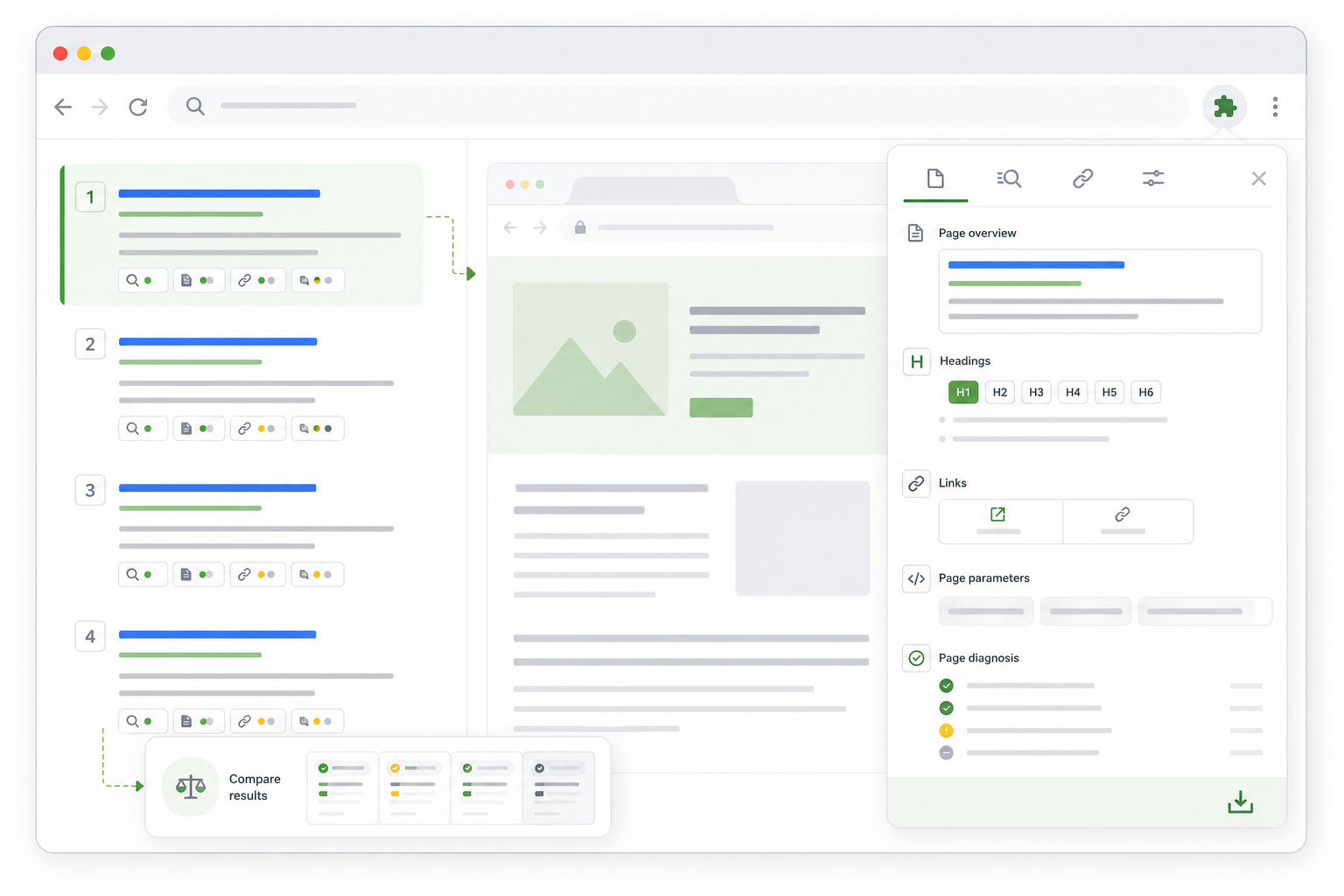
SEOquake is a browser extension primarily used for quick page and SERP-level SEO inspection, providing on-page parameters and third-party metrics while browsing.
Primary SEO Function: Browser-based SEO inspection.
Key SEO Features: SERP overlay; page diagnosis; link information; parameter comparison; export functions; quick on-page checks.
Best Use Cases: Fast SERP Reviews; Competitor Page Inspection; Prospect Research; Lightweight On-Page Checks.
Distinguishing Capability: Places SEO information directly inside normal browser and SERP research rather than requiring a separate project interface.
Pricing and Access: Free.
Main Strengths: Fast; lightweight; convenient for ad hoc research.
Main Limitations: Not designed for deep site crawling, long-term project management, or full competitive intelligence.
Best For: SEOs that want quick browser-level inspection during everyday research.
60. Keywords Everywhere
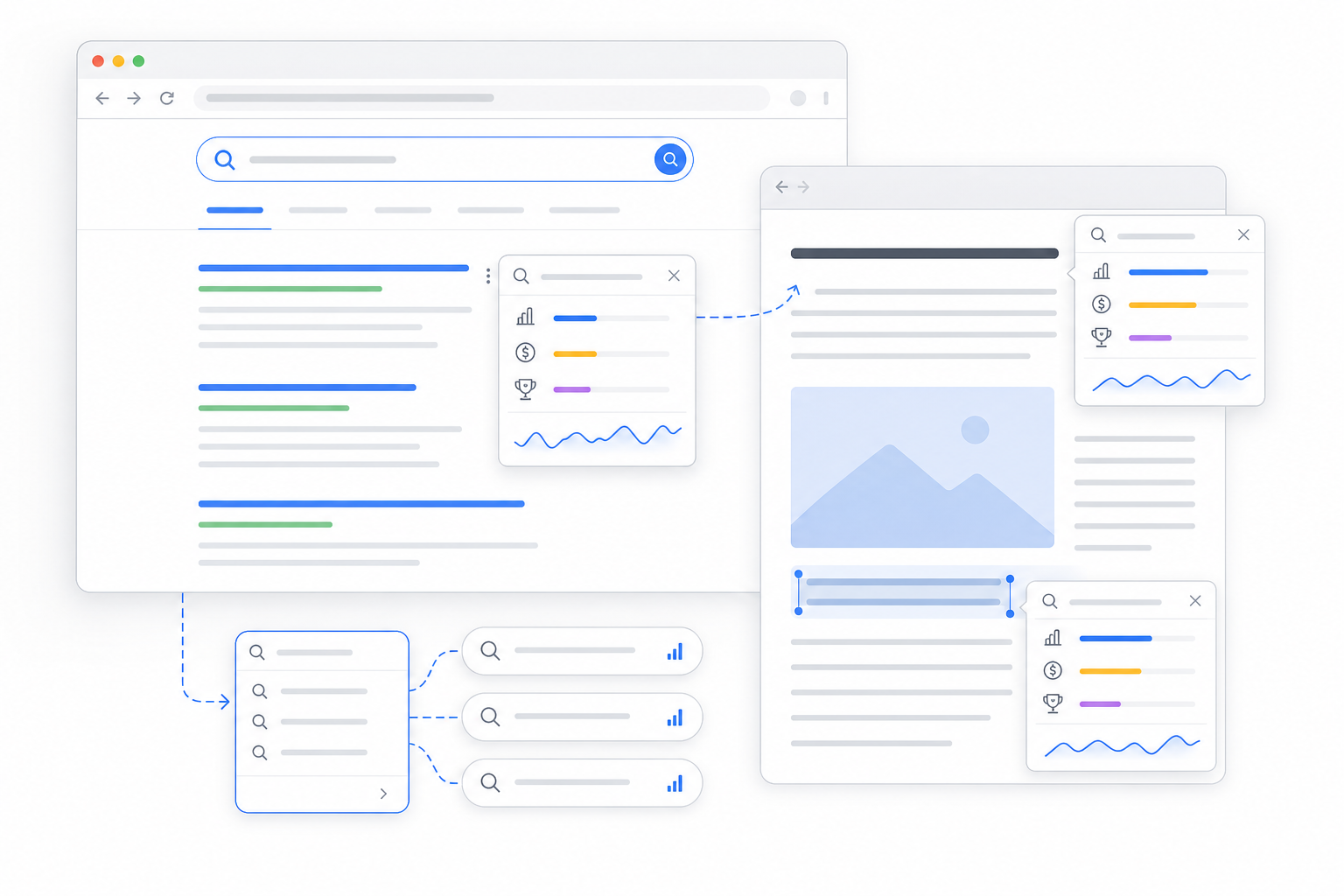
Keywords Everywhere is a browser-based keyword research tool primarily used to display keyword metrics and related search ideas directly within common search and browsing interfaces.
Primary SEO Function: In-browser keyword research.
Key SEO Features: Search volume estimates; CPC data; competition information; related keywords; trend data; browser overlays.
Best Use Cases: Quick Keyword Validation; SERP Research; Related-Query Discovery; Everyday Content Research.
Distinguishing Capability: Keyword information appears directly inside the browsing workflow, reducing the need to open a separate SEO platform for every query.
Pricing and Access: Paid or credit/subscription-based depending on current plan structure.
Main Strengths: Convenience; low-friction research; useful related-query discovery.
Main Limitations: Primarily keyword-focused; metrics remain third-party estimates and do not replace full competitor, backlink, or technical analysis.
Best For: Writers, marketers, and SEOs that want lightweight keyword data while browsing.
What Are SEO Tools Used For?
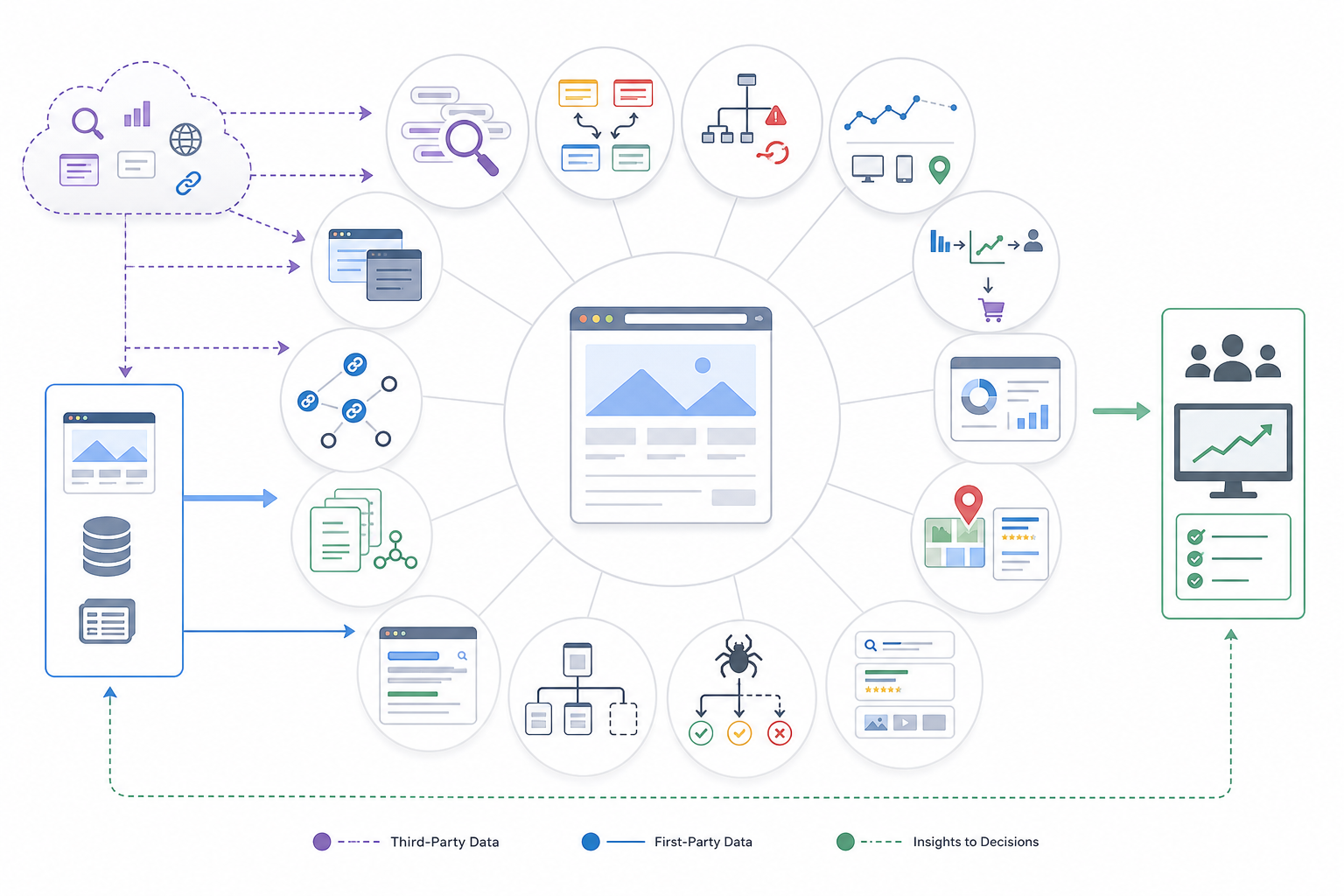
SEO tools are used to collect, analyze, organize, and monitor search-related evidence so SEO teams can make better decisions about keywords, content, technical health, rankings, competitors, backlinks, traffic, and business performance. Different tools specialize in different functions, so one platform does not need to perform every task.
- Keyword Research: Discover search queries, estimate demand, identify related terms, assess competition, and support page targeting. Search volume and difficulty values from third-party platforms remain estimates.
- Search Intent Analysis: Classify or investigate whether searches are informational, navigational, commercial, or transactional. Automated labels work best as supporting evidence rather than final classifications.
- Technical SEO Auditing: Identify broken links, redirects, crawlability problems, duplicate elements, metadata issues, rendering problems, and other technical conditions.
- Rank Tracking: Monitor selected queries across search engines, devices, locations, and periods where supported.
- Competitor Analysis: Compare domains across keywords, ranking pages, content, backlinks, visibility, and modeled traffic.
- Backlink Analysis: Identify referring domains, new and lost links, anchors, linked pages, and competitor link gaps.
- Content Analysis: Compare topic coverage, competing pages, structure, and related concepts when planning or improving content.
- On-Page SEO Analysis: Review titles, headings, metadata, images, internal links, schema, and other page-level elements.
- Internal Linking Analysis: Map internal relationships, find orphan or underlinked pages, review crawl depth, and surface candidate source-to-target links.
- Website Crawling and Indexation Analysis: Determine which URLs are discoverable, crawlable, redirected, canonicalized, excluded, or otherwise affected by technical signals.
- SERP Analysis: Review ranking pages, result types, competitors, and SERP features around important searches.
- Performance Measurement: Measure impressions, clicks, organic traffic, landing-page results, conversions, and revenue where appropriate.
- SEO Reporting: Bring rankings, search performance, technical findings, backlinks, and business outcomes into dashboards or recurring reports.
- Local SEO Management: Monitor local rankings, listings, reviews, citations, and location-specific search visibility where local search matters.
- Opportunity Discovery: Surface keyword gaps, declining pages, content gaps, technical issues, link opportunities, and pages with unrealized potential.
Tools provide evidence. SEO strategy determines which findings actually deserve implementation.
First-party platforms such as Search Console and GA4 measure activity associated with the website itself. Third-party tools commonly model keywords, backlinks, competitors, authority, and market visibility from their own datasets. Those two forms of evidence answer different questions and should not be treated as interchangeable.
How Do You Choose the Right SEO Tool?
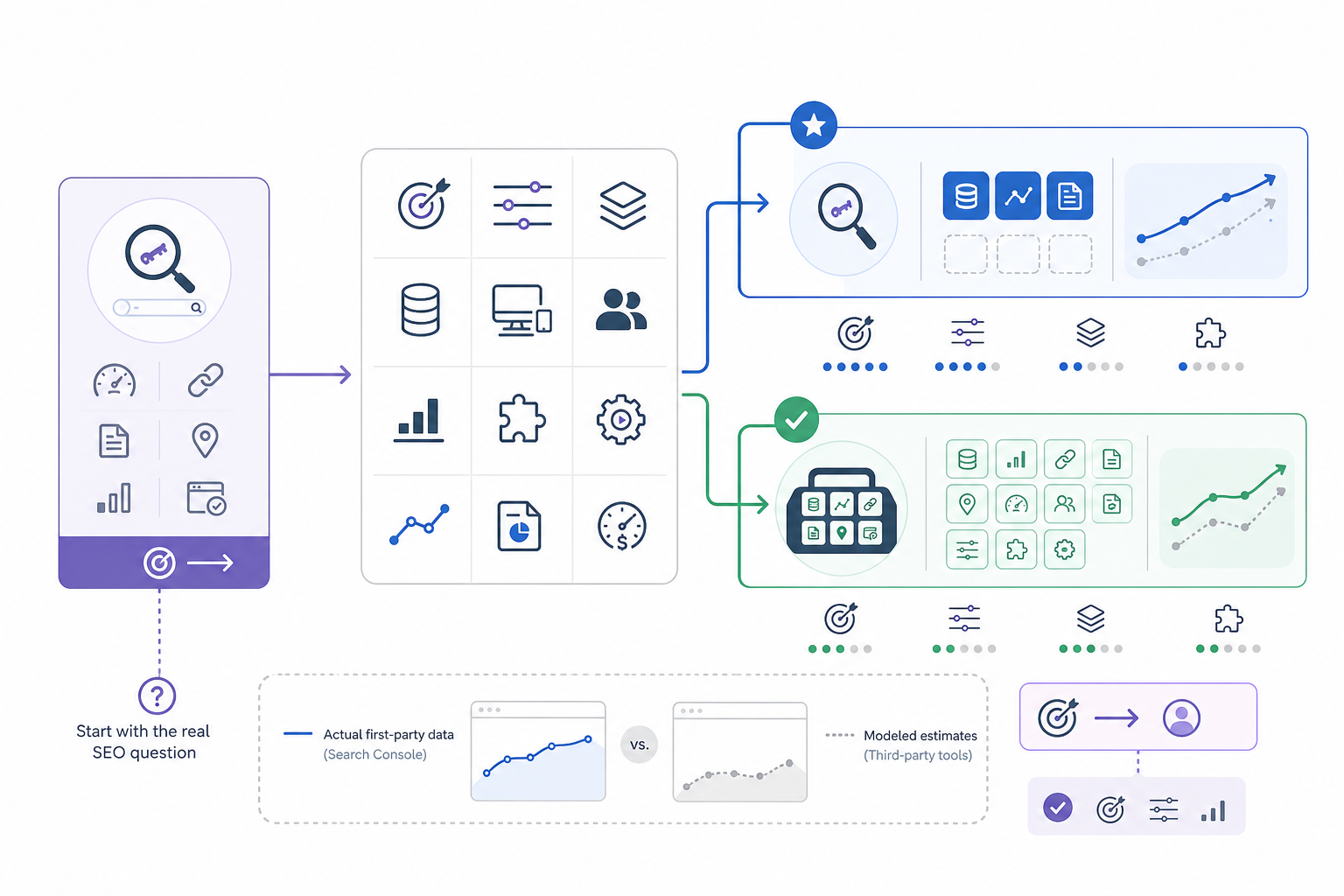
The right SEO tool is chosen by matching the platform's capabilities, data, operational fit, scale, integrations, and cost with the SEO problem you actually need to solve. The platform with the most features is not automatically the most suitable.
| Selection Criterion | What to Evaluate | Why It Matters |
|---|---|---|
| Primary SEO Goal | Keyword research, crawling, ranks, backlinks, content, reporting, local SEO, or broader management | Prevents paying for functions unrelated to the actual objective |
| Required Capability | Must-have functionality and specialist depth | A feature existing does not mean it is deep enough for the workflow |
| Tool Type | Specialist vs all-in-one | Determines whether depth or consolidation matters more |
| Data Source | First-party, crawler-generated, or third-party modeled data | Prevents direct measurements and estimates from being compared incorrectly |
| Website Fit | URL volume, CMS, ecommerce, SaaS, publisher, local, international | Different websites create different analysis requirements |
| Team Fit | Solo user, content team, technical team, agency, enterprise | Determines required usability, seats, permissions, and collaboration |
| Scale and Limits | Tracked keywords, crawled URLs, projects, exports, API calls, competitors | Headline features have limited value when practical usage limits are too low |
| Integrations | Search Console, analytics, CMS, BI, data warehouse, reporting tools | Reduces duplicate work and fragmented data |
| Automation | Scheduled crawls, alerts, reports, recurring tracking, API workflows | Provides value when the task is repetitive enough to justify automation |
| Historical Data | Rankings, links, competitors, traffic estimates, audits | Important for trend analysis, migrations, and long-term benchmarking |
| Reporting | Exports, dashboards, white labeling, scheduled reports | Matters especially for agencies and stakeholder-heavy organizations |
| Cost | Subscription, usage fees, seats, add-ons, operational savings | Determines whether additional capability produces enough value |
Choose a specialist tool when one discipline requires greater depth. Screaming Frog or Sitebulb can provide more technical-control depth than a broad suite, while AccuRanker can be more appropriate when ranking measurement is the primary requirement.
Choose an all-in-one tool when consolidating research, rankings, auditing, competitor intelligence, and reporting reduces enough operational complexity to justify some compromise in specialist depth.
Data quality also matters. Search Console should usually remain the primary source for actual Google Search clicks and impressions on your own site even when a commercial suite produces attractive visibility estimates.
A useful tool is the one that answers a real SEO question accurately enough, fits the team's workflow, and produces evidence that changes a decision.
Which SEO Tools Work Best for Different SEO Tasks?
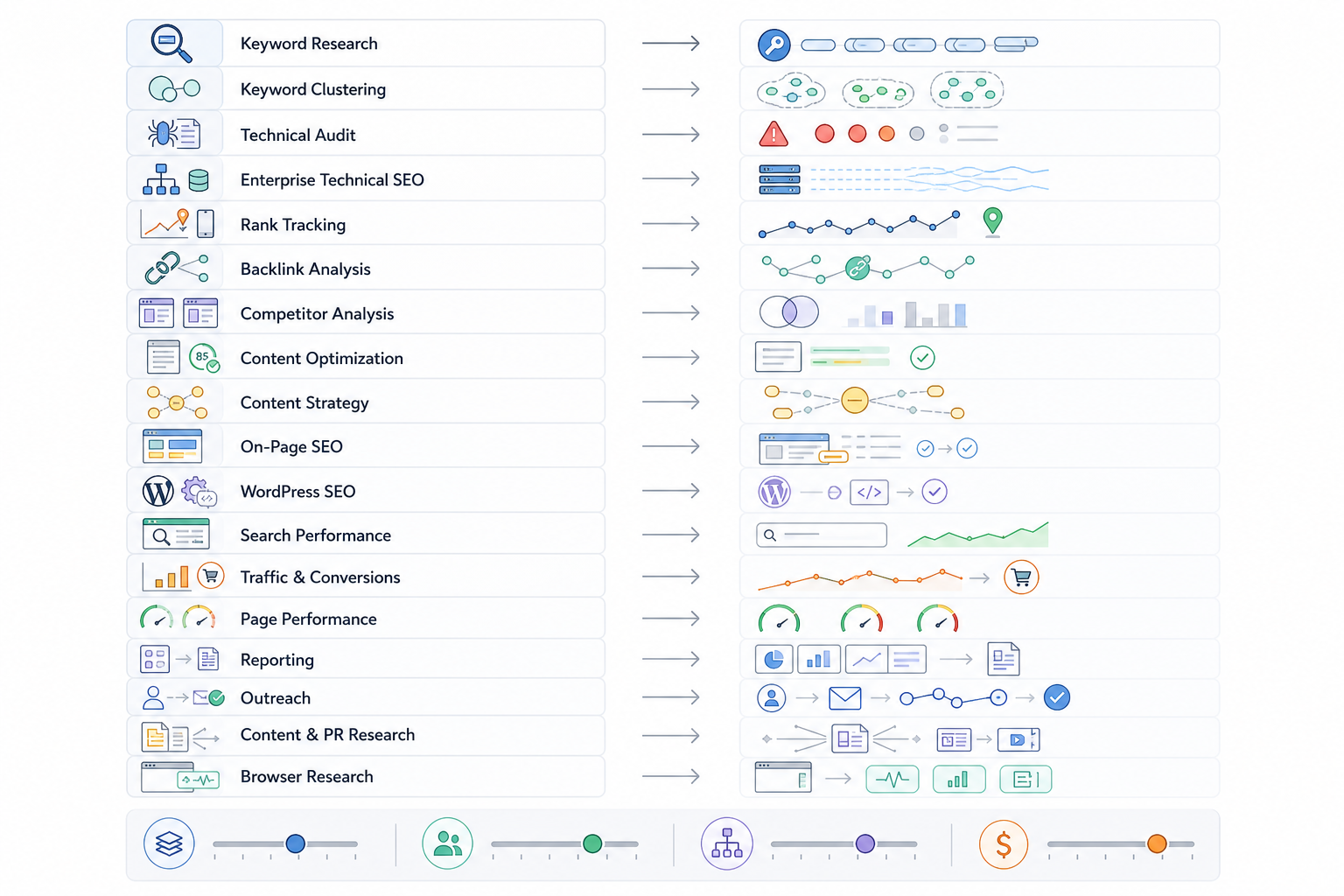
Different SEO tasks require different tool capabilities, so tool selection should be performed by function rather than by one overall software ranking.
| SEO Task | What the Tool Must Do | Suitable Tools | Primary Output | Best Fit |
|---|---|---|---|---|
| Keyword Research | Discover terms, demand, SERPs, related queries, intent clues | Semrush, Ahrefs, KeywordTool.io, Mangools, Ubersuggest | Keyword opportunities | Content and SEO planning |
| Keyword Clustering | Group terms that can share page intent | Keyword Insights, Serpstat | Keyword-to-page groups | Large content programs |
| Technical SEO Auditing | Crawl URLs, inspect status codes, canonicals, links, rendering | Screaming Frog, Sitebulb, Lumar, Oncrawl | Technical findings and URLs | Technical SEO teams |
| Enterprise Technical SEO | Crawl large sites, analyze logs, segment data | Botify, JetOctopus, Oncrawl, Lumar | Crawl and bot intelligence | Large complex websites |
| Rank Tracking | Monitor keywords by location, device, and date | AccuRanker, AWR, Nightwatch, Wincher, Keyword.com | Ranking trends | Agencies and ongoing SEO |
| Backlink Analysis | Discover links, referring domains, losses, gaps | Ahrefs, Majestic, Semrush, LinkResearchTools | Link intelligence | Off-page SEO |
| Competitor Analysis | Compare keywords, pages, links, visibility | Semrush, Ahrefs, SpyFu, SISTRIX, Similarweb | Competitive gaps | Strategy and research |
| Content Optimization | Analyze ranking content and topical coverage | Clearscope, Surfer, Frase, POP | Page recommendations | Editorial teams |
| Content Strategy | Prioritize clusters, gaps, and existing content | MarketMuse, Keyword Insights | Topic and content plans | Content-heavy sites |
| On-Page SEO | Inspect page elements and implementation | POP, Surfer, Screaming Frog | Page-level findings | Page optimization |
| WordPress SEO | Implement metadata, schema, sitemaps, redirects | Yoast, Rank Math, AIOSEO | CMS implementation | WordPress sites |
| Search Performance | Provide actual query, click, impression, page data | Google Search Console | First-party search evidence | Every Google-focused site |
| Traffic and Conversions | Measure organic visits and outcomes | GA4 | Sessions and conversions | Business performance |
| Page Performance | Test Core Web Vitals and loading | PageSpeed Insights, Lighthouse, GTmetrix | Performance diagnostics | Technical teams |
| Reporting | Combine multiple sources and automate reports | Looker Studio, AgencyAnalytics | Dashboards and reports | Agencies and stakeholders |
| Outreach | Discover prospects and manage communication | Respona | Outreach pipeline | Link building and PR |
| Content and PR Research | Find popular content, media, mentions | BuzzSumo | Content and media opportunities | PR and content teams |
| Browser Research | Add quick metrics during SERP/page review | SEOquake, Keywords Everywhere | In-browser evidence | Everyday SEO research |
No tool listed in one row is automatically superior to every alternative in that category. Tool selection still depends on required depth, market coverage, scale, data source, workflow, and cost.
Who Benefits Most From All-in-One SEO Software?
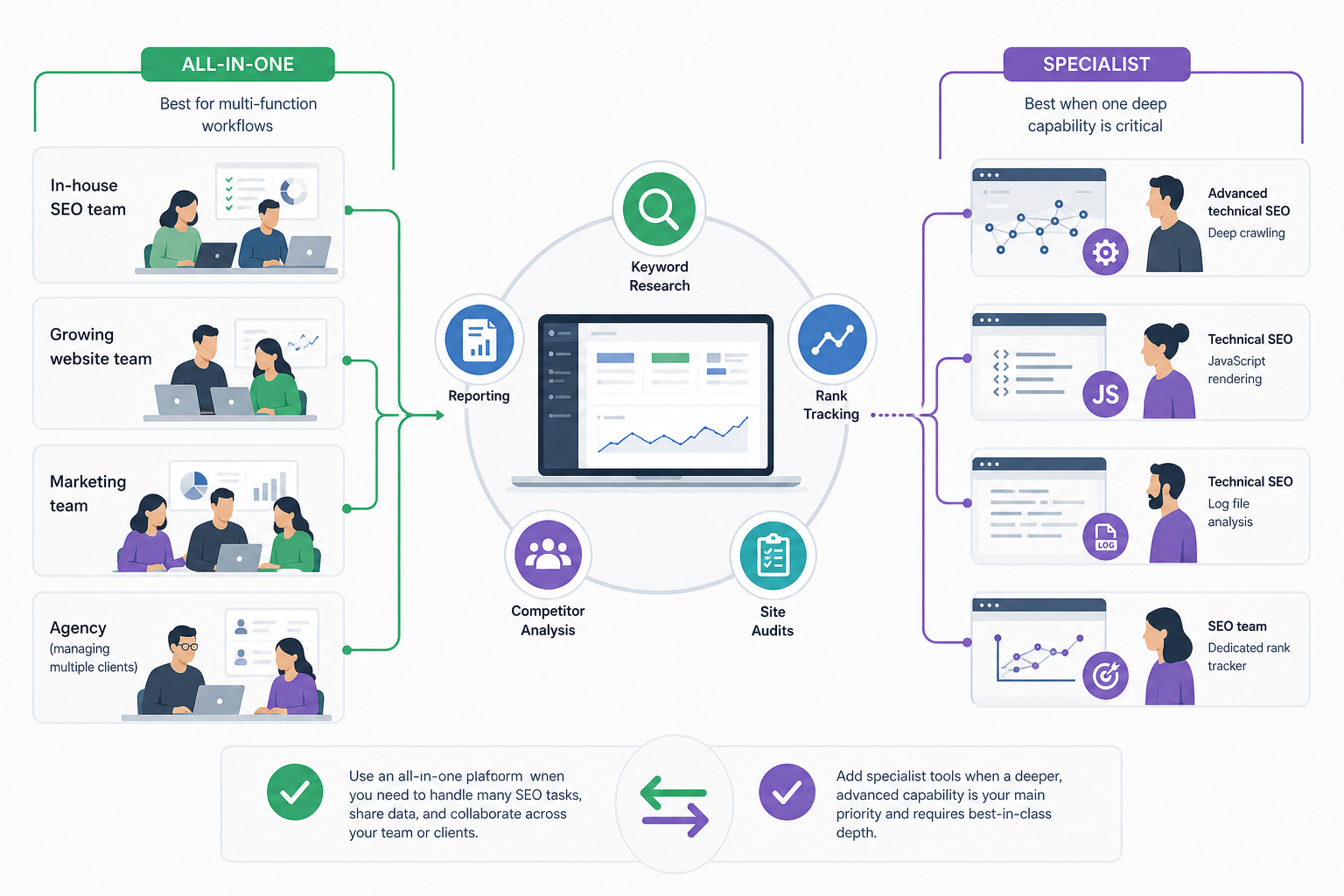
All-in-one SEO software is most useful for teams that regularly need several connected SEO capabilities and gain operational value from keeping research, tracking, auditing, competitor data, and reporting in one environment.
Small in-house SEO teams can benefit when the same people perform keyword research, monitor competitors, audit pages, track rankings, and report performance.
Growing websites can benefit when SEO activity becomes frequent enough that using separate lightweight tools creates fragmented workflows.
Marketing teams can benefit when SEO is one part of a broader acquisition program and users need understandable dashboards rather than highly technical specialist interfaces.
Agencies can benefit from all-in-one platforms where multi-project management, competitor research, rankings, reporting, and client workflows need to operate repeatedly across accounts.
All-in-one software becomes less attractive when one specialist requirement dominates the work. A large publisher with demanding JavaScript crawling and log-analysis requirements can still need specialist technical software even if it already pays for a broad SEO suite.
The choice is therefore not between all-in-one and specialist tools universally. Many mature SEO stacks use one broad platform for general research and add specialist software only where greater depth creates meaningful value.
Which SEO Tools Are Best Suited to Agencies?
Agency SEO tools need to support multiple websites, clients, users, ranking sets, recurring audits, exports, reports, and repeatable workflows.
| Tool | Strong Agency Use | Collaboration / Scale | Reporting | Main Limitation |
|---|---|---|---|---|
| Semrush | Research, rankings, audits, competitors | Strong multi-project coverage | Built-in reports | Cost rises with scale and add-ons |
| SE Ranking | Rankings, audits, competitor monitoring | Agency-oriented projects | White-label/reporting options | Specialist depth varies by function |
| AgencyAnalytics | Client reporting | Built specifically around multi-client operations | Core specialization | Relies on connected tools for much underlying SEO data |
| Ahrefs | Competitors, backlinks, keywords | Strong research across many domains | Useful exports/reporting | Heavy agency use can become costly |
| Screaming Frog | Technical audits | Flexible project crawling | Export-based | Requires manual analysis and reporting design |
| Sitebulb | Technical audits and audit presentation | Desktop and cloud workflows | Strong visual audit reporting | Primarily technical |
| AccuRanker | High-volume rank tracking | Strong keyword segmentation | Flexible reporting | Specialist rank tracker |
| Advanced Web Ranking | Multi-client rank tracking | Strong scale and localization | White-label reporting | Narrower SEO function |
| Search Atlas | Broad SEO and automation | Agency and white-label capabilities | Integrated | Automation requires governance |
| Looker Studio | Custom client dashboards | Highly flexible | Custom dashboards | Requires setup and reliable source data |
A smaller agency does not automatically need every category. One broad research platform, one technical crawler, first-party client data, and an efficient reporting system can cover a large percentage of routine agency SEO work.
The largest unnecessary expense often comes from subscribing to multiple all-in-one platforms that duplicate the same keyword, rank, competitor, and audit functions without producing materially different decisions.
What SEO Tool Works Best for Small Businesses and Beginners?
Small businesses and beginners generally benefit from tools that provide essential data with manageable cost and complexity, rather than enterprise platforms with advanced capabilities they are unlikely to use.
| Tool | Cost Type | Best For | Main SEO Capability | Ease of Use | Main Limitation |
|---|---|---|---|---|---|
| Google Search Console | Free | Every website | Search and indexing data | Moderate | No competitor research |
| Google Analytics 4 | Free | Business measurement | Traffic and conversions | Moderate | Requires correct setup |
| Google Trends | Free | Topic planning | Demand trends | Easy | No absolute search volume |
| Seobility | Freemium | Small websites | Audits and monitoring | Easy to Moderate | Lower specialist depth |
| Ubersuggest | Freemium / Paid | Beginners | Keywords and competitors | Easy | Smaller advanced toolkit |
| Mangools | Paid | Keyword-focused beginners | Keywords and ranks | Easy | Limited technical depth |
| Morningscore | Paid | Guided SEO | Monitoring and tasks | Easy | Less specialist depth |
| SE Ranking | Paid | Growing small teams | Broad SEO management | Moderate | More features than very small sites require |
| Yoast SEO | Freemium | WordPress sites | CMS SEO implementation | Easy | Not a research platform |
| Rank Math | Freemium | WordPress sites | CMS SEO implementation | Moderate | Many options can add complexity |
| AIOSEO | Freemium | WordPress businesses | SEO configuration | Easy to Moderate | Research requires other tools |
For a new small website, Google Search Console and GA4 usually deserve priority before a large commercial tool subscription because they establish what the site is actually receiving from search and what those visits accomplish.
A paid suite becomes more useful once keyword research, competitor analysis, rank tracking, or regular auditing starts taking enough time to justify additional data and automation.
When Are Paid SEO Tools Worth Using?
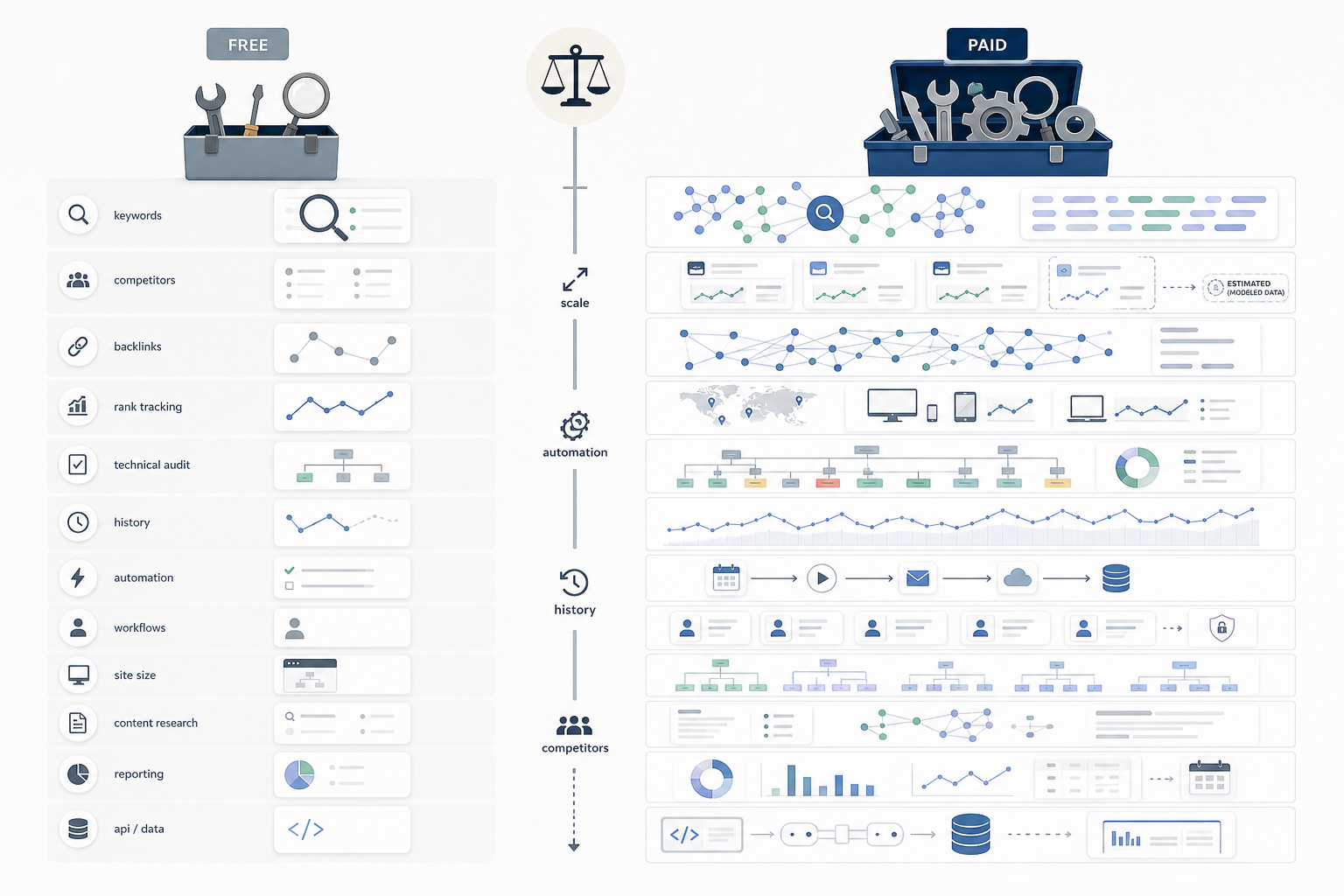
Paid SEO tools become worthwhile when free tools no longer provide enough competitive data, historical depth, automation, scale, or workflow efficiency for the SEO work being performed. Paying for software is justified by added capability or saved time, not by the assumption that paid data is inherently better.
| Situation / Need | Free or Basic Tool Limitation | Paid Tool Advantage | When the Upgrade Is Worth It |
|---|---|---|---|
| Large Keyword Research | Limited discovery and filtering | Larger databases, SERPs, clusters, history | Research is frequent and large-scale |
| Competitor Analysis | First-party tools cannot show competitor site data | Modeled keywords, pages, traffic, gaps | Competitive research influences strategy regularly |
| Backlink Analysis | Limited external link intelligence | Larger link indexes, loss monitoring, gaps | Link building or authority analysis is active |
| Rank Tracking at Scale | Manual checks are impractical | Automated locations, devices, history | Hundreds or thousands of terms require monitoring |
| Advanced Technical Audits | Basic free crawls hit limits | Rendering, large crawls, extraction, scheduling | Site size and complexity require deeper crawling |
| Historical Research | Limited retained data | Longer ranking, link, and competitor histories | Trends and past changes affect decisions |
| Automation | Repeated manual work | Scheduled crawls, reports, alerts, APIs | Labor saved exceeds subscription cost |
| Agency Management | Manual multi-client workflows | Projects, seats, white labeling, recurring reports | Client volume makes automation operationally valuable |
| Large Websites | Crawl and export limits | Higher URL limits, segmentation, APIs | Site scale exceeds lightweight tools |
| Content Research at Scale | Manual SERP review takes substantial time | Briefs, clustering, SERP extraction | Content production is frequent |
| Stakeholder Reporting | Data must be assembled manually | Connected dashboards and scheduled reporting | Reporting consumes recurring team hours |
| API / Data Warehouse Needs | Free interfaces offer limited automation | Programmatic data access | SEO data feeds internal systems |
Free tools remain sufficient in many situations.
A small site primarily measuring impressions, clicks, landing-page traffic, indexing, and conversions can accomplish substantial work through Search Console, GA4, PageSpeed Insights, Bing Webmaster Tools, Google Trends, and a limited crawler.
Paid tools become most valuable when they reveal information the organization cannot otherwise obtain efficiently, or when they replace enough recurring manual work to justify their cost.
Paid competitor data still remains modeled. A subscription does not turn competitor traffic estimates, authority scores, difficulty scores, or visibility indexes into first-party Google measurements.
How Many SEO Tools Do You Actually Need?
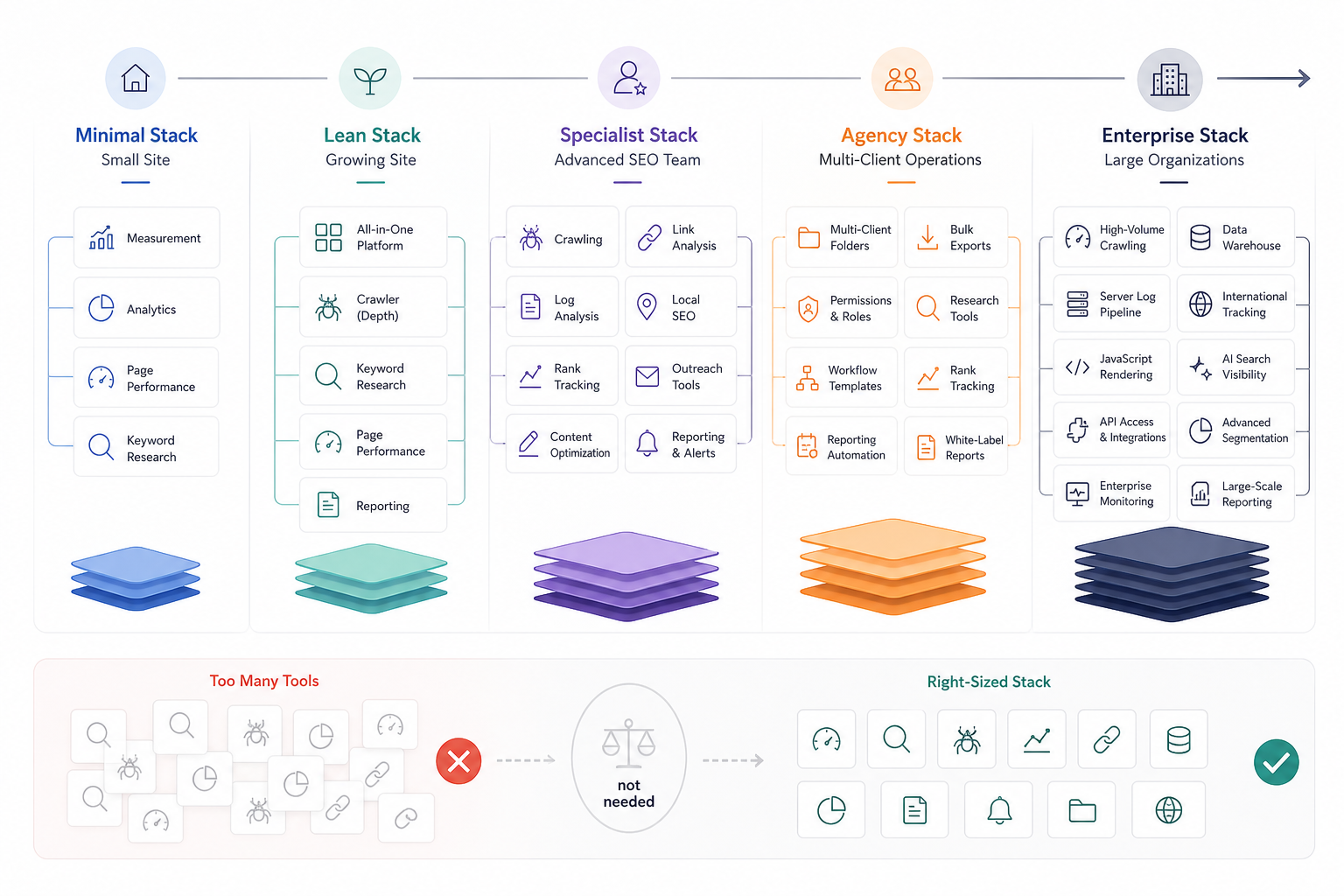
Most websites do not need a large collection of SEO tools. They need enough software to cover their core search-performance measurement, research, technical analysis, monitoring, and reporting requirements without unnecessary duplication.
There is no universal requirement to use three, five, ten, or any other fixed number of SEO tools. One platform can cover several functions, while an advanced SEO team can require multiple specialist systems.
Minimal Stack: Small or Early-Stage Website
A small website with straightforward SEO requirements can start with:
- Google Search Console for search performance and indexation
- GA4 for traffic and conversions
- PageSpeed Insights for performance
- One limited crawler or lightweight research tool when required
The objective is reliable measurement and basic diagnosis rather than software breadth.
Lean Stack: Growing Website or Small SEO Team
A growing website can add:
- One all-in-one SEO platform for keywords, competitors, rankings, and backlinks
- One technical crawler where the suite's audit functionality lacks required depth
- First-party Search Console and analytics data
- A reporting system where stakeholder communication becomes recurring
This often provides enough coverage for routine professional SEO without excessive duplication.
Specialist Stack: Advanced SEO Team
Advanced teams can maintain one broad research platform and add specialist tools for high-value disciplines such as:
- Technical crawling
- Log analysis
- Rank tracking
- Content optimization
- Link analysis
- Local SEO
- Outreach
The additional tool exists because it offers materially deeper functionality, not because a larger stack is inherently better.
Agency Stack: Multi-Client Operations
An agency can require:
- First-party client data
- Broad keyword and competitor research
- Technical crawling
- Rank tracking
- Reporting automation
- Outreach or backlink research where included in the service
Permissions, project limits, reporting, exports, and workflow efficiency matter as much as raw data features.
Enterprise or Large-Site Stack
Large organizations can require specialist platforms for:
- High-volume crawling
- Server logs
- JavaScript rendering
- APIs
- Data warehousing
- International tracking
- Enterprise monitoring
- AI-search visibility
- Large-scale reporting
A bigger organization can justify a larger stack because individual workflows operate at greater scale and complexity.
Add another tool when the existing stack cannot perform an important task adequately, its operational limits block the required workflow, a specialist function requires materially greater depth, or automation saves enough recurring work to justify the expense.
Do not add another platform solely because it offers a different proprietary authority score, keyword-difficulty number, content grade, or dashboard. Two tools that perform substantially the same research are useful together only when the second dataset or workflow adds meaningful validation, specialization, or redundancy.
Three well-selected tools can cover more useful SEO work than ten overlapping subscriptions. The right SEO stack is the smallest set of tools that provides the data and capabilities required to make and implement better SEO decisions.
Need links on real SaaS and business websites?
Links are placed after your approval, on sites with guaranteed DR and traffic, with a 1-year replacement guarantee.

