
13 Link Building Strategies: Opportunities, Execution & Programs
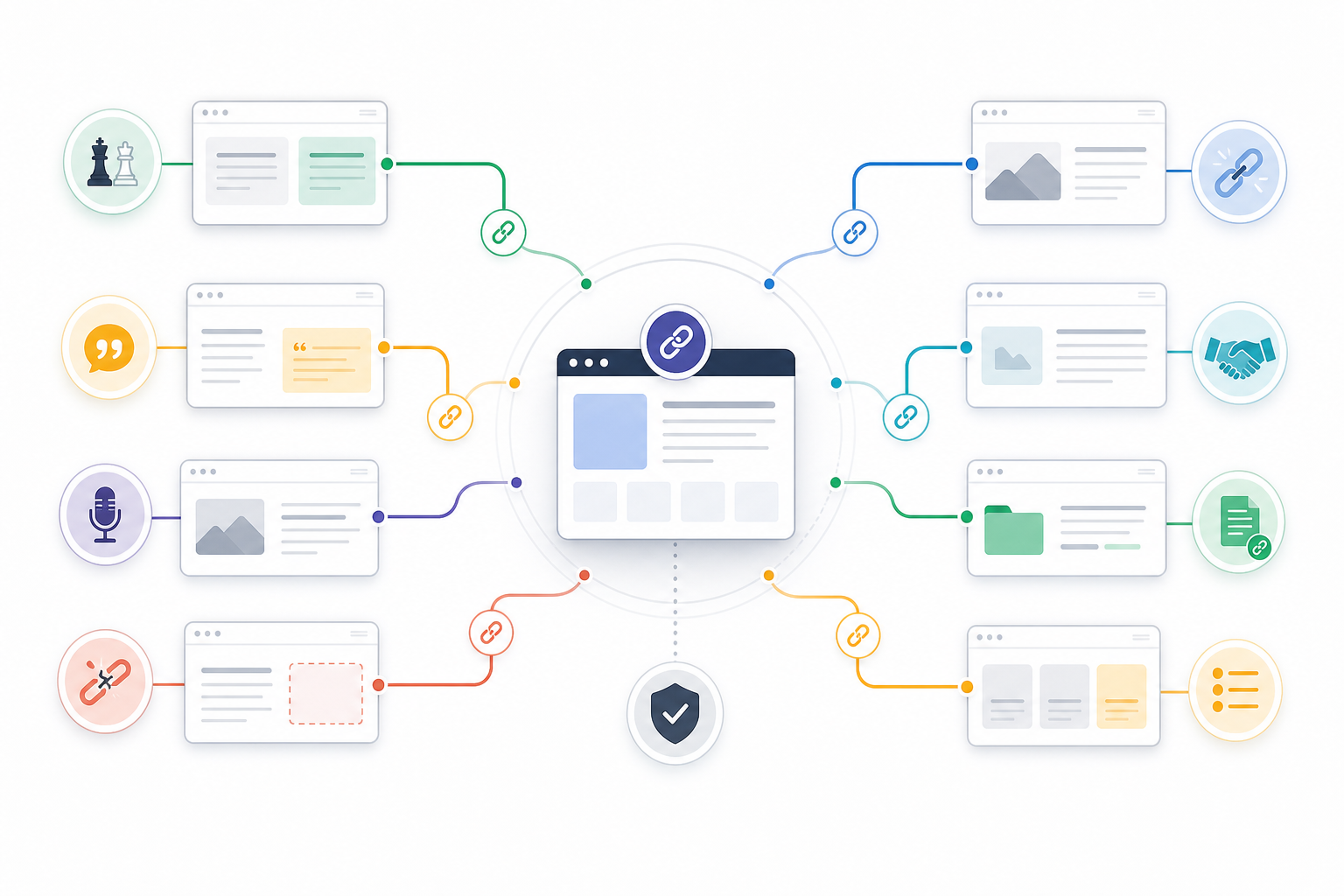
The link building strategies you should use depend on why another website would legitimately reference your business. Most websites need a mix of tactics based on existing backlinks, brand mentions, competitors, content assets, media opportunities, business relationships, and the publishers their audience already uses.
A link building strategy is the overall plan for earning, recovering, or securing relevant external references. It determines which pages need links, where opportunities can be found, which acquisition methods fit those opportunities, how prospects are qualified, and how results are measured.
A link building tactic, technique, or method is an individual way of acquiring a reference. Examples include competitor backlink replication, guest blogging, Digital PR, broken link building, link reclamation, niche edits, and listicle placements.
There is no single link building tactic that fits every website.
The most appropriate tactic usually depends on the opportunity already available.
| Opportunity Signal | Link Building Strategy | What You Need |
|---|---|---|
| Competitor has a relevant backlink | Replicate competitors' backlinks | Equivalent reference reason |
| Publisher already mentions your brand | Unlinked brand mentions | Relevant destination |
| You can contribute expertise | Guest blogging | Original contribution |
| Publishers repeatedly need a resource | Create link bait | Reference-worthy asset |
| You already have a strong asset | Pitch your content | Story or citation angle |
| Journalist is requesting expertise | Respond to media requests | Qualified expert response |
| You have research, data, or a story | Digital PR | Newsworthy input |
| Publisher links to a dead resource | Broken link building | Suitable replacement |
| Your previous backlink disappeared | Reclaim lost backlinks | Diagnosis and recovery |
| Genuine business relationship exists | Partner and community links | Real relationship |
| Existing article lacks a useful resource | Niche edits | Relevant supporting page |
| Relevant comparison article omits you | Listicle placements | Legitimate category fit |
| Another site proposes reciprocal linking | Link exchanges | Independent reason for both links |
A balanced strategy can use several opportunity sources.
For example, a SaaS company may recover lost backlinks first, convert existing brand mentions, analyze competitor links, earn integration-partner references, contribute expert commentary to journalists, and build original data assets for Digital PR.
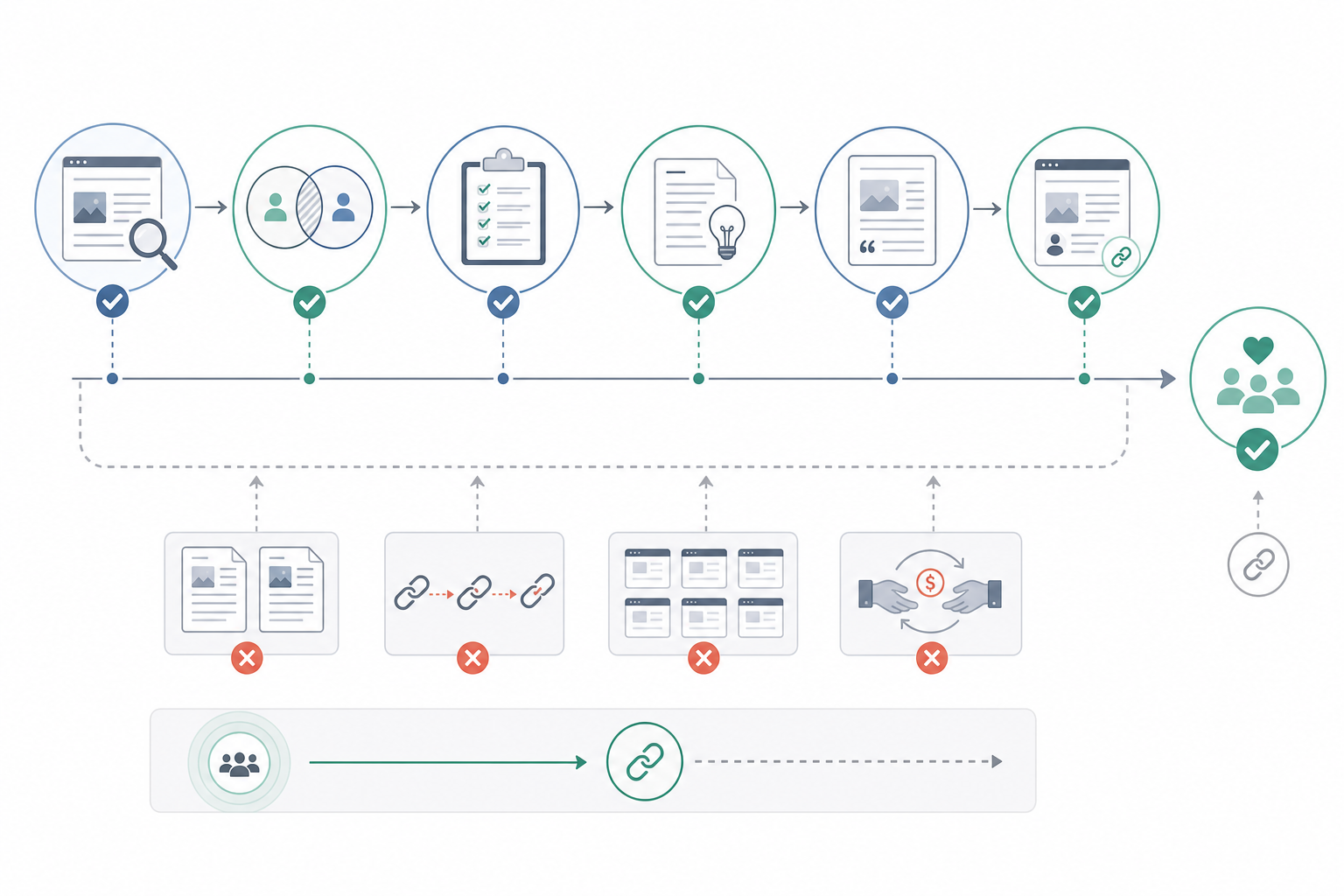
The common requirement across all link building strategies is a legitimate reference reason. The publisher should have a genuine editorial, commercial, navigational, partnership, attribution, or audience reason to mention and link to the destination.
Third-party metrics such as Domain Rating, Domain Authority, and Authority Score can help organize prospect data, but they are not Google metrics and should not determine the strategy by themselves.
Likewise, link building should not be reduced to obtaining a particular percentage of dofollow links, exact-match anchors, reciprocal links, or high-metric domains. Relevance, publisher context, destination fit, audience usefulness, and the actual relationship behind the link matter more than arbitrary ratios.
Replicate Competitors' Backlinks
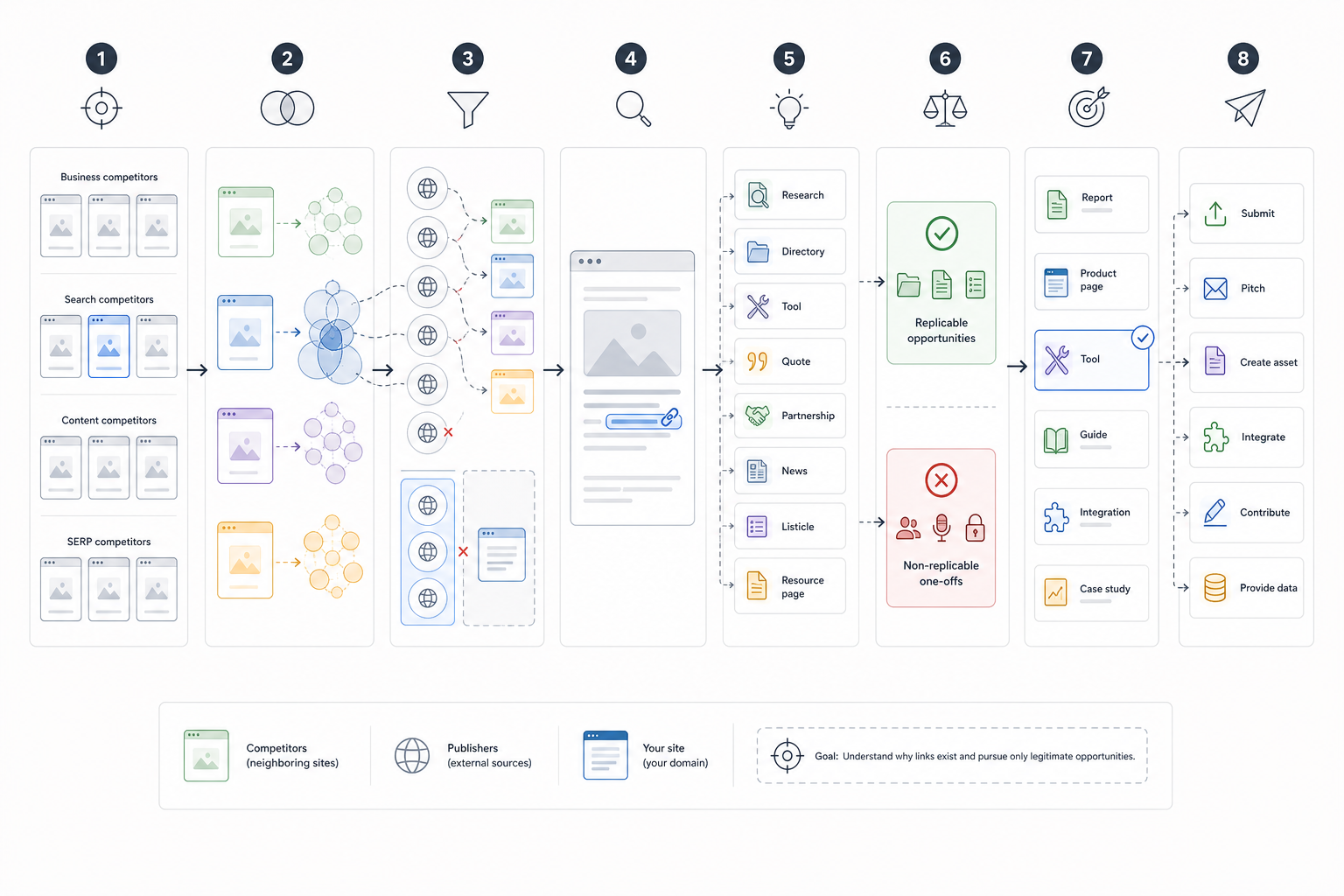
Replicating competitors' backlinks means finding relevant websites that already link to competitors and determining whether your business has a legitimate reason to earn a reference from the same source. It does not mean copying every backlink in a competitor's profile. The first step is to find competitor backlinks and understand why those references exist, then determine which of the same publisher relationships or reference needs genuinely apply to your own business.
The important question is not simply, “Who links to my competitor?” It is, “Why does this website link to my competitor, and does that same reference reason apply to us?”
1. Identify Relevant Competitors
Start with websites competing for similar:
- Search topics
- Products
- Services
- Audiences
- Commercial queries
Your strongest backlink competitors are not always your direct business competitors.
A company can have:
- Business competitors
- Search competitors
- Content competitors
- SERP competitors
For backlink discovery, search competitors can be especially useful because they reveal publishers already referencing websites within the same topical environment.
2. Compare Several Competitors
Do not analyze only one competitor.
A single backlink profile can contain:
- Historical references
- Investor relationships
- Paid placements
- Partnerships
- Founder-specific coverage
- Unusual one-off links
Comparing several competitors makes recurring publisher patterns easier to identify.
For example, if several competing SaaS tools appear in the same industry directory or comparison article, that source may represent a legitimate category-level opportunity.
3. Find Competitor-Only Referring Sources
Backlink-analysis platforms can show domains and pages that link to competitors but not to your site.
Useful data can include:
- Referring URL
- Referring domain
- Competitor destination
- Anchor text
- Link attributes
- First-seen date
- Last-seen date
- Surrounding text
- Page title
Treat this data as an opportunity dataset rather than a list of backlinks you automatically need.
4. Inspect the Actual Linking Page
Domain-level metrics do not explain why the link exists.
Open the referring page and determine:
- What the page discusses
- Which audience it serves
- Where the competitor appears
- What surrounds the link
- Which competitor page is referenced
- What relationship exists between publisher and competitor
The link may be:
- Editorial
- Directory-based
- Commercial
- Affiliate
- Partnership-based
- User-generated
- Sponsored
- Media coverage
Each requires a different acquisition approach.
5. Identify the Reference Reason
A competitor may have earned a backlink because of:
- Original research
- Statistics
- Free tool
- Expert quote
- Product recommendation
- Directory eligibility
- Integration
- Partnership
- Guest contribution
- News coverage
- Resource-page inclusion
- Listicle inclusion
- Community participation
The underlying reason matters more than the fact that the link exists.
6. Determine Whether the Opportunity Is Replicable
Some competitor links are readily replicable.
Examples include:
- Relevant industry directories
- Product directories
- Resource pages
- Multi-vendor listicles
- Broken-resource replacements
- Guest-contribution opportunities
Others may not be.
Examples include:
- Investor portfolio pages
- Acquisition announcements
- Customer testimonials
- Founder interviews
- Historical news stories
- Exclusive partnerships
The same domain does not necessarily represent the same opportunity.
7. Match the Opportunity to the Correct Destination
Do not automatically pitch your homepage.
A competitor backlink may point to a:
- Research report
- Product page
- Statistics page
- Tool
- Integration page
- Guide
- Template
- Case study
Your destination should satisfy the same reader need.
If no appropriate page exists, determine whether creating one would also make sense for your own users and content strategy.
8. Choose the Correct Acquisition Route
The reference reason determines what happens next.
A directory opportunity may require a submission.
A listicle may require an inclusion pitch.
A resource citation may require stronger research.
A partnership page may require an actual integration.
A journalist citation may require original data or expert commentary.
Competitor backlink replication works best when competitor links are used as evidence about how the market earns references, not as a shopping list of links to copy.
Turn Unlinked Brand Mentions Into Links
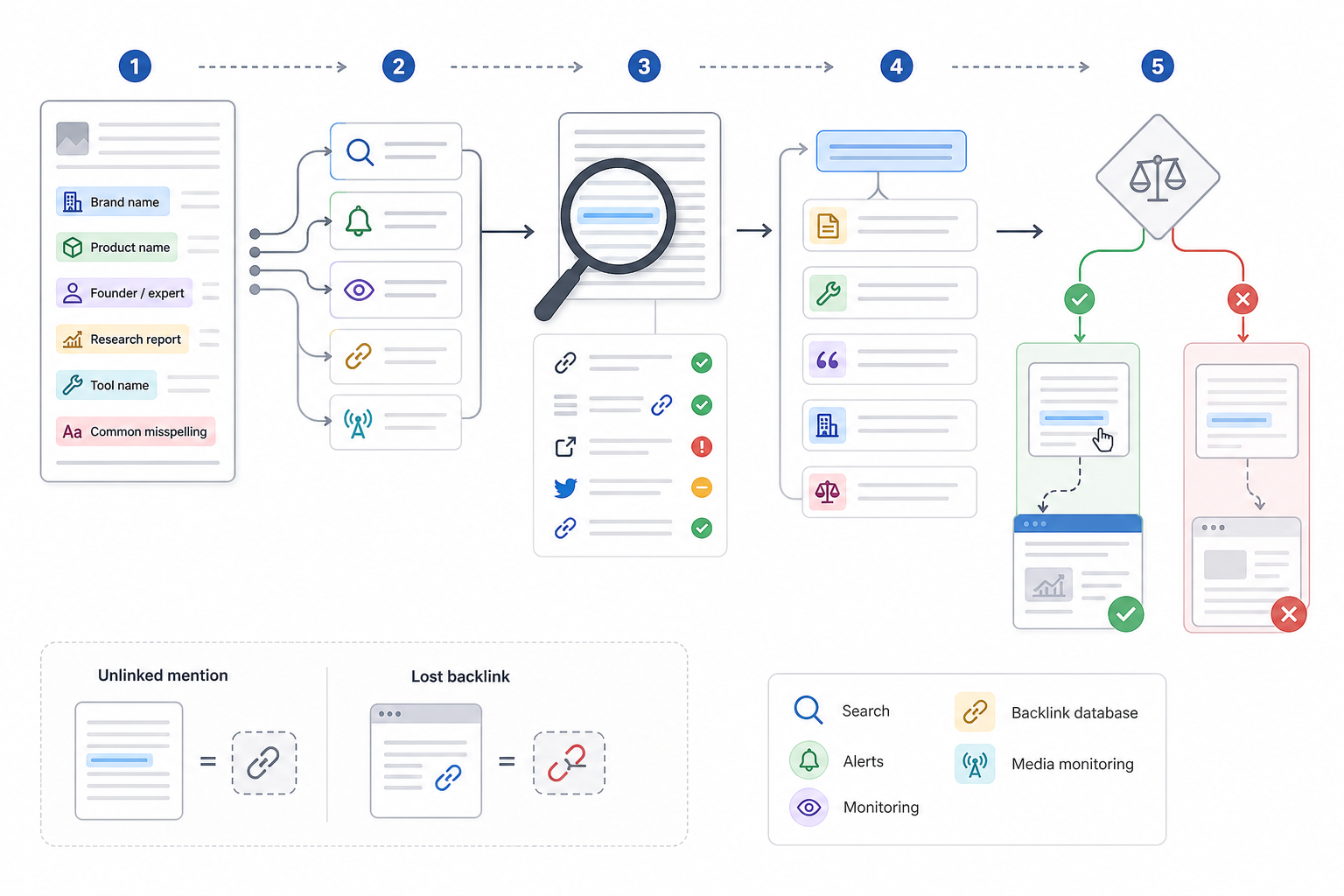
Turning unlinked brand mentions into links means finding third-party pages that already mention your company, product, research, tool, or expert without linking to an appropriate page on your website, then requesting a link where it improves attribution or navigation.
This differs from cold outreach because the publisher has already decided your brand is relevant enough to mention.
What Counts as a Brand Mention?
Monitor more than the company name.
Relevant entities can include:
- Brand name
- Common misspellings
- Product names
- Proprietary tools
- Research reports
- Founders
- Senior experts
- Branded campaigns
A page discussing your industry without mentioning your brand is not an unlinked brand mention. That is a normal prospecting opportunity.
How Do You Find Unlinked Mentions?
Potential discovery methods include:
- Brand-monitoring platforms
- Backlink databases
- Search engines
- Media-monitoring tools
- Alerts
Search operators can also identify candidate pages.
For example, searching for your brand while excluding your own domain can surface external mentions that require verification.
Verify the Mention Before Outreach
A monitoring tool can report a mention even when:
- The logo already links to your site.
- Another phrase links to your site.
- The citation appears elsewhere.
- The brand links to a social profile.
- The link points to the wrong page.
- A correct link already exists.
Open the page before contacting anyone.
Understand Why You Were Mentioned
Common contexts include:
- Product recommendation
- Research citation
- Founder quote
- Company example
- News coverage
- Statistic attribution
- Tool recommendation
- Comparison article
That context determines whether a link makes sense and where it should point.
For example, a mention of your research should normally point to the research source rather than your homepage.
Ask Only Where a Link Helps
A link can improve:
- Source attribution
- Fact verification
- Product discovery
- Navigation
- Access to the original research
- Access to the tool being discussed
A brand mention does not automatically entitle the company to a backlink.
The publisher still controls whether a link is appropriate.
Unlinked Mentions vs Lost Links
Keep these strategies separate.
Unlinked mention: a reference exists, but a link never existed.
Lost backlink: a link existed previously and later disappeared or stopped working.
The first requires an attribution request. The second requires reclamation.
Guest Blogging
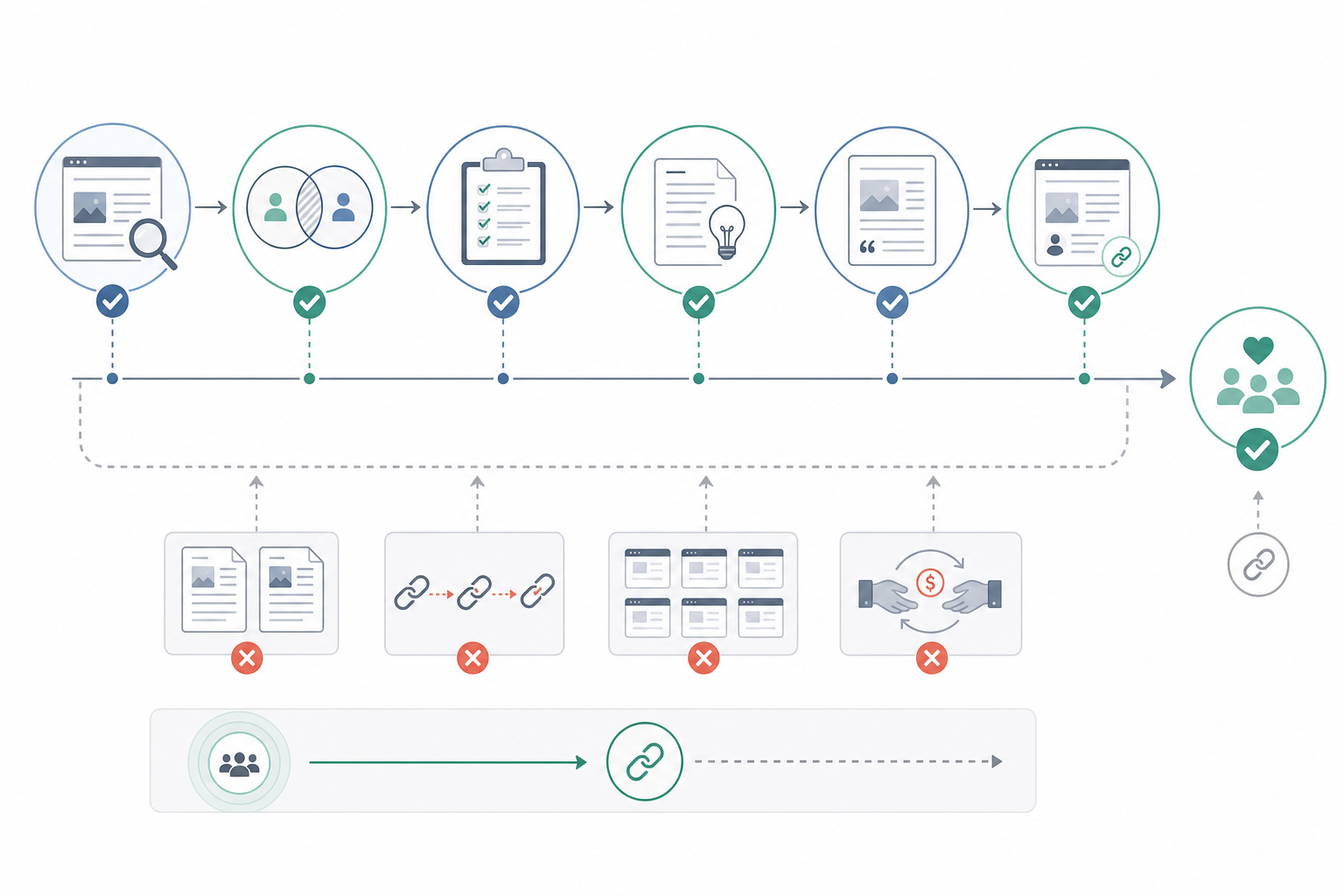
Guest blogging is the practice of contributing an original article to another relevant publication to serve its audience, demonstrate expertise, build visibility, and potentially receive appropriate attribution or contextual links.
A guest post should not exist only as a vehicle for a backlink.
The primary value should come from the contribution itself.
1. Define the Contribution Goal
Legitimate guest-blogging objectives can include:
- Reaching a relevant audience
- Demonstrating expertise
- Building brand awareness
- Generating referral traffic
- Developing publisher relationships
- Contributing useful knowledge
- Receiving author attribution
Links can be an outcome where editorially appropriate.
2. Find Relevant Publications
Potential publishers include:
- Industry publications
- Trade magazines
- Professional associations
- Relevant company blogs
- Specialist media
- Existing business partners
Search queries such as “write for us,” “contribute,” and “guest author” can reveal some opportunities, but a public contribution page is not a quality signal by itself.
Many established publications accept expert contributions without maintaining an open “Write for Us” page.
3. Qualify the Audience
The first question should be whether the publication reaches people who would realistically care about your expertise.
Relevant audience overlap can come from:
- Same industry
- Adjacent industry
- Same buyer
- Same professional role
- Complementary market
Exact keyword overlap is not required.
4. Study Existing Editorial Standards
Before pitching, review:
- Topics covered
- Tone
- Article depth
- Contributor profiles
- Recently published content
- Editorial guidelines
Avoid pitching a subject the publication has already covered repeatedly unless your contribution adds genuinely new information.
5. Pitch a Useful Topic
A guest-post pitch should explain:
- What you propose to cover
- Why the topic matters to the publication's audience
- What expertise or evidence you bring
- How the contribution differs from existing articles
Do not lead with your backlink requirement.
6. Write the Article for the Publisher's Reader
The article should function as a complete contribution.
Use citations and external references where they improve the article, including sources that do not belong to your company.
Any link to your own site should make sense within the same editorial standard.
7. Avoid Large-Scale Guest Posting Built Mainly for Links
Guest blogging can become problematic when the main purpose shifts from audience contribution to manufacturing ranking links at scale.
Examples include:
- Near-identical guest articles across many sites
- Keyword-rich commercial anchors
- Low-quality publications created mainly for guest posts
- Paid editorial links presented as independent references
Guest blogging works best as an expert-contribution strategy rather than a backlink-production system.
Create Link Bait
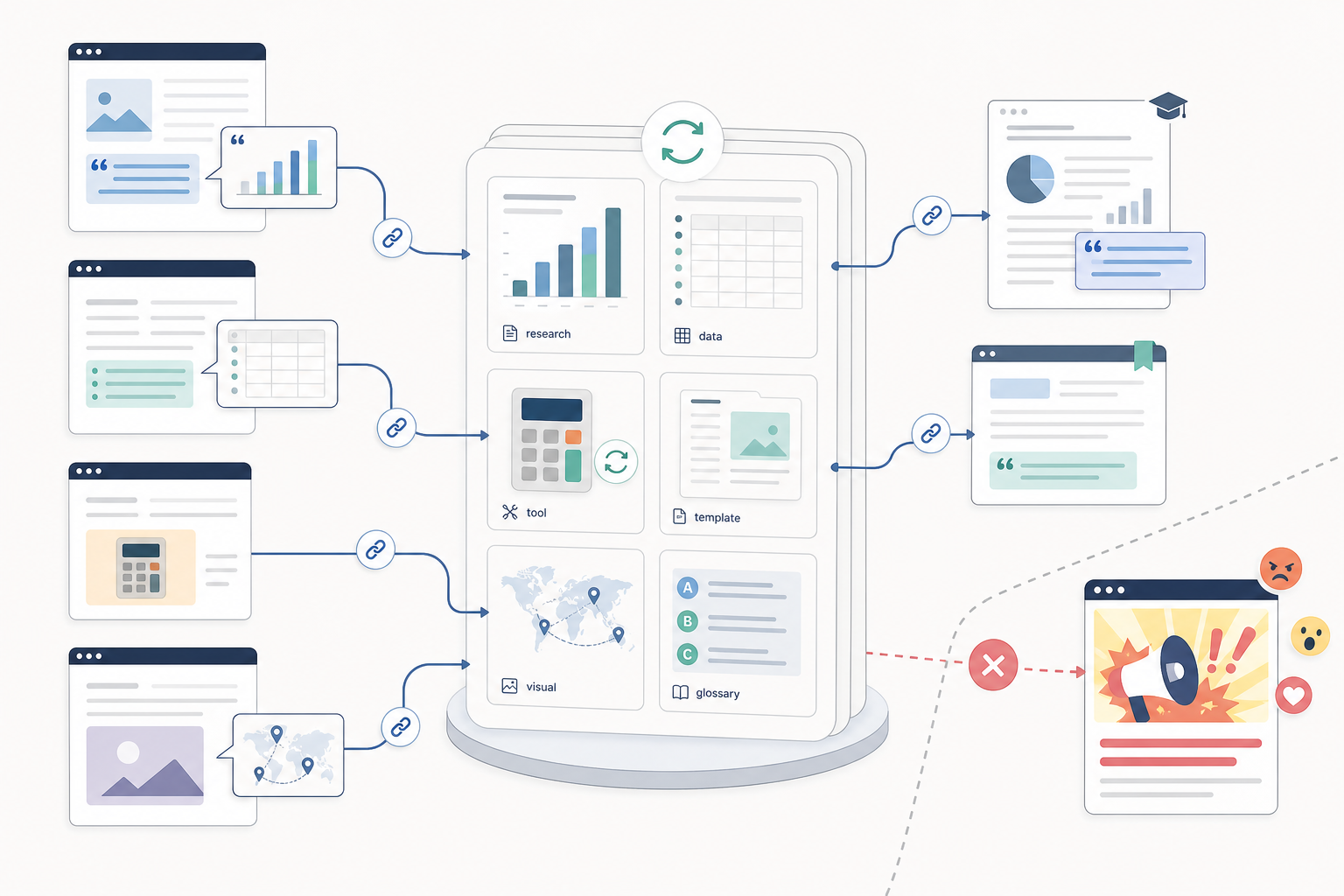
Link bait is content or functionality intentionally created to give other websites a strong reason to reference, cite, recommend, use, or discuss it.
It is better understood as a reference-worthy asset than as content designed merely to attract attention. In practice, these linkable assets can include research, tools, datasets, templates, statistics, or visual resources that give publishers a genuine reason to cite or recommend the page.
Why Do Publishers Link to Assets?
A publisher may reference an asset because it helps them:
- Prove a claim
- Cite original evidence
- Give readers a useful tool
- Explain a complex subject
- Display a visualization
- Share a template
- Provide a useful dataset
- Demonstrate an example
For example, a journalist discussing customer churn may reference an original churn benchmark rather than recreate the research.
What Types of Link Bait Can Work?
Common formats include:
Original research: surveys, experiments, benchmarks, studies, or proprietary datasets.
Statistics resources: organized and maintained data useful to writers and researchers.
Tools and calculators: calculators, generators, checkers, converters, estimators, or interactive applications.
Templates: spreadsheets, documents, frameworks, worksheets, or downloadable resources.
Visual assets: charts, maps, diagrams, infographics, or interactive visualizations.
Reference resources: glossaries, databases, directories, or comprehensive lookup pages.
What Makes an Asset Reference-Worthy?
Useful characteristics can include:
- Original information
- Clear methodology
- Practical utility
- Current data
- Easy-to-cite statistics
- Useful visual presentation
- Accessible source information
- Distinct functionality
An asset does not need to be “viral.”
It needs to solve a reference need.
Link Bait vs Clickbait
The terms describe different things.
Link bait provides enough utility or evidence that another publisher may link to it.
Clickbait primarily tries to generate clicks through headline framing or curiosity.
A misleading title does not create a strong linkable asset.
Maintain the Asset
Many linkable assets lose usefulness when their information becomes outdated.
Update:
- Statistics
- Data sources
- Calculators
- Tools
- Screenshots
- Benchmarks
- Downloadable files
when the underlying facts change.
Creating the asset is only the first step. If relevant publishers are unlikely to discover it independently, the asset can then be promoted through publication pitching or Digital PR.
Pitch Your Content to Other Publications
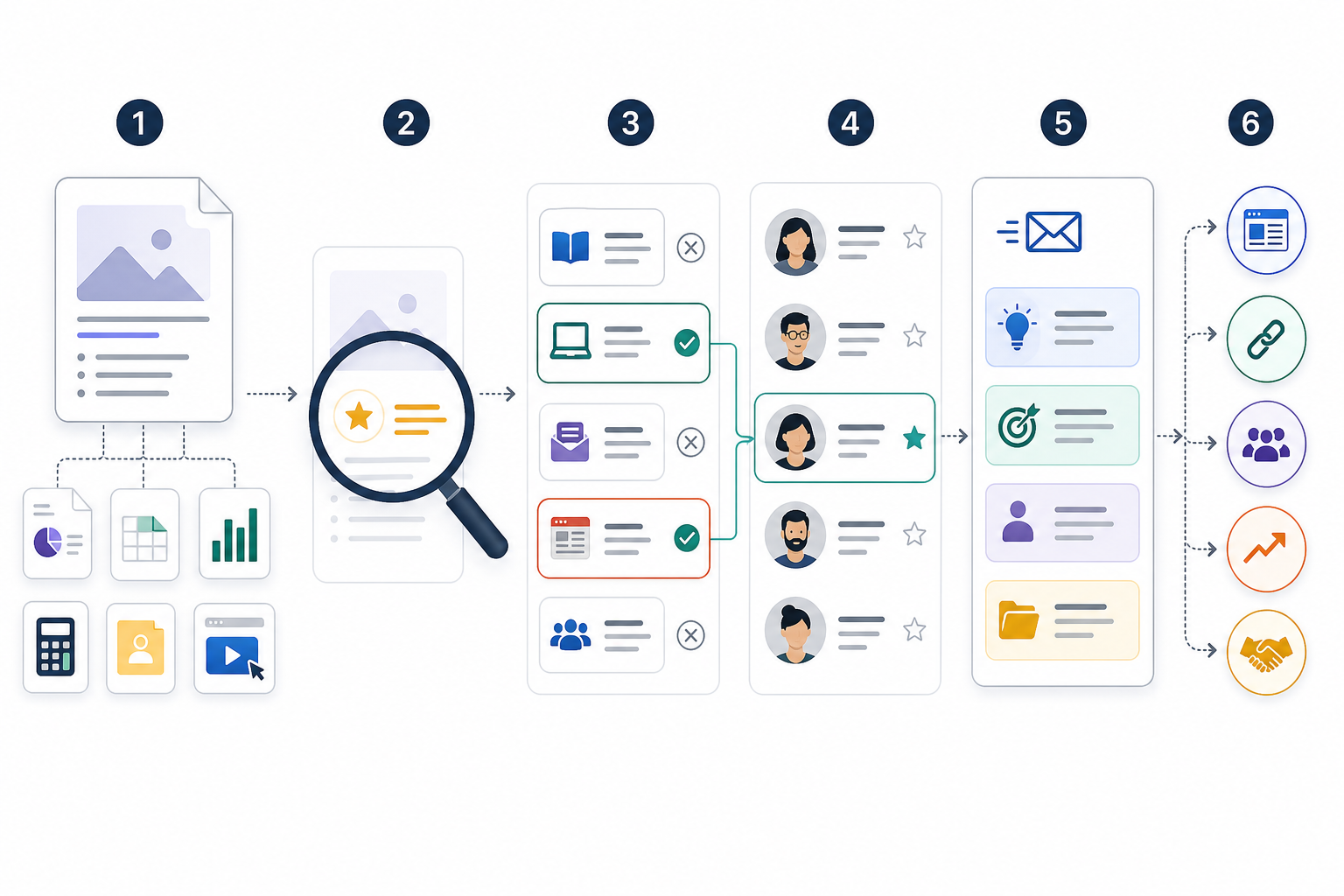
Pitching your content to other publications means identifying journalists, editors, bloggers, or industry publishers whose audiences would benefit from an existing study, tool, resource, dataset, or insight and explaining why it may be worth covering or citing.
This tactic promotes an existing asset. It does not create the asset itself.
1. Start With Something Worth Pitching
Pitchable assets can include:
- Original research
- Surveys
- Proprietary data
- Benchmarks
- Statistics
- Free tools
- Calculators
- Interactive resources
- Case studies with useful findings
- Expert analysis
- Industry trend data
Not every useful blog article is automatically pitchable.
Ask whether another writer has a reason to use it as a source.
2. Define the Editorial Angle
Identify what makes the asset relevant outside your own website.
Possible angles include:
- New evidence
- Timely trend
- Unexpected finding
- Useful source data
- Expert interpretation
- Industry implication
- Practical resource
The pitch should focus on that value rather than on your SEO objective.
3. Identify the Correct Publication
Possible targets include:
- Industry publications
- Trade media
- Specialist blogs
- News outlets with a relevant section
- Professional associations
- Newsletters
Relevance to the specific story matters more than general publication prestige.
4. Find the Correct Journalist or Editor
Look for people who actively cover the subject.
Review:
- Their beat
- Recent stories
- Previous sources
- Publication format
- Audience
A cybersecurity journalist is a better prospect for cybersecurity research than a generic editor at the same domain.
5. Make the Pitch Concise
A useful pitch usually makes four things clear:
- What is new
- Why it matters
- Why it fits that journalist
- Where the supporting information can be found
Do not ask for a backlink as the primary request.
Coverage, citation, or linking remains an editorial decision.
6. Track the Outcome
Monitor:
- Coverage
- Mentions
- Backlinks
- Referral traffic
- Journalist relationships
A story without a backlink can still create brand visibility, citations elsewhere, referral discovery, or future media opportunities.
Respond to Media Requests
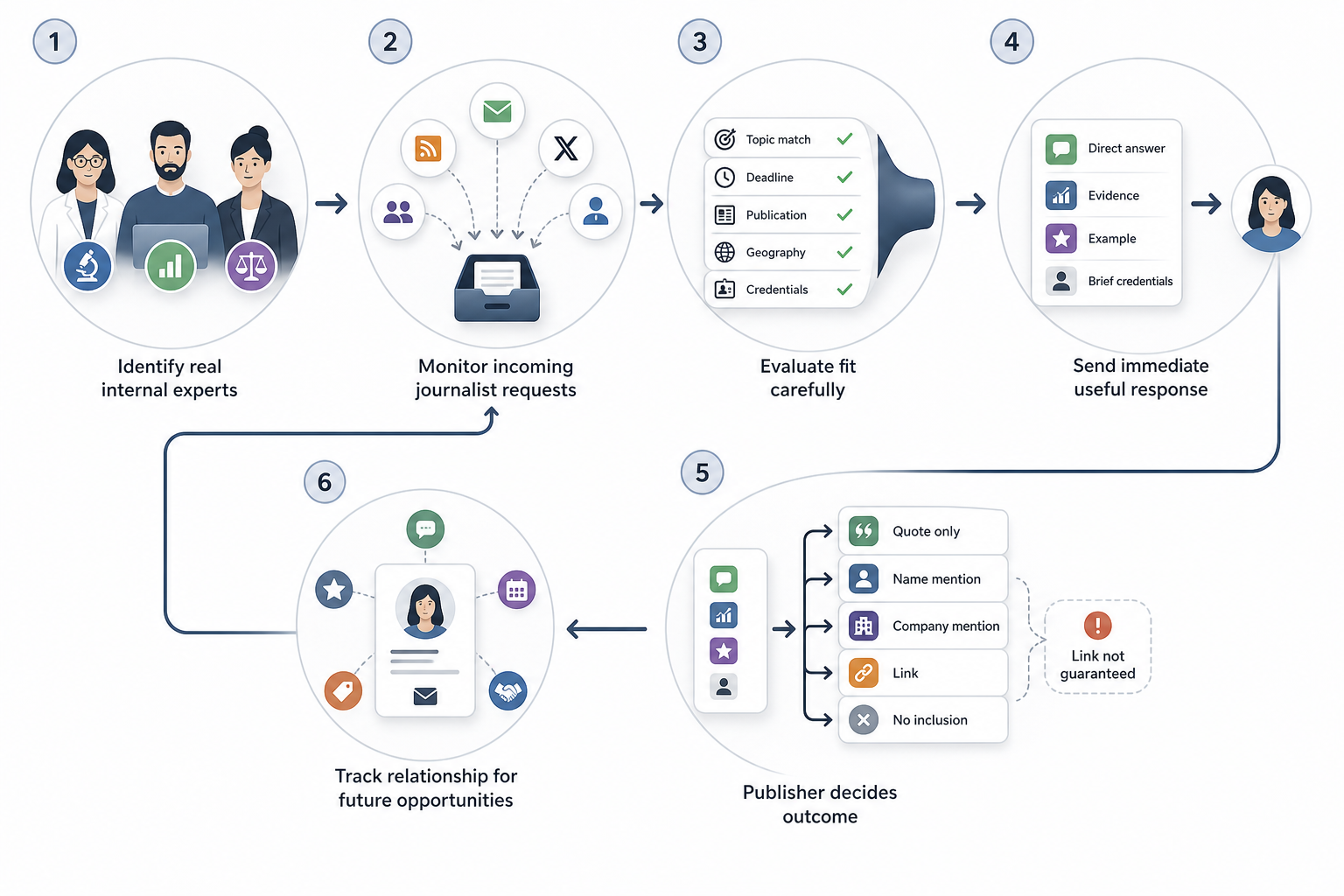
Responding to media requests means providing relevant expertise, evidence, examples, or commentary to journalists and writers who are already seeking sources for active stories.
Unlike a cold media pitch, the publisher demand already exists.
1. Define Your Real Expertise
Create a list of people who can credibly answer specific topics.
Examples include:
- Founder: company building, entrepreneurship, market trends
- CTO: software architecture, engineering, AI implementation
- SEO specialist: organic search, technical SEO, link building
- Finance leader: budgeting, cash flow, financial operations
Do not position every employee as an expert on every topic connected to the company.
2. Monitor Relevant Requests
Media-request sources can include:
- Journalist-request platforms
- PR communities
- Journalist newsletters
- Social media
- Professional networks
- Direct journalist relationships
The platform is only the discovery mechanism.
The request must still match the person's real expertise.
3. Read the Requirements Carefully
Check:
- Question
- Deadline
- Publication
- Geographic restrictions
- Required credentials
- Response format
- Whether anonymous sources are accepted
Do not answer tangentially simply because the publication is attractive.
4. Answer the Question Immediately
A useful media response generally includes:
- Direct answer
- Specific explanation
- Concrete example
- Relevant evidence
- Brief credentials
Avoid long introductions about your company.
Journalists need usable material.
5. Do Not Treat the Response as a Link Exchange
Providing a quote does not obligate the journalist to link.
The outcome may be:
- Quote
- Name attribution
- Company mention
- Link
- No inclusion
The publisher decides.
6. Track Reporter Relationships
A journalist who uses your expertise once may return for future stories.
Record:
- Journalist
- Publication
- Topic
- Previous response
- Coverage outcome
Media relationships can become more valuable than treating every request as an isolated link opportunity.
Broken Link Building
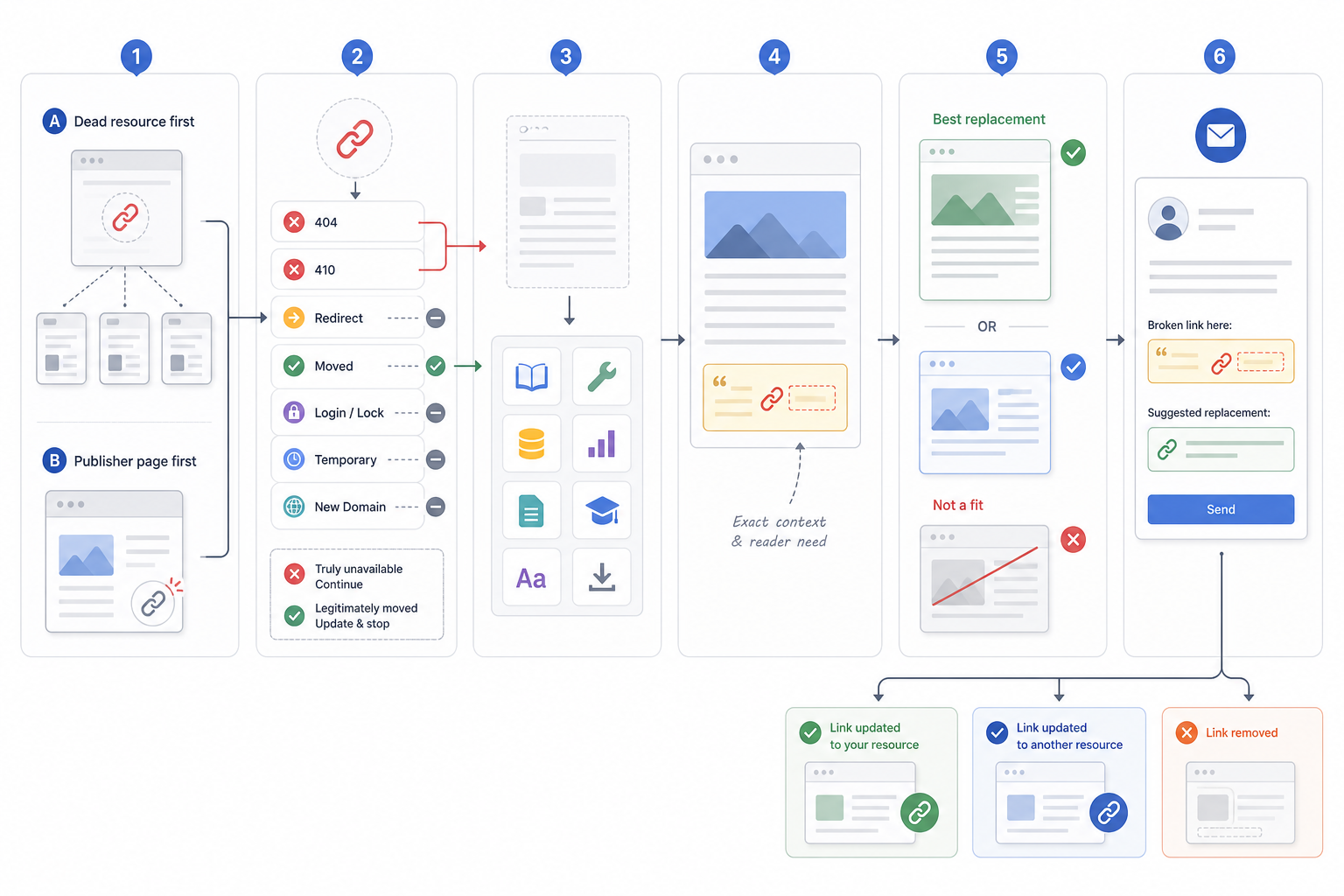
Broken link building is the process of finding relevant webpages that still link to unavailable third-party resources and suggesting a suitable live resource that can replace the missing reference.
The key is replacing an existing reader need, not simply discovering a 404 page.
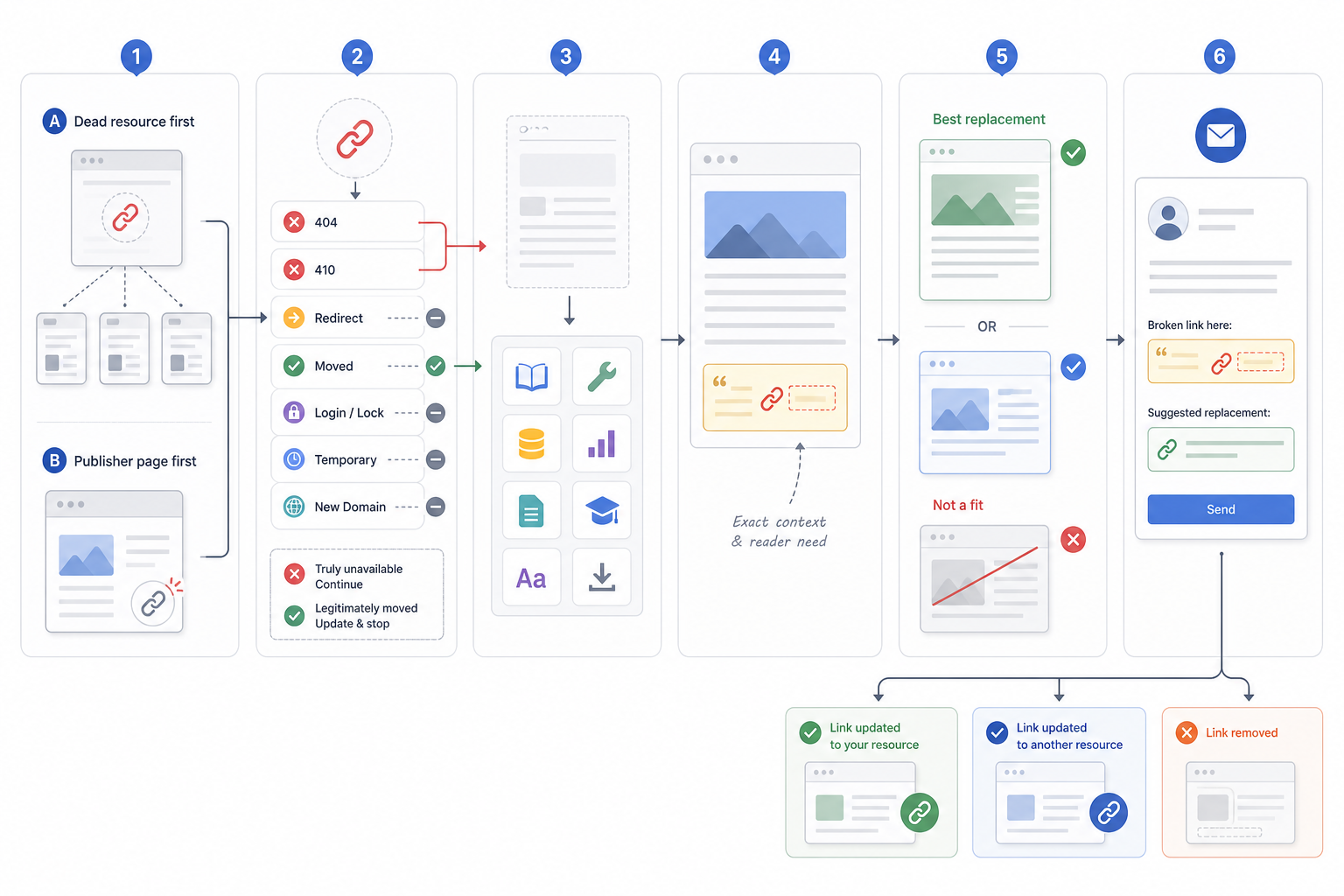
1. Find Broken Reference Opportunities
Two common discovery approaches exist.
Dead-resource first: find a relevant dead page that still has backlinks, then locate its referring pages.
Publisher-page first: find relevant resource pages or articles and identify broken outbound links.
Useful sources include:
- Competitor sites
- Industry resources
- Resource directories
- Tutorials
- Association pages
- Reference lists
2. Verify That the Resource Is Actually Unavailable
Do not rely only on a tool's status report.
Check whether the destination:
- Returns 404
- Returns 410
- Has moved
- Redirects
- Requires login
- Is temporarily unavailable
- Lives at a new domain
If the original resource moved, updating the link to its legitimate new destination may be the most useful correction.
3. Understand What the Dead Resource Used to Provide
Use available historical information to determine whether the old page was a:
- Guide
- Tool
- Dataset
- Statistic
- Template
- Study
- Definition
- Download
The replacement should satisfy approximately the same reference need.
4. Inspect the Linking Context
A page may link to the dead resource for a specific claim or purpose.
For example, if the article originally cited a survey statistic, offering an unrelated general guide is not an appropriate replacement.
5. Use an Existing Replacement or Build One Where Justified
A suitable page may already exist on your site.
If not, create a replacement only when the resource also makes sense for your audience and content strategy.
Do not create thin replacement pages solely to capture dead backlinks.
6. Contact the Publisher
Explain:
- Which link is broken
- Where it appears
- What reader need it originally served
- Which live resource could replace it
The publisher may choose your resource, another resource, or simply remove the link.
Broken link building creates an editorial opportunity, not an entitlement to the backlink.
Do Digital PR
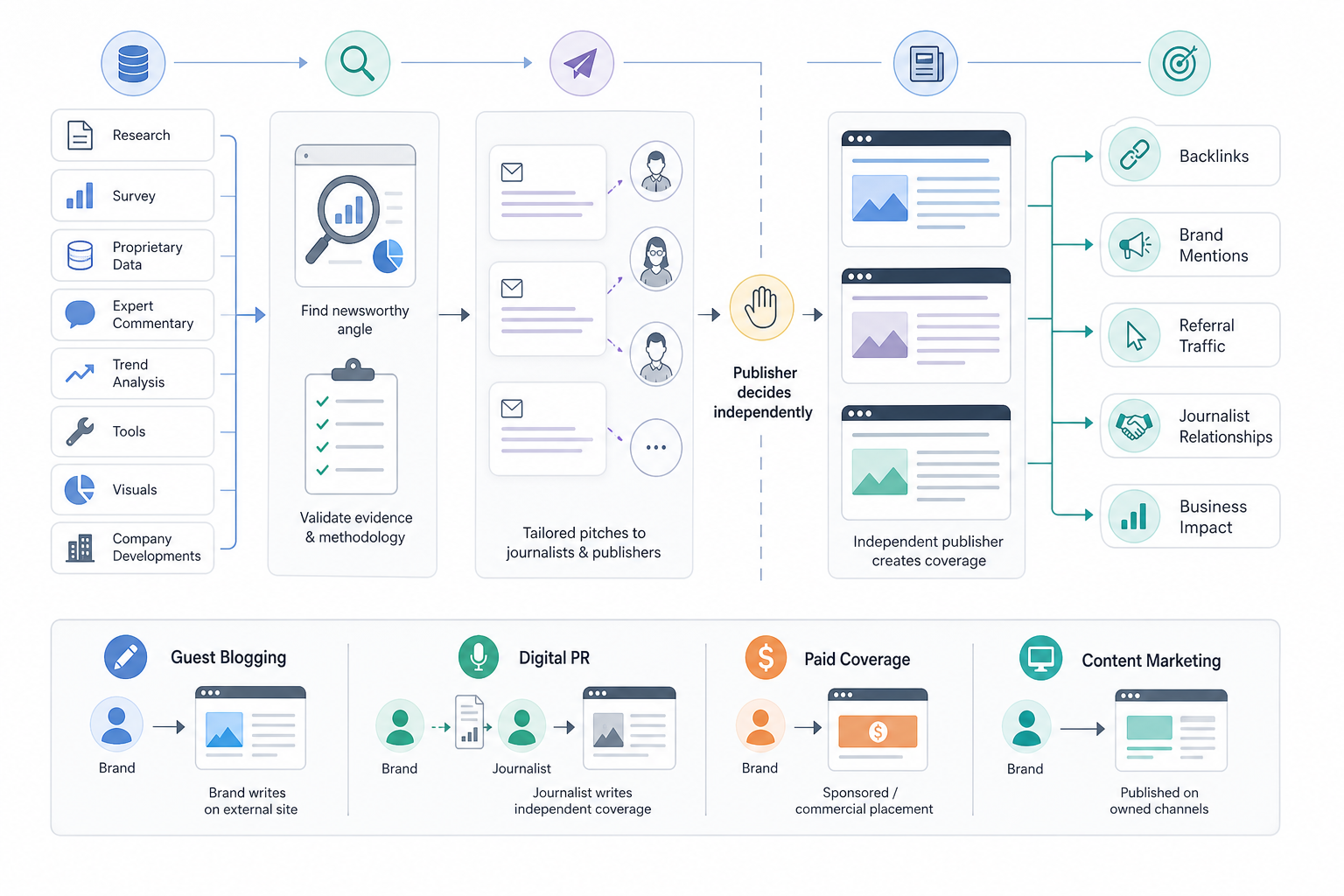
Digital PR is the use of newsworthy stories, original evidence, expert insight, useful assets, and media relationships to earn independent online coverage from relevant publishers.
Backlinks can result from that coverage, but Digital PR is broader than backlink acquisition.
What Can Digital PR Use?
Campaign inputs can include:
- Original research
- Proprietary data
- Surveys
- Industry studies
- Expert commentary
- Newsjacking
- Trend analysis
- Tools
- Indices
- Visualizations
- Company developments with wider relevance
Digital PR vs Guest Blogging
With guest blogging, your company writes the external article.
With Digital PR, a journalist or publisher independently creates the coverage using information, evidence, or expertise you provide.
Digital PR vs Content Marketing
Content marketing mainly creates material for your own channels and audiences.
Digital PR focuses on earning coverage from external publishers.
One research study can serve both purposes.
Digital PR vs Paid Coverage
Earned media results from an independent publisher decision.
Paid or sponsored coverage involves a commercial relationship.
These should not be presented as the same thing.
How Do You Build a Digital PR Campaign?
A practical process includes:
- Identify the business or subject area.
- Find a genuinely newsworthy or reference-worthy angle.
- Gather credible evidence.
- Validate the methodology.
- Build supporting material.
- Identify publications and journalists.
- Tailor the story angle.
- Pitch.
- Respond quickly to questions.
- Track coverage, mentions, links, and referrals.
- Reuse learning for future campaigns.
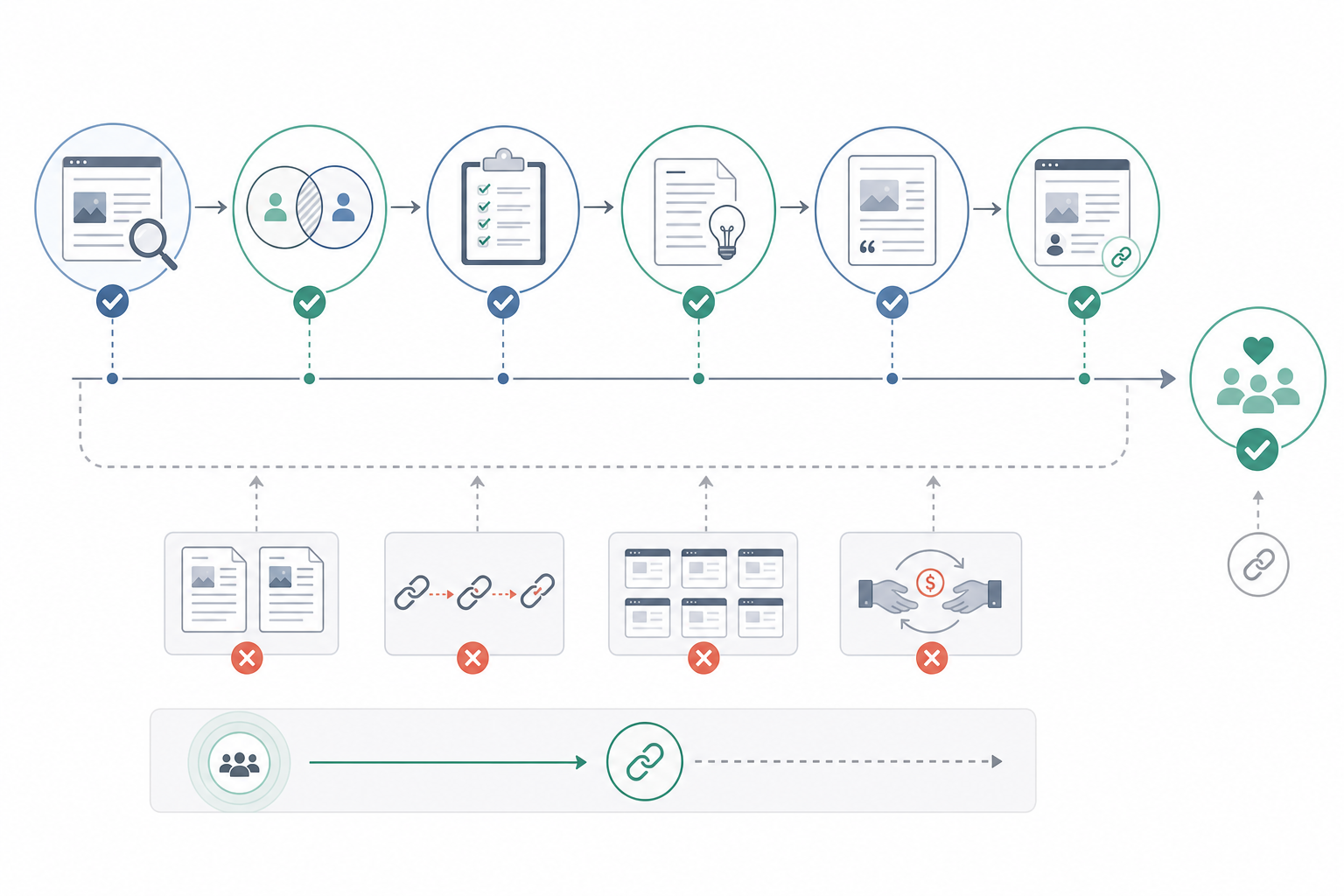
What Makes a Story Newsworthy?
Possible reasons include:
- New information
- Unexpected result
- Timely development
- Local significance
- Large dataset
- Public-interest implication
- Strong expert interpretation
- Clear industry impact
The fact that a company wants backlinks does not make a story newsworthy.
How Should Digital PR Be Measured?
Depending on the campaign, measure:
- Media coverage
- Brand mentions
- Backlinks
- Relevant referring domains
- Referral visits
- Journalist relationships
- Branded search activity
- Business outcomes where measurable
Do not attribute every ranking change to an individual PR backlink.
Digital PR is strongest when the coverage itself is valuable even before SEO effects are considered.
Reclaim Lost Backlinks
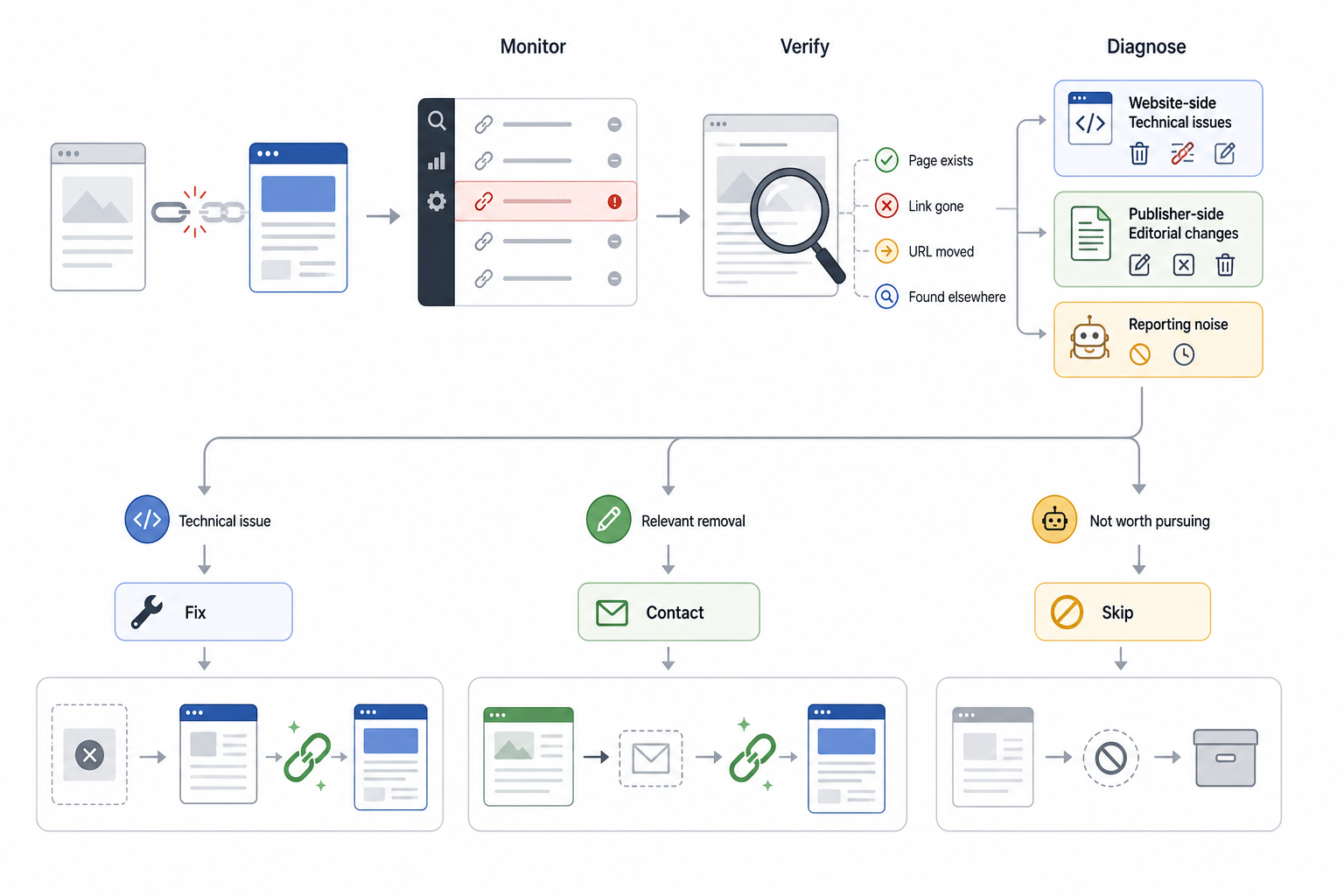
Reclaiming lost backlinks means identifying links that previously pointed to your website but no longer function or appear, diagnosing why they were lost, and restoring the destination or reference where it still makes sense.
This is a recovery strategy rather than new link prospecting.
1. Monitor Lost Links
Backlink tools can identify links that disappear over time.
Record information such as:
- Referring URL
- Former target
- Former anchor
- First-seen date
- Last-seen date
- Reported loss reason
A tool reporting a link as lost does not automatically mean the publisher intentionally removed it.
2. Verify the Loss
Open the referring page.
Check whether:
- The page still exists.
- The link is actually gone.
- The referring URL moved.
- Your target changed.
- The crawler was temporarily blocked.
- A different page now contains the reference.
Verify before contacting the publisher.
3. Identify the Cause
Common causes include:
Your-side problems
- Deleted URL
- Broken redirect
- Changed slug
- Site migration
- Removed asset
Publisher-side changes
- Article rewrite
- Link removal
- Page deletion
- New editorial policy
- Different recommended resource
Reporting issues
- Temporary crawling failure
- URL variant
- Tool database delay
The recovery action depends on the cause.
4. Fix Technical Problems First
If the publisher still links to an old page that you removed, the solution may be:
- Restore the page
- Add an appropriate redirect
- Update the destination
There may be no need to contact the publisher.
5. Contact the Publisher Only When Necessary
If the publisher removed a still-relevant reference, determine whether restoring it continues to help the article.
Do not request restoration simply because the old backlink had a high DR or DA.
The original reference reason should still exist.
6. Know When Not to Reclaim
Do not pursue a lost link when:
- The recommendation is outdated.
- The commercial relationship ended.
- The original resource no longer exists.
- The publisher intentionally replaced it with a more useful source.
- The former link no longer serves readers.
A legitimately lost link is not always a link that should be recovered.
Get Partner and Community Links
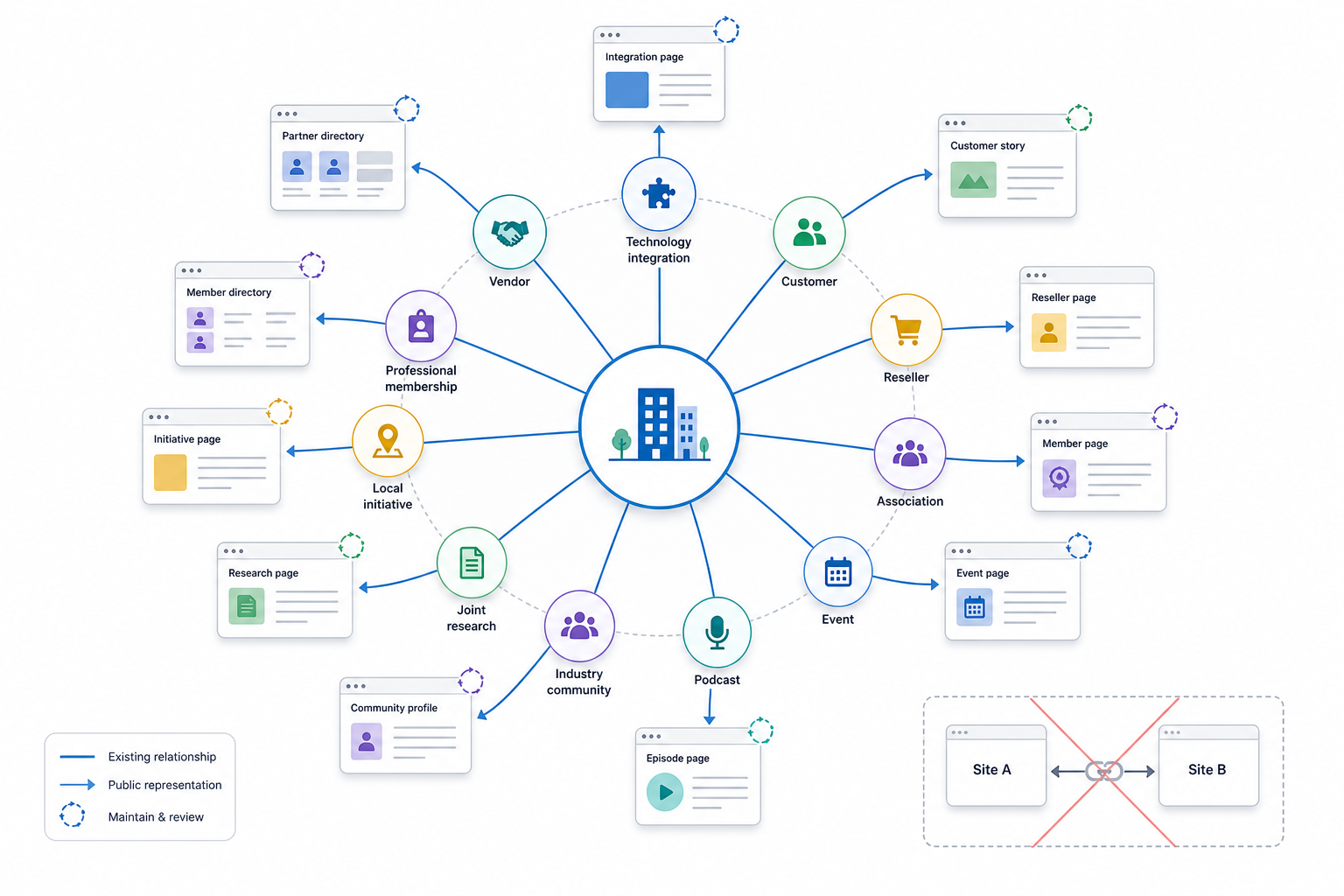
Partner and community links come from real business relationships, collaborations, integrations, memberships, events, associations, customers, vendors, or communities that have a legitimate reason to be represented online.
The relationship should create the reason for the link, not the other way around.
Where Can These Opportunities Exist?
Relevant relationships can include:
- Technology integrations
- Vendors
- Customers
- Resellers
- Associations
- Events
- Podcasts
- Industry communities
- Joint research
- Local initiatives
- Professional memberships
1. Map Existing Relationships
Start with organizations your business already interacts with.
Then determine whether those relationships have public surfaces such as:
- Partner directories
- Integration pages
- Member pages
- Speaker pages
- Event pages
- Customer stories
- Resource pages
2. Decide Whether a Public Reference Makes Sense
A link may help users:
- Verify the relationship
- Access the integration
- Find a partner
- View event information
- Discover a participating company
- Read related research
If the relationship has no useful public representation, a backlink should not be forced into it.
3. Match the Destination to the Relationship
An integration partner should usually reference the relevant integration page rather than an unrelated blog post.
An association may appropriately link to a member profile or homepage.
A joint research project may link to the research itself.
4. Avoid Turning Partnerships Into Link Exchanges
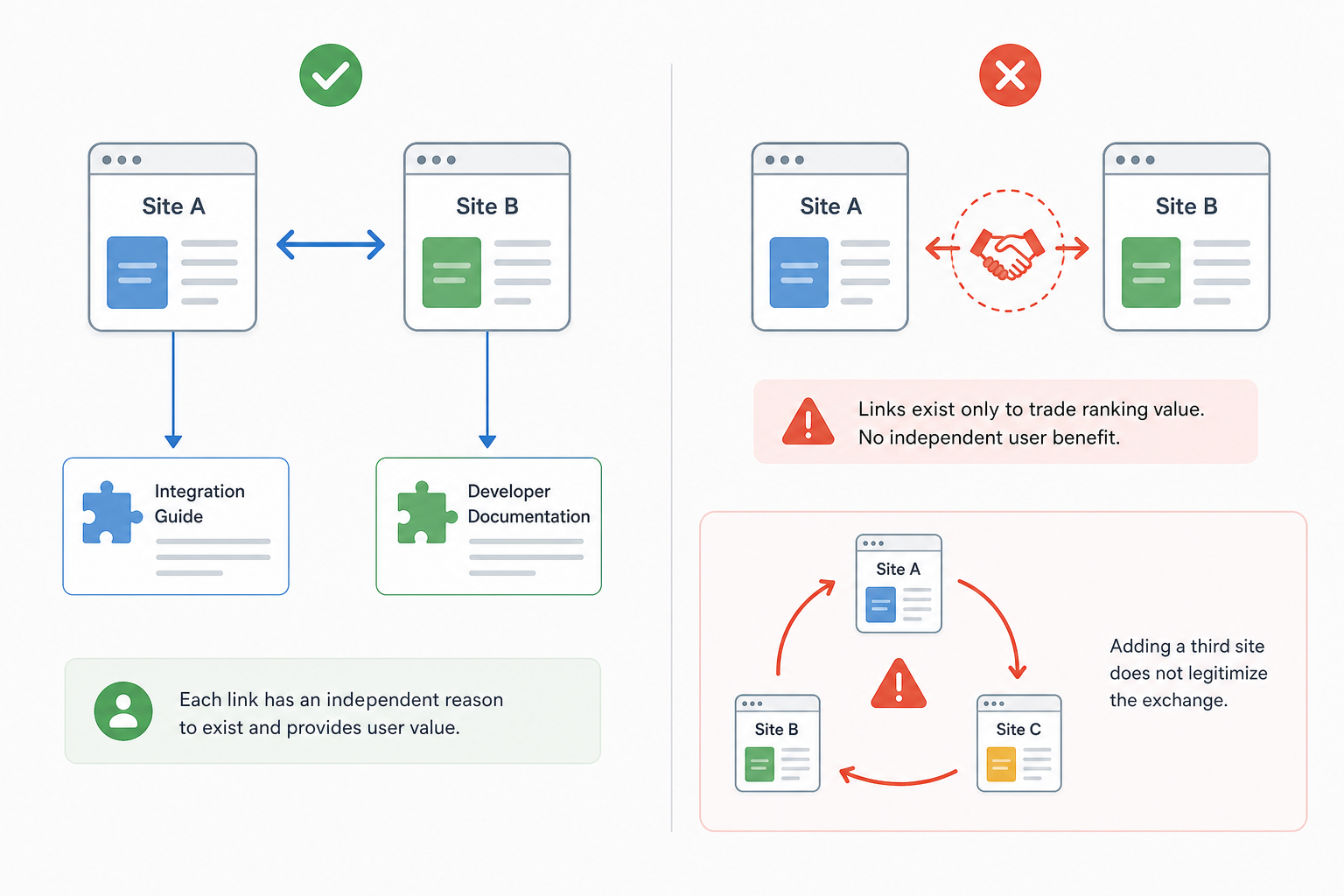
Two genuine partners can naturally reference each other.
That differs from approaching unrelated websites with a proposal such as:
“You link to us and we will link to you.”
The first represents a real relationship. The second may be a ranking-driven link exchange.
5. Maintain the Relationship
Partner links can disappear when:
- Integration pages change
- Partnerships end
- Member directories are rebuilt
- Event pages are archived
Monitor the relationship and keep the referenced information current.
Niche Edits
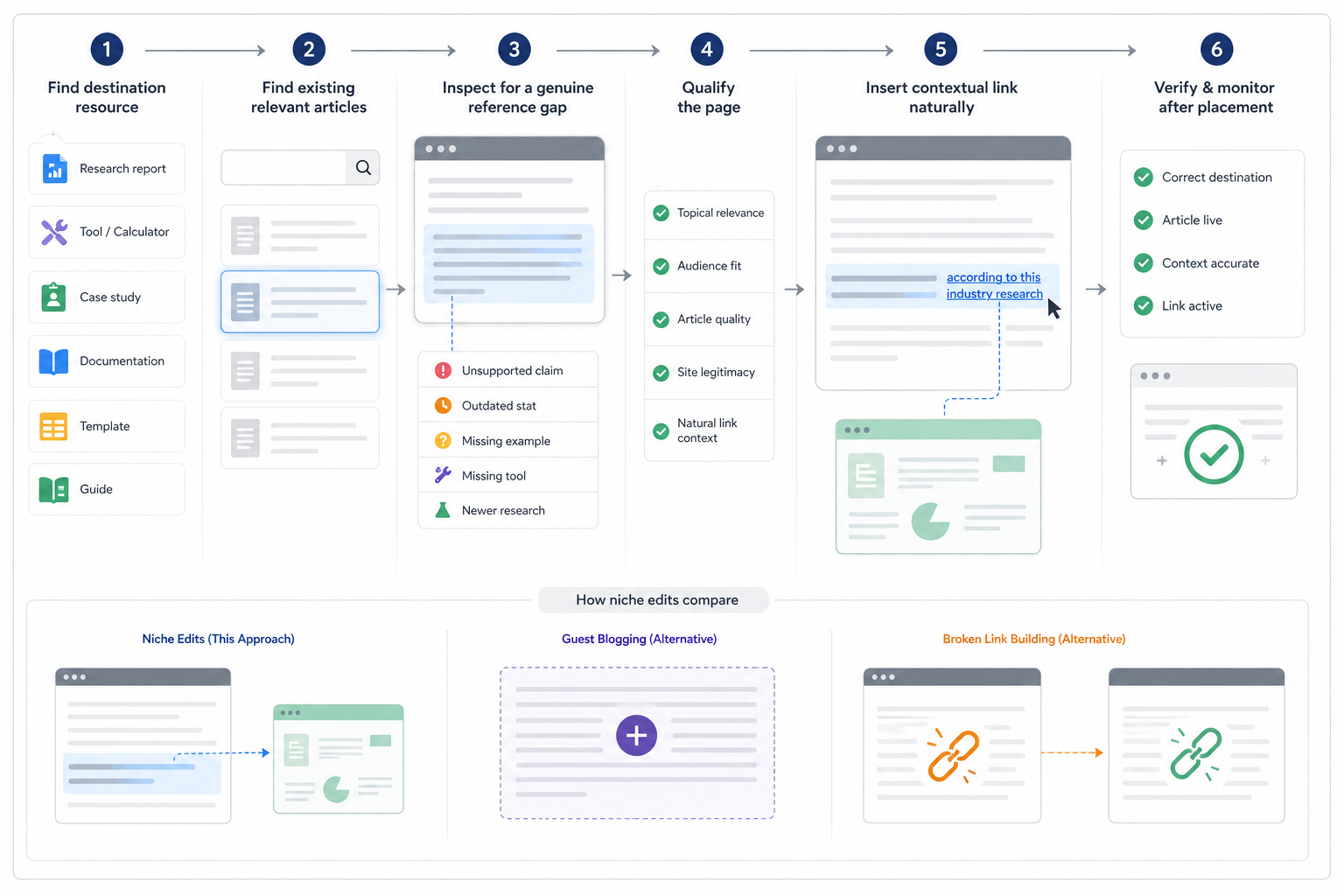
Niche edits, also called link insertions or curated links, are contextual links added to already-published third-party content when a relevant resource genuinely improves, updates, supports, or expands the article.
The defining feature is that the host article already exists.
Niche Edits vs Guest Blogging
Guest blogging: you create a new contributed article.
Niche edit: your resource is added to an existing article.
Niche Edits vs Broken Link Building
Broken link building: an existing reference no longer works.
Niche edit: the article has an editorial resource or citation opportunity even though nothing is necessarily broken.
1. Select the Destination First
Identify what your page can legitimately support.
Examples include:
- Original research
- Statistics
- Tool
- Case study
- Technical documentation
- Template
- Detailed guide
2. Find Existing Relevant Articles
Search for articles that already discuss the same subject.
Then inspect whether your resource would improve a specific passage.
The goal is not to find old pages simply because they have existing backlinks.
3. Identify a Genuine Reference Gap
Possible opportunities include:
- Unsupported claim
- Outdated statistic
- Missing example
- Missing tool
- Incomplete resource list
- Newer research
- Useful supporting explanation
The added link should improve the content itself.
4. Qualify the Actual Page
Evaluate:
- Topic relevance
- Audience fit
- Article quality
- Link context
- Publication legitimacy
- Existing outbound-link behavior
- Destination fit
Do not choose opportunities solely by domain-level metrics.
5. Separate Editorial and Paid Niche Edits
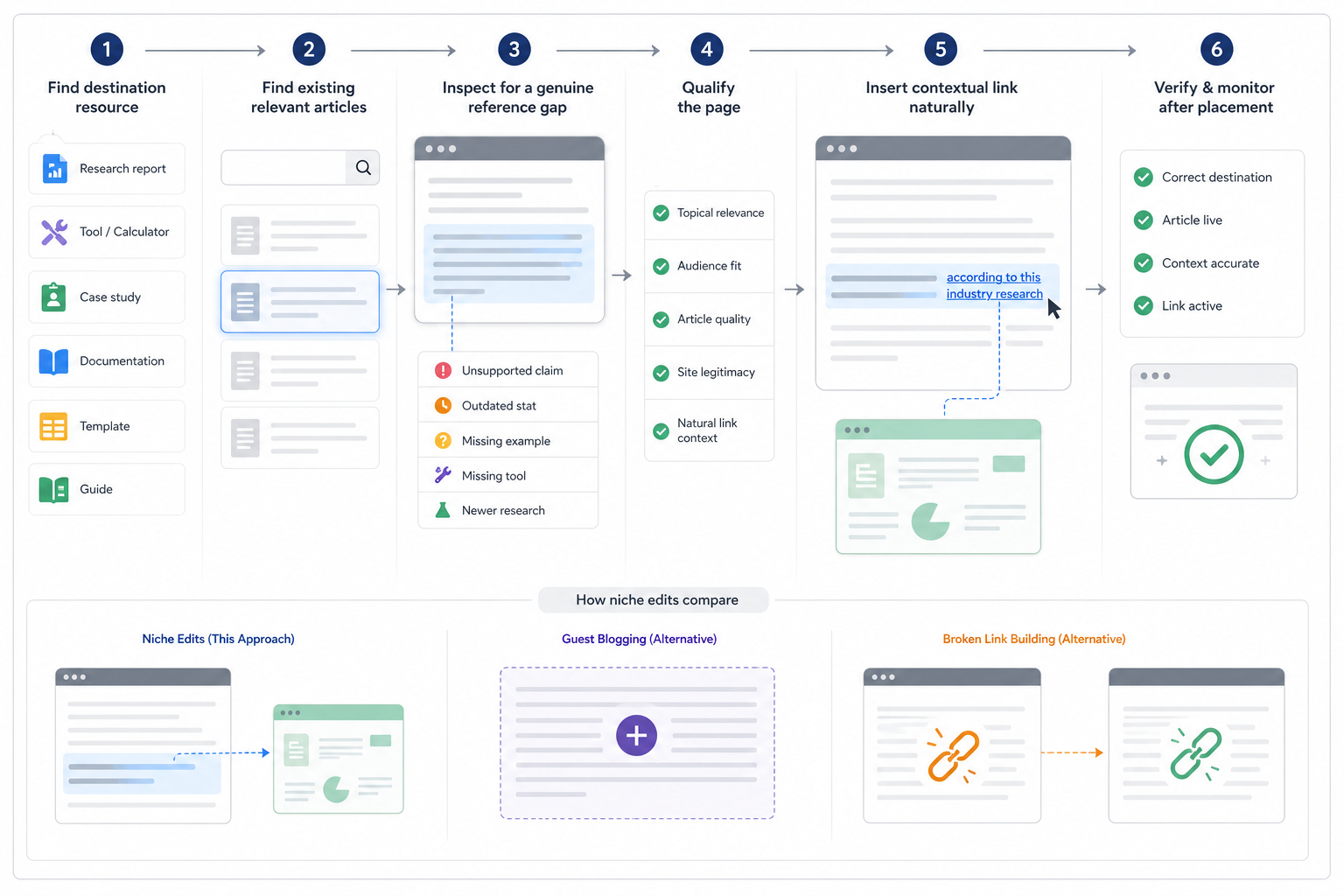
An editor may independently decide to add a useful resource.
Alternatively, a publisher may offer a commercial insertion.
These are different relationships.
If payment influences the placement, the commercial relationship should be treated transparently and appropriate link qualification should be used.
Do not pay specifically to disguise a ranking link as an editorial recommendation.
6. Let Context Determine the Anchor
Avoid demanding:
- Exact-match commercial anchors
- Artificial anchor ratios
- Keyword-stuffed supporting sentences
The publisher should use wording that accurately describes the destination within the article.
7. Verify and Monitor the Placement
Check that:
- The correct page was linked.
- The context remains accurate.
- The destination works.
- The article remains live.
- The relationship is represented correctly.
A legitimate niche edit that later disappears can become a reclamation opportunity.
Listicle Placements
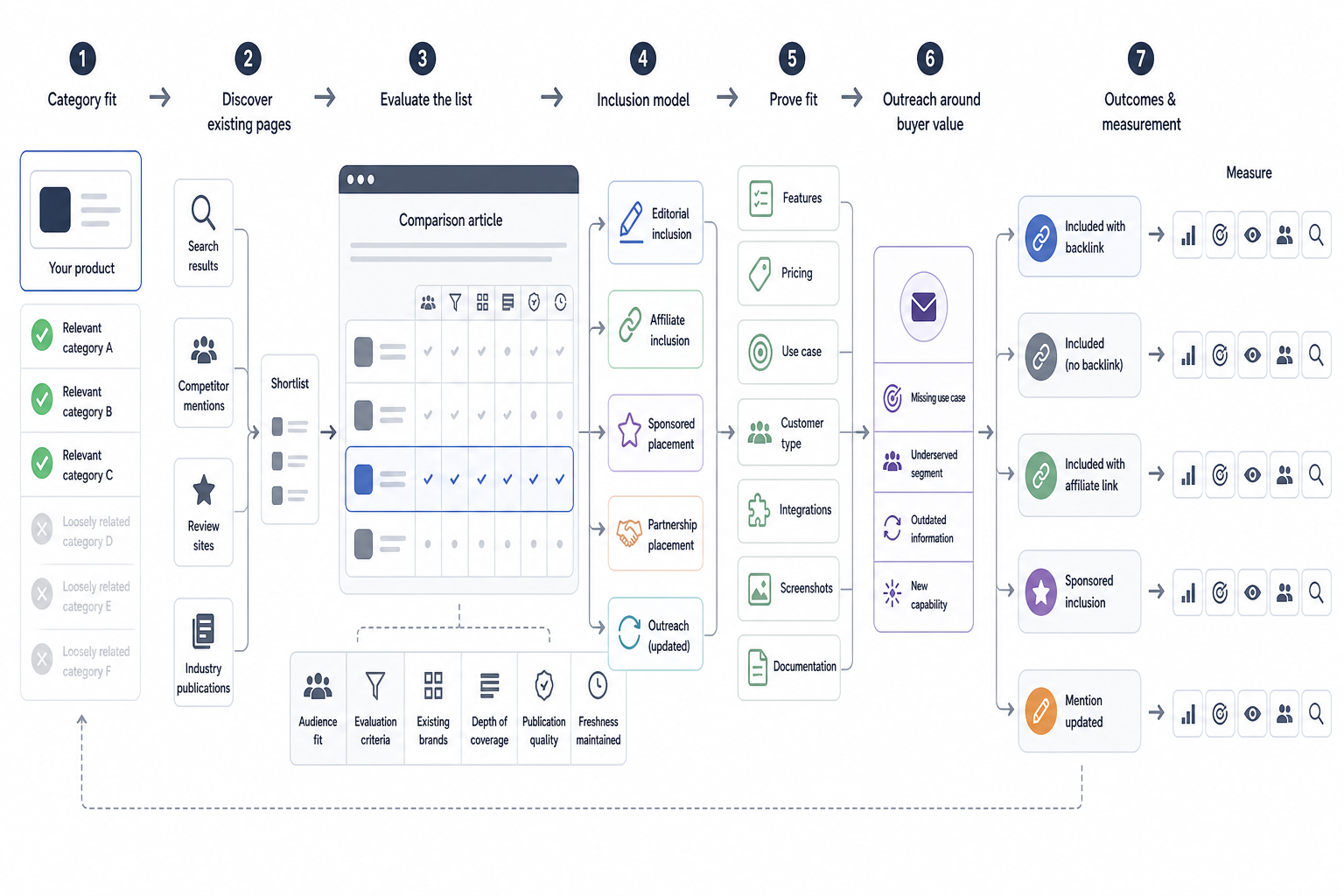
Listicle placements are inclusions of a brand, product, service, or company in an existing third-party roundup, comparison, “best X,” “top X,” or alternatives article where the brand genuinely fits the evaluation.
Their primary strategic value can extend beyond the backlink because these pages often appear while buyers are comparing available options.
What Types of Listicles Matter?
Examples include:
- Best CRM software
- Top project management tools
- HubSpot alternatives
- Best SEO agencies for SaaS
- Best accounting software for startups
- Best ecommerce platforms for small businesses
Different listicles serve different buyer needs.
A broad “best CRM” page may have different selection criteria from “best CRM for nonprofits.”
1. Define the Category You Actually Compete In
Do not pursue every article that loosely mentions your industry.
Map the product to categories where it genuinely qualifies.
2. Find Existing Comparison Pages
Discovery sources can include:
- Search results
- Competitor backlinks
- Competitor brand mentions
- Industry publications
- Affiliate publishers
- Review sites
Competitor presence helps discover pages but does not prove that your brand qualifies.
3. Evaluate the List
Review:
- Search intent
- Audience
- Selection criteria
- Existing brands
- Article depth
- Publication quality
- How products are evaluated
- Whether the page appears maintained
A useful list should stand on its own as a meaningful comparison, not simply as a collection of links.
4. Determine the Inclusion Model
A listicle can be:
- Independently editorial
- Affiliate-supported
- Sponsored
- Partnership-driven
- Updated through outreach
These models should not be treated as identical.
Affiliate participation does not automatically make an article low quality, just as the label “editorial” does not automatically prove complete independence.
5. Prove Why Your Brand Belongs
Provide factual evidence such as:
- Features
- Pricing
- Use case
- Customer type
- Integrations
- Differentiators
- Product screenshots
- Relevant documentation
Do not ask the publisher to call your product “best” without evidence.
6. Pitch Inclusion Around Buyer Value
Explain what the current article may be missing.
For example:
- Product fits an underserved use case.
- Tool serves a market segment not represented.
- Existing information is outdated.
- Product now supports a relevant capability.
Make accurate inclusion easier for the editor.
7. Separate Inclusion From Link Acquisition
Possible outcomes include:
- Brand added with a backlink
- Brand added without a backlink
- Existing mention updated
- Affiliate link added
- Sponsored inclusion
Each has different commercial and SEO implications.
Listicle placement therefore should be measured through more than backlink count.
Relevant measurements can include:
- Referral visits
- Buyer conversions
- Brand visibility
- Accuracy of representation
- Search visibility of the list itself
Link Exchanges
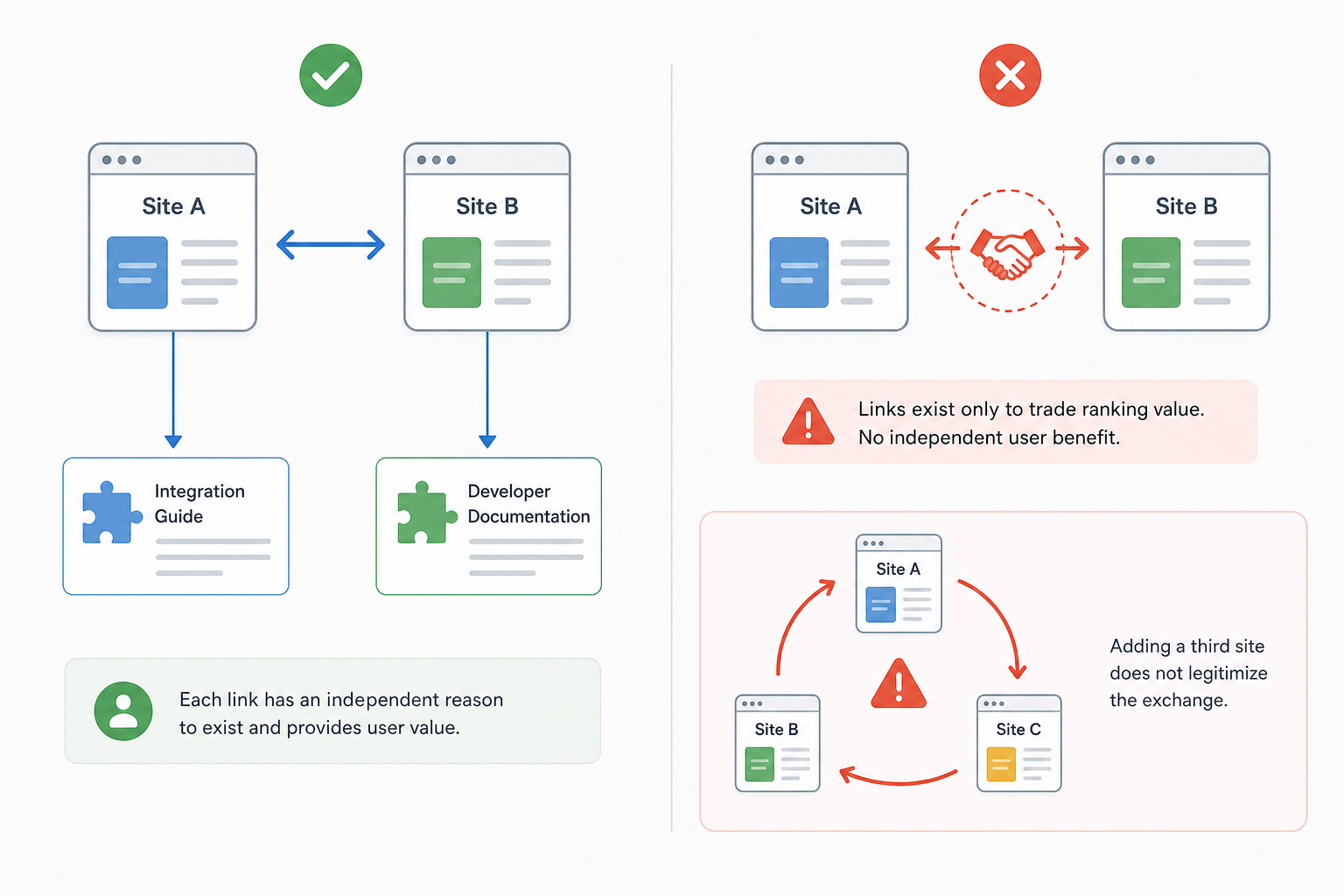
A link exchange occurs when two websites link to each other. Reciprocal links can arise naturally between partners, integrations, complementary resources, researchers, or organizations, but intentionally exchanging links mainly to manipulate rankings, especially at scale, can create link-spam risk.
The existence of links in both directions is not enough to determine whether the relationship is legitimate.
Natural Reciprocal Linking
Suppose Software A integrates with Software B.
Software A links to Software B's integration documentation.
Software B links to Software A's corresponding integration page.
Both links have an independent reason to exist for users.
That is natural reciprocity.
Ranking-Driven Exchange
A different situation is:
Website A asks Website B for a backlink.
Website B agrees only if Website A provides a backlink in return.
Neither reference would otherwise exist.
That is a deliberate link exchange.
How Should You Evaluate a Reciprocal Link?
Ask:
- Would Site A link to Site B without receiving a backlink?
- Would Site B link to Site A without receiving a backlink?
- Does each reference help its own audience?
- Are the pages contextually related?
- Is compensation involved?
- Is reciprocal linking being repeated systematically?
There is no universal safe reciprocal-link percentage.
Rules such as “keep reciprocal links under 10%” or “only exchange with DR 50+ sites” do not establish whether the links are legitimate.
Do Not Use Three-Way Exchanges as a Loophole
Changing the pattern from:
A links to B and B links to A
to:
A links to B, B links to C, and C links to A
does not automatically change the underlying purpose.
If the references exist primarily because backlinks are being traded for rankings, adding more websites does not create an independent editorial reason.
The correct question is not how to make an exchange appear natural. It is whether each link has a legitimate reason to exist.
Where Can You Find Link Building Opportunities?
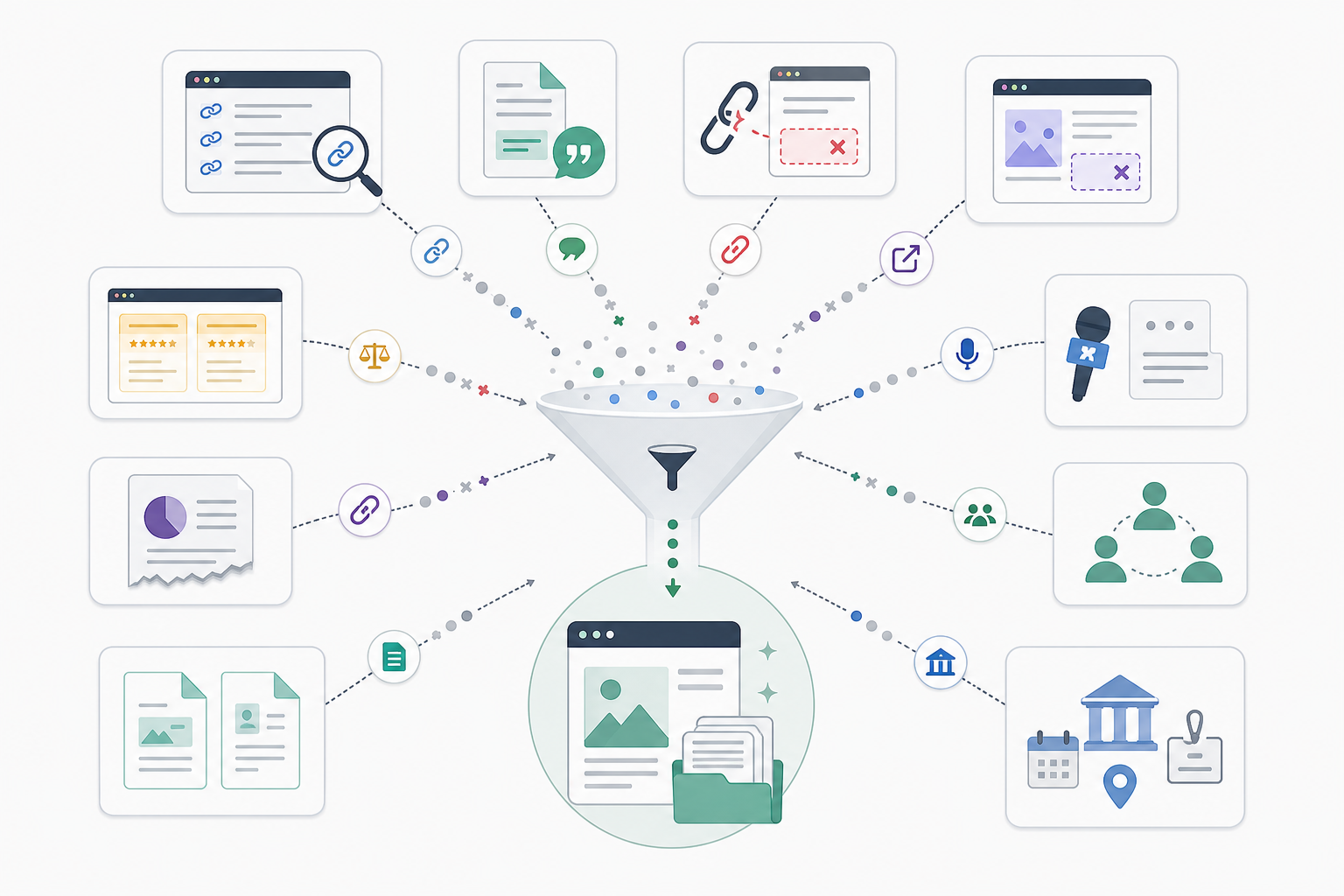
Link building opportunities can be found wherever there is evidence that another website may have a legitimate reason to reference your brand, expertise, content, data, product, relationship, or resource.
The goal is not to collect the largest possible prospect list. It is to find signals that reveal a real reference opportunity.
Competitor Backlinks
Analyze:
- Competitor referring domains
- Competitor referring pages
- Sites linking to several competitors
- Competitor linkable assets
- Competitor media coverage
These can reveal:
- Directories
- Resource pages
- Listicles
- Partnerships
- Guest-contribution opportunities
- Journalist sources
Existing Brand Mentions
Look for pages already mentioning:
- Company
- Products
- Founders
- Research
- Tools
- Statistics
An existing mention can become an attribution opportunity.
Existing Backlinks
Review your own backlink profile for:
- Lost links
- Broken links
- Wrong destinations
- Old URLs
These can create reclamation opportunities.
Existing Publisher Content
Relevant articles can reveal:
- Citation gaps
- Outdated resources
- Broken external links
- Missing examples
- Missing products in comparisons
These opportunities can lead to niche edits, broken link building, or listicle inclusion.
Journalists and Media
Monitor:
- Source requests
- Reporter queries
- Relevant beats
- Industry news
- Current stories
These can support reactive media responses or broader Digital PR.
Partners and Communities
Review relationships with:
- Customers
- Vendors
- Technology partners
- Associations
- Events
- Communities
- Podcasts
- Professional organizations
The underlying relationship may already create a legitimate reason for online attribution.
Linkable Content Gaps
Analyze what publishers repeatedly cite in your market.
Examples include:
- Statistics
- Research
- Calculators
- Templates
- Benchmarks
- Tools
- Visualizations
Repeated external demand can reveal an opportunity to create a reference-worthy asset.
Commercial Evaluation Pages
Search for:
- Best X
- Top X
- Alternatives
- Comparisons
- Category roundups
Where your company legitimately belongs, these pages can become listicle opportunities.
Industry and Local Ecosystems
Potential sources include:
- Trade associations
- Chambers
- Professional groups
- Vendor ecosystems
- Local organizations
- Conferences
- Industry directories
Eligibility and real participation should determine whether a reference belongs there.
The best link building opportunities are therefore found through reference signals, not simply by generating lists of high-DR domains.
How Do You Execute a Link Building Strategy?
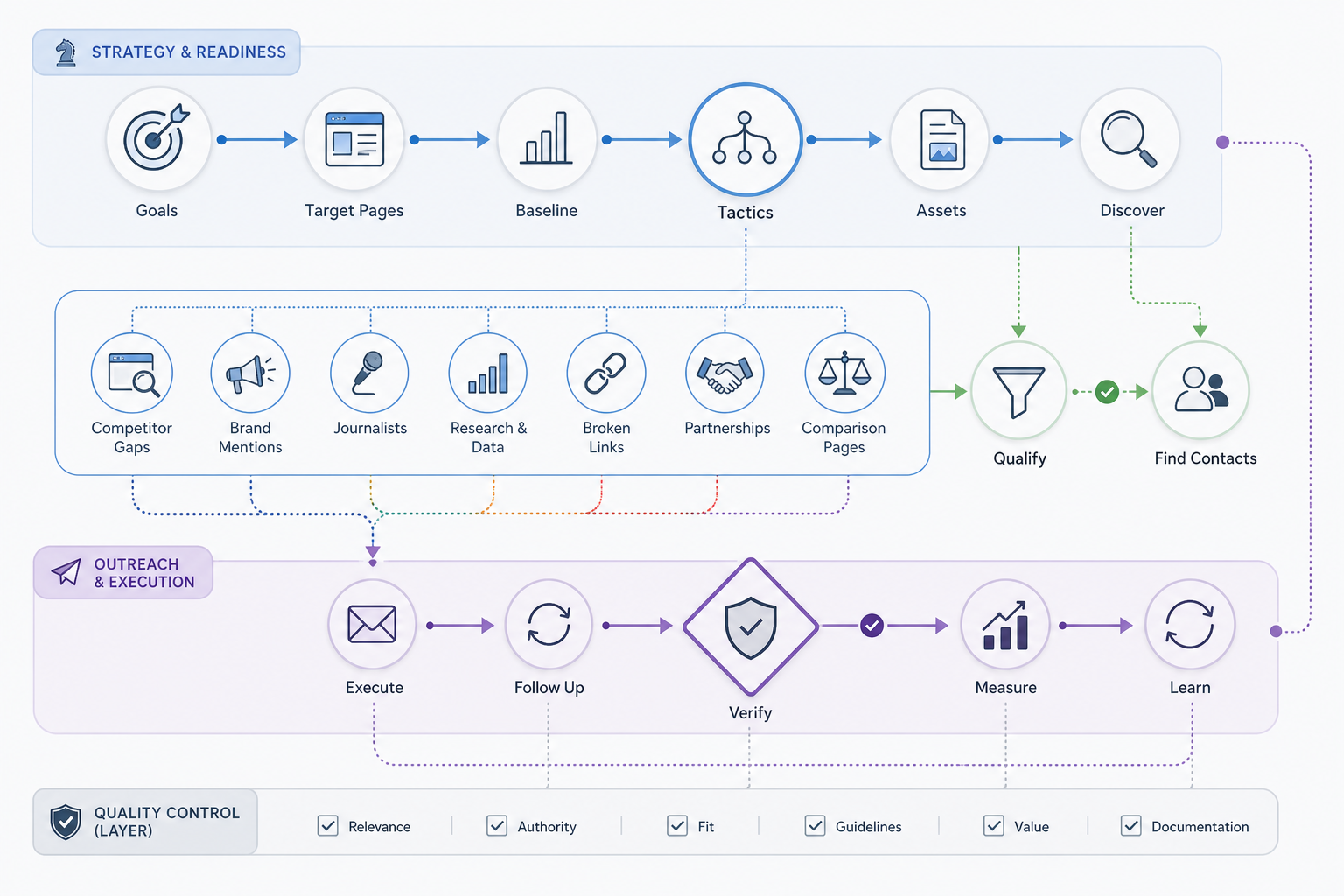
Executing a link building strategy means turning your chosen objectives and tactics into a repeatable operating process for finding, qualifying, acquiring, verifying, and measuring relevant external references.
Execution should start with the business and page objective, not with sending outreach emails.
1. Define the Objective
Possible objectives include:
- Earn references to research
- Increase relevant referring domains
- Build product-category visibility
- Recover lost links
- Increase media coverage
- Enter relevant comparison pages
- Generate referral traffic
Different goals require different tactics.
2. Select the Target
Determine what should receive the reference.
Targets can include:
- Homepage
- Product page
- Service page
- Research report
- Tool
- Statistics page
- Integration page
- Guide
Do not assume every campaign should link directly to a commercial page.
3. Establish the Baseline
Record useful starting data such as:
- Current referring domains
- Existing backlinks
- Lost links
- Main linked pages
- Unlinked mentions
- Existing media coverage
This creates a measurement point.
4. Choose the Tactic Mix
Match the available opportunities to tactics.
Examples:
- Competitor gaps → competitor replication
- Existing mentions → mention conversion
- Journalists → media requests
- Research → Digital PR
- Dead references → broken link building
- Old lost links → reclamation
- Partnerships → partner links
- Comparison pages → listicle placement
5. Prepare the Required Inputs
Depending on the tactic, you may need:
- Research
- Tool
- Expert
- Product information
- Partnership
- Guest article
- Replacement resource
- Case study
- Statistics
Do not prospect heavily before the required asset or evidence exists.
6. Discover Opportunities
Build candidate lists from sources such as:
- Competitor backlinks
- Search results
- Brand monitoring
- Publisher research
- Journalist platforms
- Existing relationships
- Broken resources
7. Classify Every Opportunity
Classifications can include:
- Editorial
- Media
- Guest contribution
- Directory
- Partner
- Listicle
- Broken link
- Reclamation
- Niche edit
- Commercial
Classification determines how the opportunity should be handled.
8. Qualify Before Outreach
Evaluate:
- Relevance
- Audience
- Publisher quality
- Actual page
- Destination fit
- Reference reason
- Relationship model
- Acquisition feasibility
Domain metrics can support prioritization but should not replace manual qualification.
9. Identify the Correct Contact
Possible owners include:
- Author
- Editor
- Journalist
- Content manager
- Partnership manager
- Website owner
Contact discovery should happen after qualification, not before.
10. Execute the Tactic
The action depends on the opportunity.
You might:
- Send an attribution request.
- Pitch a resource.
- Submit a directory listing.
- Answer a journalist.
- Contribute an article.
- Suggest a broken-link replacement.
- Ask a partner to correct missing attribution.
Do not force every opportunity into the same outreach template.
11. Follow Up Selectively
A reasonable follow-up can remind a busy editor or publisher.
Repeated aggressive follow-ups can damage the relationship.
Track responses so people are not contacted unnecessarily.
12. Verify the Outcome
After a placement goes live, check:
- Correct referring page
- Correct destination
- Accurate context
- Link functionality
- Appropriate relationship treatment
- Page accessibility
13. Measure the Campaign
Operational measurements can include:
- Opportunities discovered
- Qualified opportunities
- Outreach sent
- Responses
- Links earned
- Referring domains
- Media coverage
- Restored links
- Referral traffic
Where possible, also evaluate:
- Leads
- Signups
- Purchases
- Product discovery
Avoid attributing a ranking change to one individual link without evidence.
14. Learn and Adjust
Review which opportunity sources produce useful results.
You may find that:
- Original research earns media citations.
- Integrations generate partner links.
- Competitor analysis exposes listicles.
- Founder expertise performs well in journalist outreach.
Those patterns can inform the next campaign.
What Should a Link Building Checklist Include?
A link building checklist should cover strategy, target-page readiness, assets, opportunity discovery, prospect qualification, relationship type, outreach, live-placement verification, tracking, maintenance, and campaign review.
Use the checklist as a quality-control system rather than simply as a prospect list.
Strategy and Baseline
- ☐ Campaign objective is defined.
- ☐ Target pages or brand outcomes are identified.
- ☐ Existing backlinks are reviewed.
- ☐ Lost backlinks are reviewed.
- ☐ Existing brand mentions are reviewed.
- ☐ Success is not defined only by backlink count.
Target and Asset Readiness
- ☐ Destination page is useful and live.
- ☐ Page matches the expected reference context.
- ☐ Supporting research or evidence is ready.
- ☐ Required product information is accurate.
- ☐ Linkable assets are current.
Opportunity Discovery
- ☐ Competitor links are reviewed where relevant.
- ☐ Brand mentions are monitored.
- ☐ Broken-resource opportunities are checked.
- ☐ Media requests are monitored.
- ☐ Partner opportunities are reviewed.
- ☐ Relevant listicles are identified.
Prospect Qualification
- ☐ Referring page is relevant.
- ☐ Audience fit is clear.
- ☐ Reference reason exists.
- ☐ Destination fits the passage or relationship.
- ☐ Publisher appears legitimate.
- ☐ Opportunity is not selected solely by DA or DR.
Relationship Check
- ☐ Editorial opportunities are distinguished from commercial ones.
- ☐ Sponsored relationships are handled transparently.
- ☐ Reciprocal links have independent reasons to exist.
- ☐ No paid ranking link is disguised as independent editorial inclusion.
- ☐ Anchor text is not being artificially engineered.
Outreach and Execution
- ☐ Correct contact is identified.
- ☐ Outreach references the actual page or relationship.
- ☐ Reader or publisher value is clear.
- ☐ Message is concise.
- ☐ Follow-ups are controlled.
- ☐ Outreach history is recorded.
Live Placement QA
- ☐ Referring page is live.
- ☐ Link works.
- ☐ Destination is correct.
- ☐ Context is accurate.
- ☐ Relationship treatment is appropriate.
- ☐ No misleading claims were added.
Tracking and Measurement
- ☐ Live links are recorded.
- ☐ Referring domains are tracked.
- ☐ Lost links are monitored.
- ☐ Referral traffic is reviewed where meaningful.
- ☐ Business outcomes are reviewed where measurable.
Maintenance
- ☐ Important links are periodically checked.
- ☐ Lost links are investigated before outreach.
- ☐ Outdated destination pages are updated.
- ☐ Partner information remains accurate.
- ☐ Linkable assets remain current.
- ☐ Campaign learnings are fed into future prospecting.
A useful checklist verifies whether the reference should exist, whether it was acquired appropriately, and whether it continues to serve its intended context.
Which Link Building Programs Can Support Your Strategy?
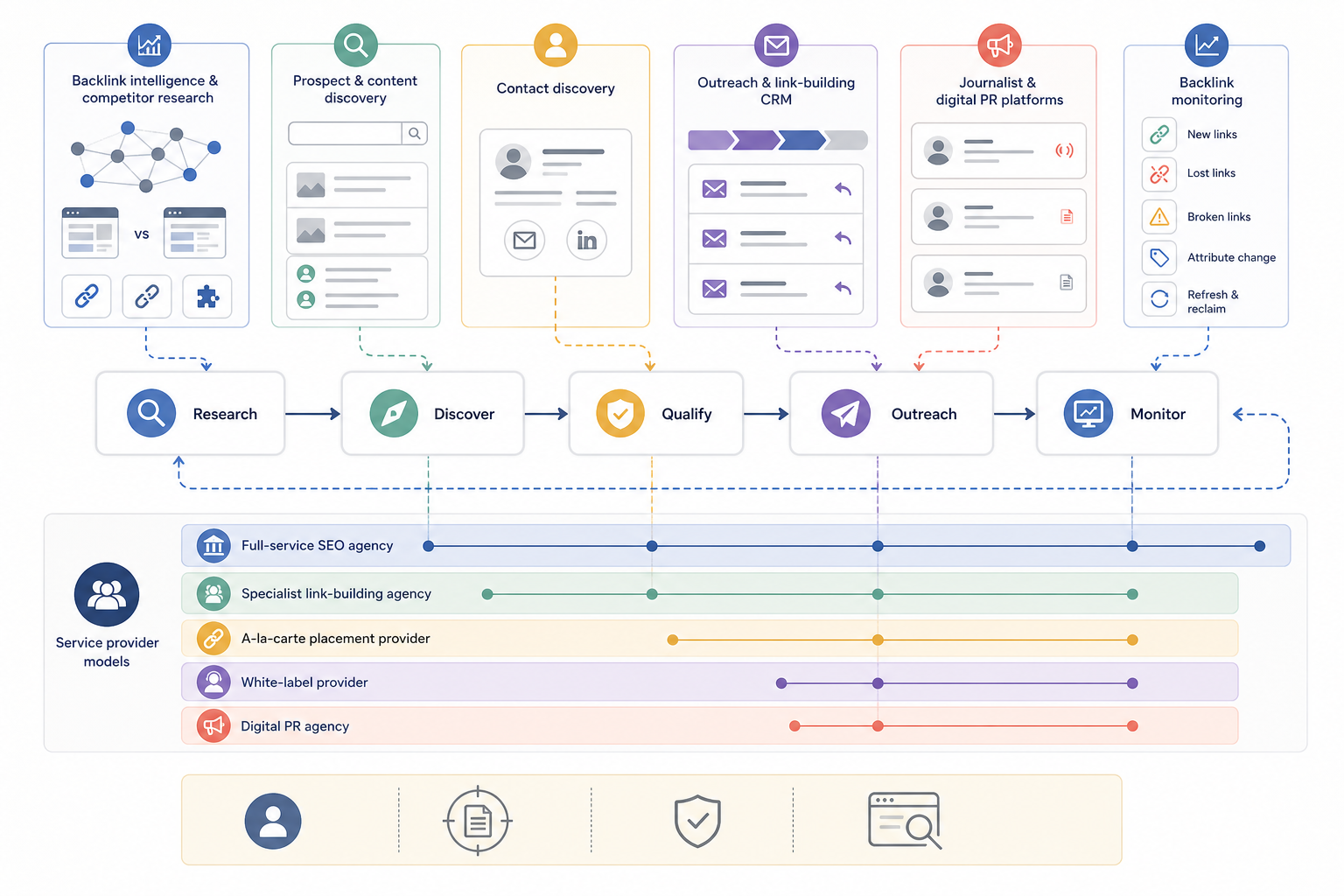
Link building programs fall into software tools that support research, prospecting, outreach, and monitoring, and service providers that execute part or all of the link-building process.
The right program depends on which operational layer you need help with. Different link building tools support different parts of that workflow, from backlink research and competitor analysis to prospecting, outreach, monitoring, and campaign reporting.
Backlink Intelligence and Competitor Research
These tools help analyze:
- Referring domains
- Referring pages
- Competitor backlinks
- Backlink gaps
- Lost links
- Broken links
Examples include:
Ahrefs: backlink intelligence, competitor research, Link Intersect, broken-link discovery, and content prospecting.
Semrush: backlink analysis, Backlink Gap, prospect discovery, outreach workflows, and monitoring.
SE Ranking: backlink research, gap analysis, and backlink monitoring.
Moz Link Explorer: backlink analysis and competitor-link intersection.
These tools help discover potential opportunities. They do not determine whether an opportunity is relevant or legitimate.
Prospect and Content Discovery
Useful resources can include:
- Ahrefs Content Explorer
- Semrush backlink research
- BuzzSumo
- Search operators
- Publisher databases
Discovery should be followed by manual page-level qualification.
Outreach and Link-Building CRM
Outreach systems help teams manage:
- Contacts
- Prospects
- Personalization
- Email sequences
- Follow-ups
- Campaign stages
- Reporting
Examples include:
- BuzzStream
- Pitchbox
- Semrush outreach workflows
Automation can organize communication, but it should not decide whether a backlink should exist.
Contact Discovery
Email-discovery tools such as Hunter can help find the correct contact after a prospect has been qualified.
The preferred sequence is:
qualify the opportunity first, find the contact second.
Collecting thousands of emails before deciding whether the websites are relevant reverses that process.
Journalist and Digital PR Platforms
Media-oriented programs can support:
- Source requests
- Journalist research
- Media monitoring
- PR outreach
Examples include:
- HARO
- Connectively
- Featured
- Qwoted
- SourceBottle
- Muck Rack
These platforms support media discovery. The quality of the response and relevance of the expert still require human judgment.
Backlink Monitoring
Monitoring tools can identify:
- New links
- Lost links
- Broken links
- Destination changes
- Attribute changes
Examples include backlink-monitoring functions within Ahrefs, Semrush, and SE Ranking.
Monitoring is particularly useful for link reclamation and placement maintenance.
Managed Link-Building Services
Software helps internal teams execute campaigns. Service providers can take responsibility for functions such as:
- Prospecting
- Publisher outreach
- Content support
- Placement coordination
- Reporting
- Link replacement
Different service models include:
Full-service SEO agencies: link building forms part of a broader SEO engagement.
Specialist link-building agencies: acquisition is the primary service.
À-la-carte providers: customers purchase individual placements according to defined criteria.
White-label providers: agencies outsource fulfillment for their own clients.
Digital PR agencies: media stories, research, and journalist relationships drive acquisition.
BuildSaaSLinks
BuildSaaSLinks is a SaaS-focused à-la-carte link-building provider designed for teams that want individual SaaS-relevant editorial placements without necessarily hiring a full SEO agency.
Its service model focuses on publisher placements, reporting, and post-placement maintenance rather than software-based backlink research.
This model can fit:
- SaaS businesses
- SEO teams
- Agencies requiring SaaS link fulfillment
- Businesses buying links individually rather than through a full monthly SEO retainer
FatJoe
FatJoe represents a broader white-label and managed fulfillment model.
Its service categories include areas such as:
- Blogger outreach
- Niche edits
- Managed link acquisition
- Content-related fulfillment
This model can suit agencies or internal teams looking to outsource larger parts of production and publisher coordination.
Full-Service and Managed Agencies
Providers such as broader SEO or Digital PR agencies can combine:
- Strategy
- Link building
- Content
- Digital PR
- Technical SEO
- Reporting
This may make more sense where link acquisition cannot be separated from wider organic-search work.
How Should You Evaluate a Link-Building Provider?
Ask:
- How are publishers found?
- Why should each link exist?
- Can you review the actual pages?
- How is topical relevance evaluated?
- Are placements editorial, sponsored, affiliate, or paid?
- Who produces supporting content?
- Can you approve or reject opportunities?
- What happens if a link disappears?
- How are commercial relationships represented?
- What reporting is provided?
Do not select a provider only because it sells placements according to DR, DA, or traffic tiers.
Those metrics can organize a commercial service, but placement quality still depends on the actual publisher, page, context, audience, destination, and reason for the reference.
Link building software and service providers can make research, outreach, fulfillment, and monitoring more efficient, but they do not replace the central strategic decision: whether another website has a legitimate reason to reference your page in the first place.
Need links on real SaaS and business websites?
Links are placed after your approval, on sites with guaranteed DR and traffic, with a 1-year replacement guarantee.

