
Link Building Benefits: How It Supports SEO, Traffic, Brand Visibility & SaaS Growth
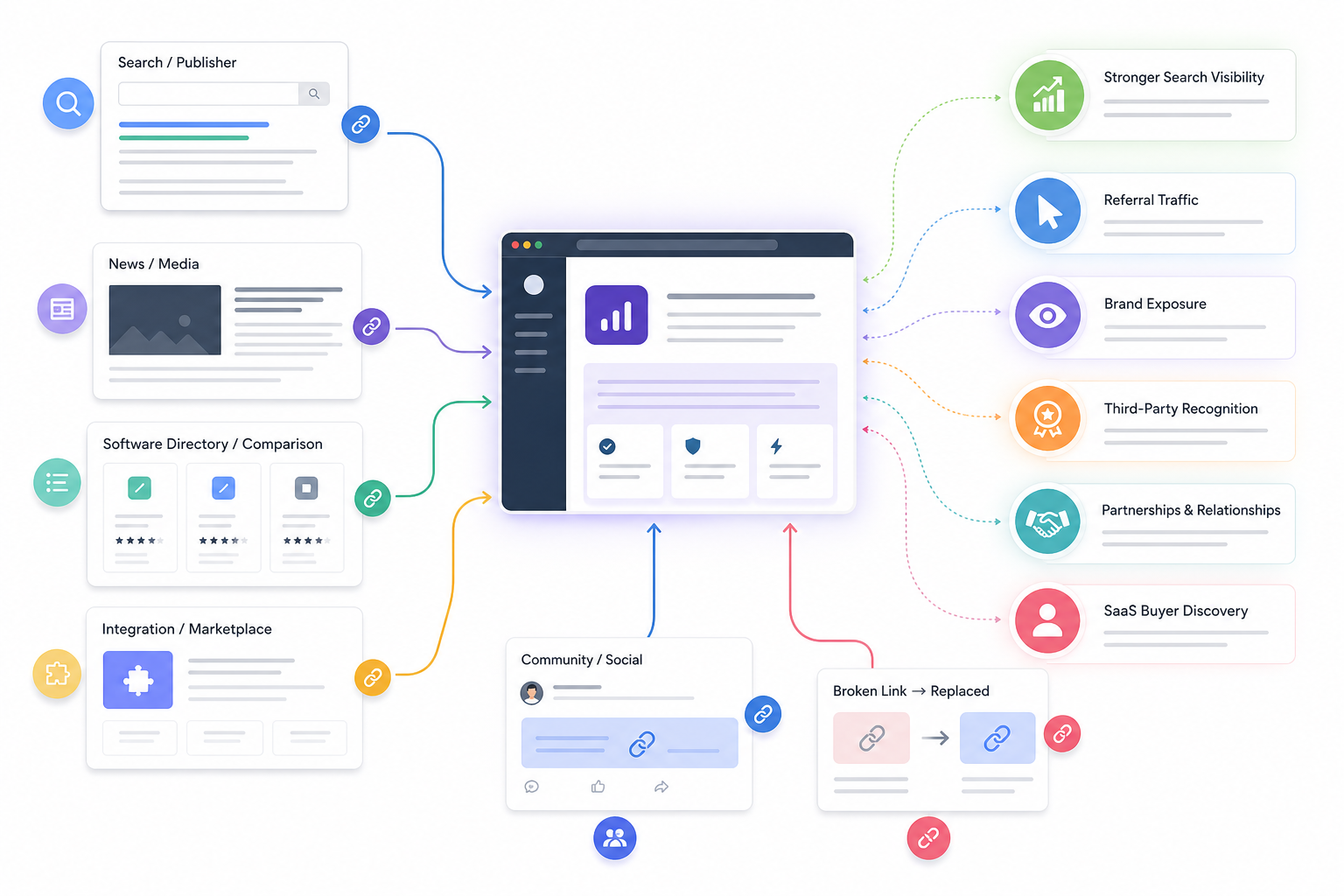
The benefits of link building extend beyond rankings. Relevant external references can support organic search visibility, create additional discovery and referral paths, expose a brand, product, expert, or resource to new audiences, strengthen third-party recognition, and create commercial, publisher, media, and partnership opportunities.
The actual benefit of any backlink depends on why the reference exists, where it appears, who sees it, what page it points to, and whether the source and destination are genuinely relevant to one another.
Link building can create value across several dimensions.
Search value comes from relevant external references forming part of the wider relationships search systems can evaluate between webpages.
Discovery value comes from links giving users and crawlers another route to pages, products, research, tools, and other resources.
Referral value comes from users clicking from an external page directly to the linked destination.
Brand and audience value comes from third-party websites exposing a company, product, expert, study, or resource outside the company's owned channels.
Commercial value can arise when a link appears in environments where people are actively evaluating options, such as software comparisons, product directories, integration marketplaces, and partner ecosystems.
Relationship value can develop through legitimate interaction with publishers, journalists, editors, partners, associations, and professional communities.
Durable value can exist when a useful external reference remains live, relevant, and discoverable over time.
One backlink can create several of these benefits simultaneously, but no backlink automatically delivers all of them.
The way the backlink is acquired also changes its likely benefit profile.
Broken link building starts with a reference that previously existed but no longer works. Its distinctive advantage is that the publisher has already demonstrated a need for an external resource in that context, creating an opportunity to restore a useful reader path with an appropriate replacement.
Guest posting creates value differently. A business or expert contributes original knowledge to another publication, gaining access to a relevant external audience while potentially creating referral visits, expert visibility, publisher relationships, and appropriate source references.
PR moves further toward independent editorial recognition. Original research, proprietary data, expert commentary, useful tools, and genuine company developments can create reasons for journalists to mention, cite, or link to a company while also generating media visibility and journalist relationships.
Social media sharing supports link building more indirectly. Sharing research, reports, statistics, calculators, tools, templates, and other useful resources can expose them to journalists, creators, publishers, researchers, and professional communities that may later choose to reference them independently.
For SaaS companies, these benefits can become particularly relevant because software buyers frequently research products through search results, comparison articles, alternatives pages, integration marketplaces, software directories, partner ecosystems, industry publications, and communities. Relevant external references can therefore contribute to product discovery throughout the buying journey.
Professional link building services create a different category of benefit. Their value comes from adding execution capacity across prospect research, publisher qualification, outreach, content coordination, quality assurance, monitoring, and reporting rather than making an individual backlink inherently more valuable.
Two backlinks are therefore not equivalent simply because both point to the same website.
Their actual benefit depends on attributes such as:
- Source: whether the referring page is legitimate and relevant.
- Audience: whether real users who care about the topic can encounter the reference.
- Context: why the link appears in that particular article, comparison, directory, research page, or partnership page.
- Destination: whether the linked page satisfies the expectation created by the source.
- Relationship: whether the reference is editorial, sponsored, affiliate, partnership-based, user-generated, or navigational.
- Persistence: whether the referring page and link remain useful and discoverable over time.
Different reference reasons can therefore produce different benefit profiles.
A research citation can support source attribution, expert visibility, referral discovery, and search context. A broken-link replacement can restore a useful reader path while creating a contextual backlink. A guest contribution can create audience access and publisher relationships. PR coverage can create media exposure and source citations. Social distribution can increase human discovery. A SaaS integration reference can help users understand product compatibility while sending referral traffic.
Link building benefits should also be separated from guarantees.
A backlink does not guarantee higher rankings. A crawlable external link provides another discovery route, but discovery is not the same as crawling, indexing, or ranking. Domain Rating, Domain Authority, and similar third-party scores do not represent Google's measurement of backlink value. External recognition can help human audiences evaluate expertise or credibility, but backlinks should not be described as mechanically increasing E-E-A-T or transferring a measurable amount of “trust,” “authority,” or “link juice.”
Commercial outcomes are equally conditional. A relevant link can create an opportunity for referral traffic, leads, demos, trials, purchases, partnerships, or other business outcomes, but those results depend on the referring audience, user intent, destination, product, offer, and conversion journey.
Useful links can also continue creating value over time, but they are not permanent assets. External publishers can remove links, edit pages, change destinations, add link qualifications, or retire content.
Link building therefore creates several kinds of potential value, but the clearest starting point is to separate its main benefits across search visibility, referral traffic, page discovery, brand recognition, and ongoing external value.
What Are the Main Benefits of Link Building?
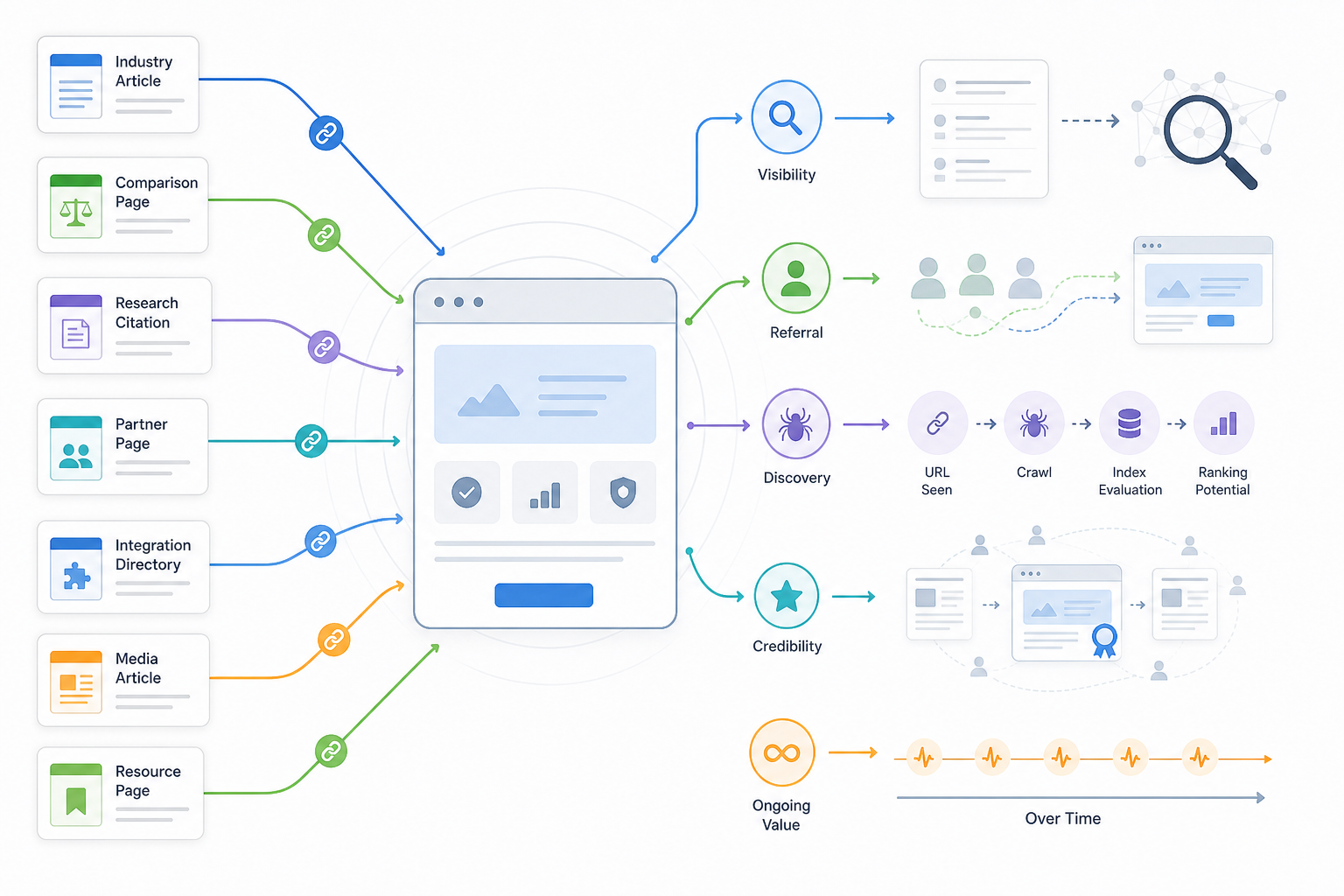
The main benefits of link building are improved search visibility, increased referral traffic, better URL and content discovery, greater brand visibility and human credibility, and potential ongoing organic or referral value.
1. Improved Search Visibility
Relevant external links can contribute to the broader systems search engines use to understand relationships among webpages and evaluate useful results.
The important relationship is:
Relevant external reference → possible contribution to search evaluation.
It is not:
Backlink → automatic ranking increase.
Search performance can also depend on factors such as:
- Search intent
- Content relevance
- Technical accessibility
- Page quality
- Internal architecture
- Competition
A backlink therefore supports one part of a broader organic search environment.
Domain Rating, Domain Authority, Authority Score, and similar metrics can help SEO practitioners research websites, but they are third-party measurements rather than Google's own backlink-value scores.
2. Increased Referral Traffic
External links give users a direct route from another website to the linked page.
Relevant referral sources can include:
- Industry publications
- Product-comparison pages
- Research citations
- Partner pages
- Integration directories
- Media articles
- Resource pages
A SaaS buyer reading a software comparison, for example, can click directly from the third-party article to a product page.
Referral potential depends on several factors, including:
- Referring-page readership
- Link placement
- Topic relevance
- User intent
- Destination fit
A backlink therefore creates a referral opportunity, not guaranteed traffic.
3. Better URL and Content Discovery
Crawlable external links can give search engines another path through which to discover URLs.
The stages should remain separate.
Discovery means a search engine becomes aware of a URL.
Crawling means a crawler fetches the URL.
Index evaluation means the search engine processes the page and determines whether and how it belongs in its index.
Ranking determines whether the indexed page appears for relevant searches.
A backlink can support discovery without guaranteeing any later stage.
4. Greater Brand Visibility and Credibility
Third-party references can expose a:
- Brand
- Product
- Expert
- Research report
- Tool
to audiences beyond the company's own website.
External exposure can come through:
- Journalist citations
- Industry publications
- Product reviews
- Guest contributions
- Partner pages
- Research citations
- Comparison articles
Independent references can influence how human readers recognize and evaluate the company or resource.
This is a human credibility and visibility benefit.
It should not be described as a measurable Google trust score or as a mechanical increase in E-E-A-T.
5. Potential Long-Term Organic and Referral Value
A useful external reference can continue providing value while it remains live, relevant, and discoverable.
Possible ongoing outcomes include:
- Referral visits
- Brand discovery
- Product discovery
- Source attribution
- Search context
For example, an evergreen industry guide that continues receiving readers can keep sending users to a cited research page long after the original outreach or promotion ended.
That does not mean every backlink produces permanent compounding ROI.
External publishers control their own pages, so links can eventually be:
- Removed
- Replaced
- Edited
- Redirected
- Qualified differently
The ongoing benefit comes from a persistent, useful external reference rather than from backlink permanence.
What Are the Benefits of Broken Link Building?
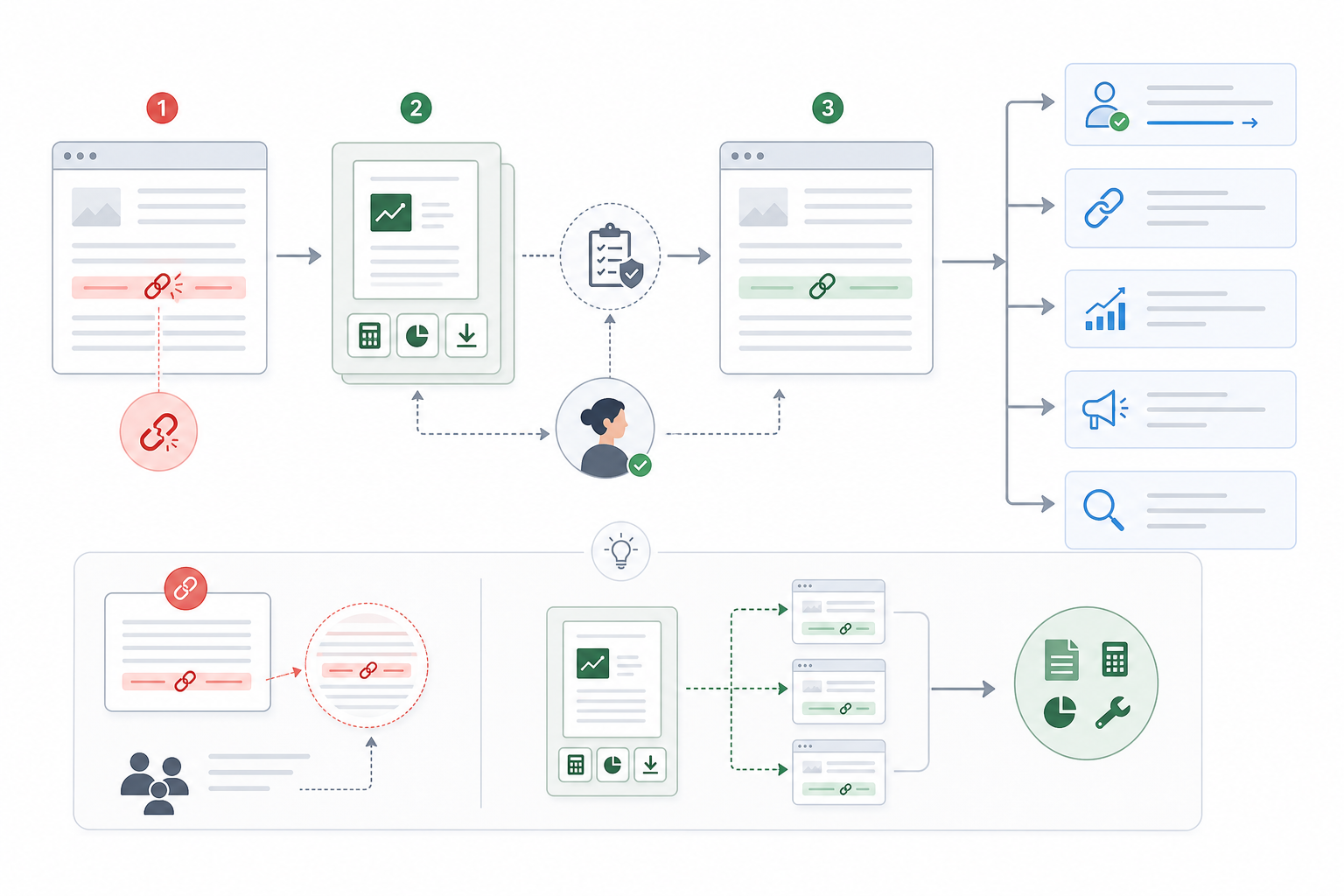
Broken link building is beneficial because it starts with an external reference need that already existed but is no longer being served. If your resource genuinely replaces the unavailable destination, the publisher can restore a useful navigation path while creating a contextually relevant backlink opportunity.
Existing Reference Demand Has Already Been Demonstrated
A broken link shows that the publisher previously considered an external resource useful within that page.
The original resource may have provided:
- Research
- Statistics
- Calculators
- Templates
- Explanations
- Tools
That historical backlink is evidence of a previous reference need.
It is not evidence that the publisher must accept a new replacement.
The Existing Context Can Support Relevance
The broken reference already appears inside a specific article, paragraph, resource page, or citation.
If the new resource performs approximately the same function as the unavailable destination, the surrounding content can already provide a logical context for the replacement.
For example, a guide citing a discontinued mortgage calculator has a clearer reason to consider another working mortgage calculator than an unrelated mortgage-services landing page.
Broken Link Replacement Can Improve Reader Experience
A dead link sends users to an unavailable destination.
Replacing it with a useful working resource restores the intended navigation path.
This benefits the publisher's readers without requiring any assumption about search rankings.
The Resulting Backlink Can Provide Broader Link Benefits
Where a legitimate replacement is accepted, the resulting external reference can potentially support:
- Search context
- Referral traffic
- Source attribution
- Brand discovery
- Resource discovery
These are the same broad link benefits already established above, applied through the broken-link mechanism.
Outreach Begins With a Specific Reason
The broken reference itself gives the outreach a concrete context.
Instead of simply asking:
“Can you add our link?”
the outreach can identify:
- The broken destination
- Where it appears
- What purpose it originally served
- The working resource that can replace it
The observable problem makes the communication more specific.
Broken Resources Can Reveal Content Demand
Historical backlinks can show what types of resources publishers previously found useful.
Examples include:
- Benchmark studies
- Calculators
- Research reports
- Templates
- Technical explanations
- Free tools
If several relevant websites linked to the same discontinued resource, the pattern can provide evidence that demand existed for that type of information or functionality.
One Replacement Can Be Relevant to Several Publishers
A dead resource can have backlinks from multiple legitimate pages.
One suitable replacement can therefore potentially fit several external contexts.
Each page still requires separate qualification because historical relevance does not guarantee current relevance.
Broken link building does not create automatic opportunities. A dead competitor page, old backlink, or working replacement does not oblige a publisher to update the reference.
When Is Guest Posting Beneficial for Link Building?
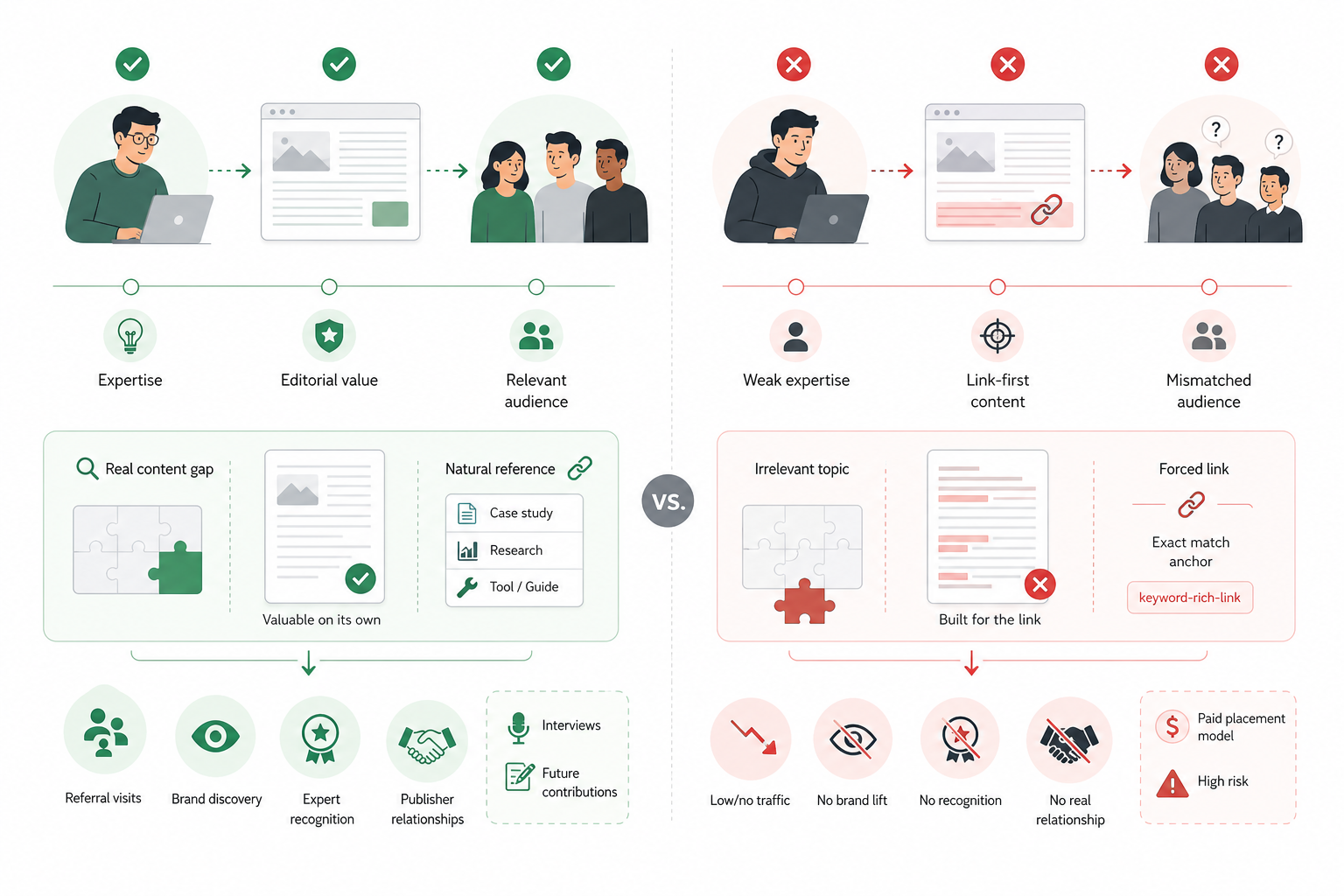
Guest posting is most beneficial when you have genuine expertise to contribute, the publication reaches a relevant audience, the article provides independent editorial value, and any link to your own website naturally supports the reader rather than being the reason the article exists.
The Publication Reaches a Relevant Audience
The publisher should reach people who genuinely care about the contributor's knowledge.
Audience relevance can come through:
- Industry
- Profession
- Business problem
- Technology
- Customer type
- Use case
A cybersecurity expert contributing to a security publication has a clear audience relationship.
A guest article on an unrelated website chosen only because it has a high DR does not provide the same audience fit.
The Contributor Has Genuine Expertise
Useful guest contributions can come from:
- First-hand experience
- Practitioner knowledge
- Original data
- Technical expertise
- Case-study learning
- Specialist analysis
The contributor should be able to add information that is useful to the publication's readers.
The Article Has Value Without the Backlink
A practical test is:
Would this article still deserve publication if the contributor's self-link were removed?
If yes, the article has independent editorial value.
If no, the article is being built around link acquisition rather than around audience value.
A Genuine Editorial Need Exists
The strongest guest contributions fill a real gap in the publication.
Examples include:
- Missing specialist knowledge
- Practitioner experience
- Original case-study evidence
- Technical implementation advice
- Industry analysis
The topic should not be created around a desired exact-match anchor.
Any Self-Reference Serves a Function
A link back to the contributor's website can be useful when it points to an original:
- Research report
- Case study
- Tool
- Calculator
- Documentation page
- Proprietary source
In those situations, the reference helps the reader access the underlying material.
Guest Posting Can Provide Relevant Audience Exposure
A strong external contribution can create:
- Referral visits
- Brand discovery
- Expert recognition
- Industry visibility
The outcome depends on the publication's audience and the relevance of the contribution.
Traffic is not guaranteed.
Guest Posting Can Build Publisher Relationships
A useful contribution can create future opportunities such as:
- Expert requests
- Interviews
- Repeat contributions
- Collaborative research
- Editorial citations
That relationship can create value beyond the first article.
Guest posting becomes a weaker fit when the backlink is the primary reason the content exists, the publication's audience is unrelated, the contributor lacks relevant expertise, or the publisher's model centers on selling exact-match dofollow placements.
How Does PR Benefit Link Building?
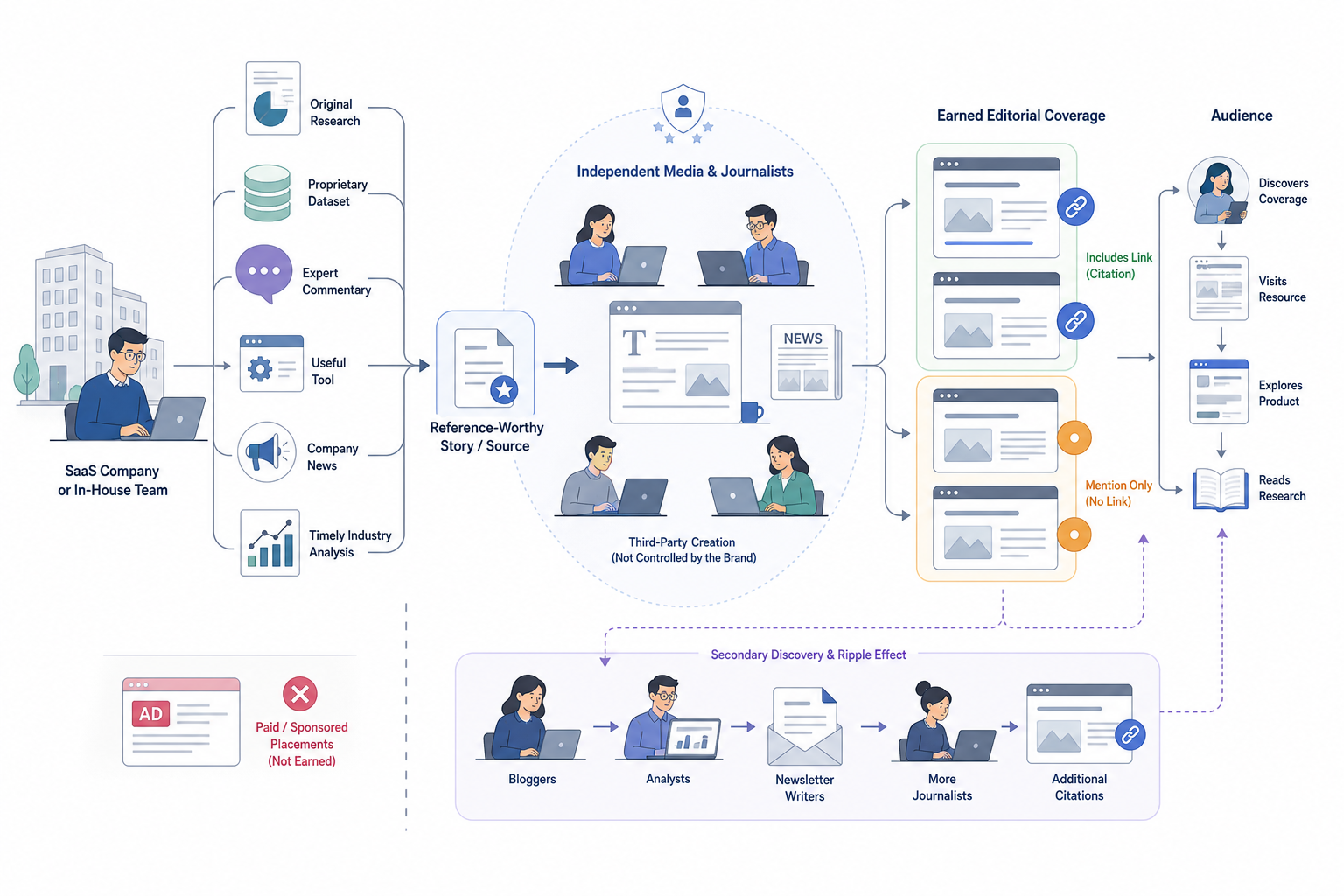
PR benefits link building by creating independent editorial reasons for journalists and publications to mention, cite, or link to a company's evidence, expertise, story, product, or resource.
Unlike guest posting, where the business contributes the external article, PR can lead to coverage created independently by journalists or publications. In link building, digital PR applies this model online by turning research, data, expert insight, useful assets, and newsworthy developments into opportunities for independent coverage and citations.
PR Creates an Editorial Reason for Reference
Strong PR inputs can include:
- Original research
- Proprietary data
- Expert commentary
- Useful tools
- Meaningful company developments
- Timely industry analysis
These inputs give journalists something useful to report, interpret, cite, or investigate.
The process should begin with a reference-worthy story or source rather than with the need to obtain a backlink.
Earned Coverage Can Create Editorial Backlinks
A journalist may link when readers benefit from accessing the:
- Source study
- Methodology
- Original dataset
- Company resource
- Expert profile
- Tool
The decision belongs to the publisher.
PR coverage does not guarantee a backlink.
Media Audiences Create Brand and Referral Exposure
Relevant media coverage can introduce the company, research, product, or expert to a larger or different audience.
Readers can then:
- Discover the brand
- Visit the cited resource
- Explore the product
- Read the underlying research
The usefulness of that exposure depends on the publication and audience rather than on DR alone.
PR Provides Independent Third-Party Recognition
When a publication independently covers a company or cites its research, that recognition can influence human perception.
It can make an:
- Expert
- Company
- Research project
- Product
- Dataset
more visible within its market.
This does not create a measurable Google trust score.
PR Can Expose Genuine Expertise
Journalists frequently need specialists who can interpret:
- Industry changes
- Technical developments
- Market data
- Customer behavior
- Operational problems
Providing useful expertise can increase recognition of the expert or company as a relevant source.
Backlinks should not be described as directly increasing E-E-A-T.
PR Can Build Journalist Relationships
A reliable expert, researcher, or data source can become useful to journalists beyond a single story.
Future opportunities can include:
- Follow-up quotations
- Interviews
- Source requests
- Research citations
- Industry commentary
The relationship itself can therefore have value even where a specific media mention contains no hyperlink.
PR Can Amplify Useful Assets
PR can expose:
- Research
- Reports
- Tools
- Original datasets
to audiences that would not necessarily discover those assets directly.
This can create further citation opportunities.
PR Can Create Secondary Discovery
Other:
- Journalists
- Bloggers
- Analysts
- Newsletter writers
can discover a useful source through existing media coverage and later reference it independently.
This downstream effect is possible rather than guaranteed.
Earned PR should also remain separate from paid or sponsored media. Independent editorial coverage and commercial placements represent different relationships, even if both create visibility.
How Does Social Media Sharing Benefit Link Building?
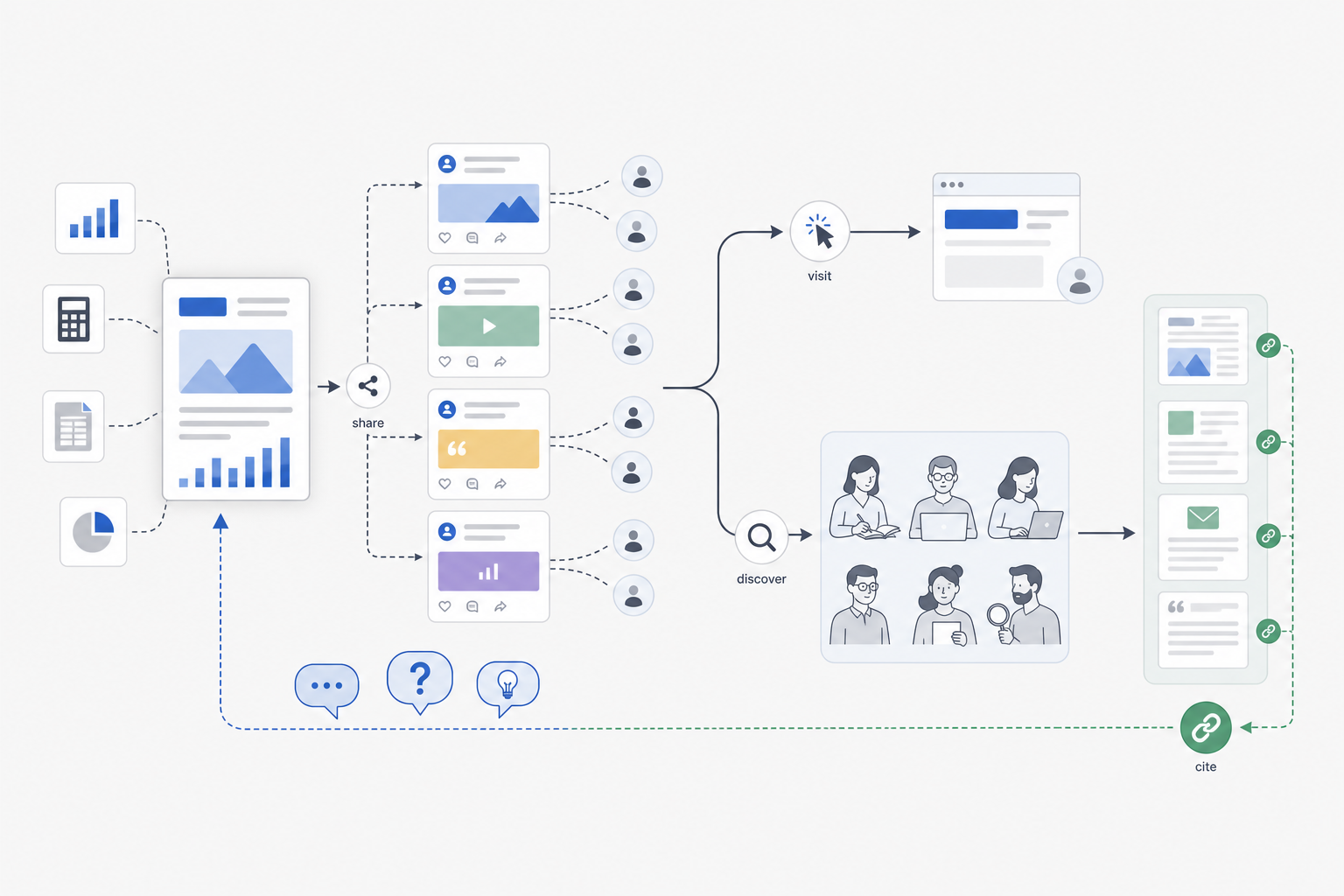
Social media sharing benefits link building mainly through distribution, human discovery, referral traffic, and relationship development rather than because social-platform links themselves function like earned editorial backlinks.
Its role is usually indirect: useful content reaches more relevant people, and some of those people can later choose to cite or reference it independently.
Social Media Expands Distribution
A resource cannot be cited by someone who never sees it.
Social channels can expand discovery beyond:
- Organic search
- Direct traffic
- Existing customers
This increases the number of relevant people who can encounter the resource.
Publishers and Journalists Can Discover Resources
Social audiences can include:
- Journalists
- Editors
- Bloggers
- Analysts
- Researchers
- Newsletter writers
- Industry creators
For example, a journalist can discover new research through LinkedIn and later reference the original study in a news article.
The later editorial backlink results from the journalist's independent decision, not from the social link itself.
Social Sharing Can Amplify Linkable Assets
Distribution can be particularly useful for:
- Original research
- Statistics
- Reports
- Calculators
- Tools
- Templates
- Visualizations
These assets already have a potential reference function, and social sharing increases their exposure.
A social share does not automatically produce a backlink.
Social Media Can Generate Direct Visits
Users can click a social link and visit the website.
That creates a distribution or referral outcome.
It should remain separate from the SEO value of an independently earned external backlink.
Social Interaction Can Reveal Relevant Relationships
Substantive interaction can reveal:
- Journalists interested in the topic
- Publishers
- Industry creators
- Potential partners
- Relevant communities
Those interactions can create future relationship opportunities.
Someone liking a post does not automatically make them an appropriate outreach prospect.
Social Response Can Improve Future Content and PR
Audience response can reveal:
- Interesting findings
- Common questions
- Confusing information
- Missing data
- Potential story angles
These signals can inform better future research, resources, and distribution.
Social media therefore supports link building mainly by increasing human discovery of things worth referencing.
It should not be reduced to:
social share = backlink,
social engagement = ranking signal,
or social sharing = guaranteed faster indexing.
Why Can SaaS Companies Benefit From Link Building?
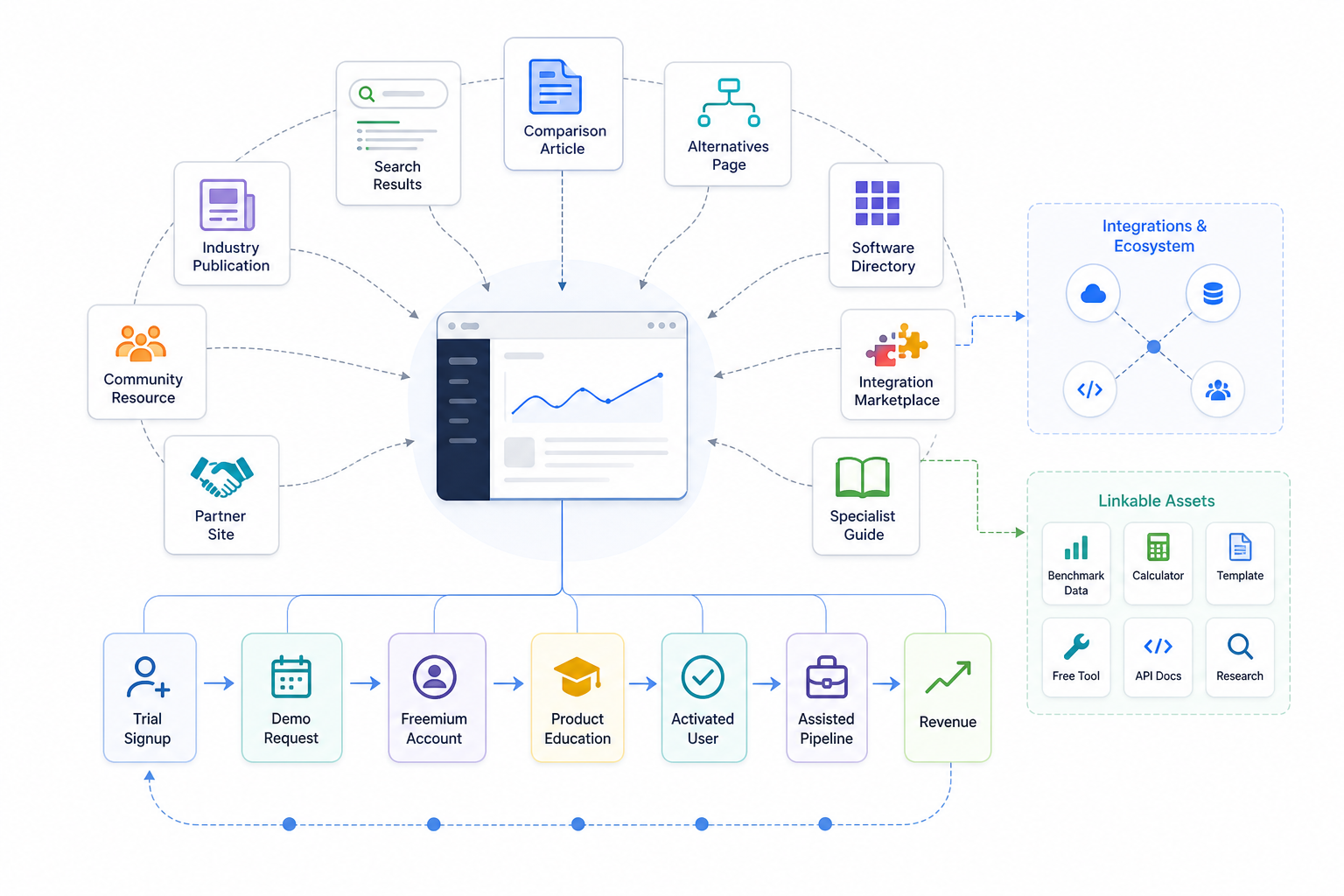
SaaS companies can benefit from link building because software buyers frequently discover and evaluate products through search results, comparison articles, alternatives pages, software directories, integration marketplaces, industry publications, communities, and partner ecosystems. Relevant references can therefore contribute to search visibility, product discovery, referral traffic, buyer evaluation, brand recognition, and measurable acquisition opportunities.
Link Building Can Support Competitive Organic Discovery
SaaS categories frequently compete around:
- Product-category searches
- Use cases
- Integrations
- Comparisons
- Alternatives
- Industry-specific requirements
Relevant external references can act as one input within this broader competitive search environment.
More backlinks do not automatically mean a SaaS company will outrank another product.
SaaS Buyers Use Third-Party Comparison Pages
Prospective buyers often research:
- Best software lists
- Alternatives
- Product-vs-product comparisons
- Independent reviews
- Software directories
A relevant inclusion can place a SaaS product directly inside the buyer's evaluation process.
This makes buyer-comparison discovery particularly relevant to SaaS link building.
Relevant Sources Can Send Product-Focused Referral Traffic
Referral sources can include:
- Software comparisons
- Vertical publications
- Integration guides
- Specialist resources
A visitor arriving from one of these sources already has contextual interest in the topic being discussed.
That does not mean every visitor has immediate purchase intent.
SaaS Referral Journeys Can Produce Measurable Actions
Depending on the product, users can take actions such as:
- Start a trial
- Create a freemium account
- Request a demo
- Create an account
- Join product education
Where attribution supports it, SaaS teams can measure how external referral sources contribute to these outcomes.
The presence of the backlink does not guarantee conversion.
Integrations Create Natural External Relationships
Software products frequently connect with:
- Integration partners
- Implementation partners
- Agencies
- App marketplaces
- Technology ecosystems
A real product integration creates a useful reason for cross-site references.
These links can help users research:
- Compatibility
- Implementation
- Available workflows
- Product partners
The value comes from the real product relationship rather than from manufacturing partner pages solely for SEO.
Third-Party References Support Product Evaluation
Buyers often want information beyond the vendor's own website.
Relevant external resources can provide:
- Product discussion
- Independent comparisons
- Expert commentary
- Ecosystem listings
- Customer examples
These give potential customers additional places to evaluate the product.
They should not be described as automatic “trust transfer.”
SaaS Businesses Often Have Linkable Product Knowledge
Software companies can own useful resources such as:
- Benchmark data
- Usage data
- Calculators
- Templates
- Free tools
- API documentation
- Research
These resources can create legitimate citation opportunities because they provide information or functionality other publishers may need.
External References Can Support Longer Buying Journeys
A buyer can encounter the same SaaS product across:
- Search
- Industry publications
- Comparisons
- Integration pages
- Partner ecosystems
Repeated relevant exposure can increase familiarity with the company during the evaluation process.
There is no fixed number of touchpoints that guarantees a software purchase.
SaaS Link Outcomes Can Be Measured
Depending on analytics and attribution, useful metrics can include:
- Referral sessions
- Trials
- Demo requests
- Activated users
- Assisted pipeline
- Revenue
This allows SaaS companies to evaluate link building using more than link counts or third-party authority metrics.
Link Building Can Diversify SaaS Acquisition
External references can add discovery surfaces across:
- Organic search
- Referral traffic
- PR
- Partner ecosystems
- Product comparisons
This can create a more diversified acquisition mix.
Any effect on CAC must be measured rather than assumed.
What Are The Benefits of Professional Link Building Services?
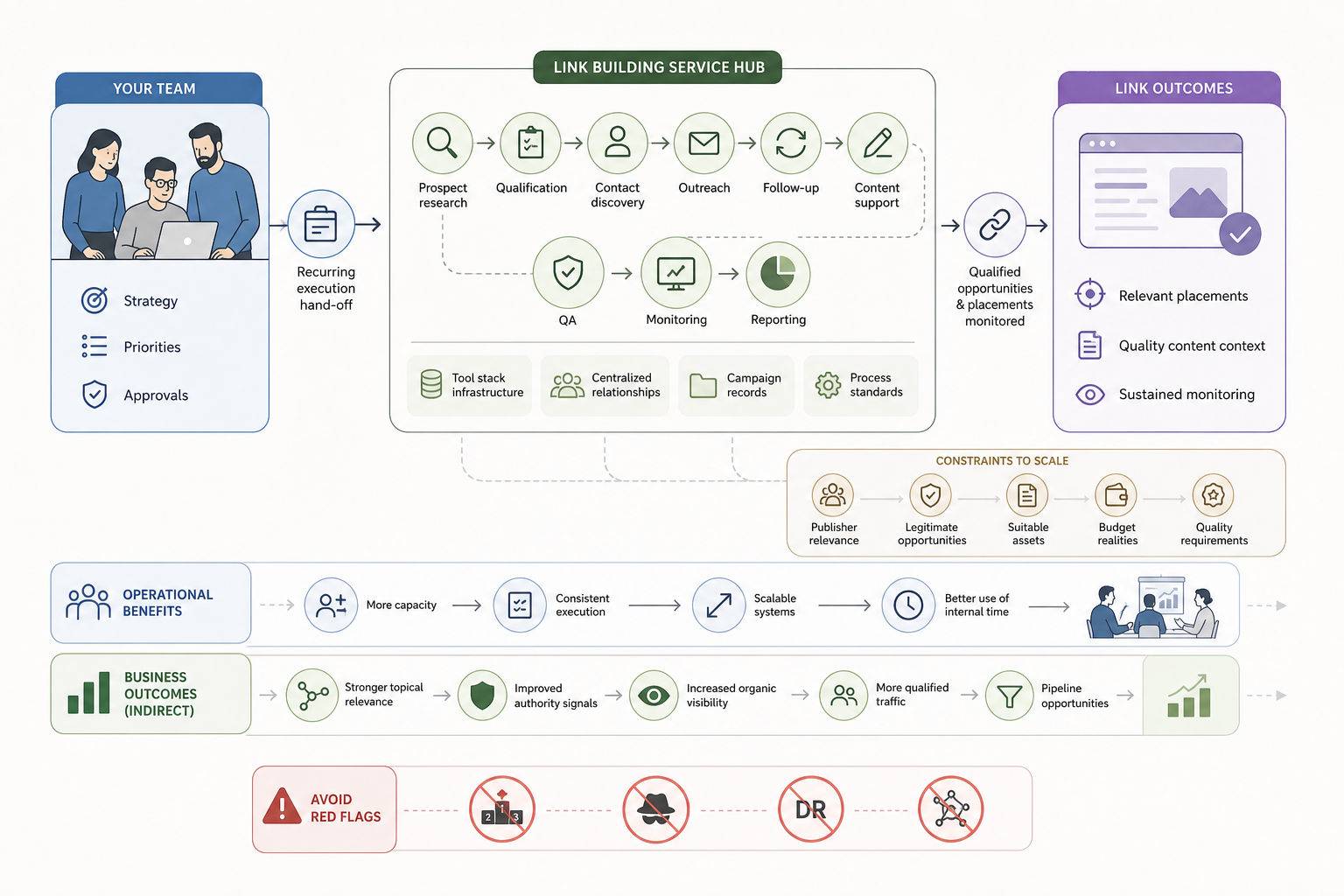
Professional link building services can be beneficial when a business understands why relevant external references matter but lacks the internal resources, specialist expertise, processes, content capacity, or campaign infrastructure required to execute link acquisition consistently.
Their primary benefit is operational specialization and capacity across research, qualification, outreach, content support, quality assurance, monitoring, and reporting. A professional service does not automatically make the resulting backlinks better or guarantee rankings, traffic, or revenue.
1. Additional Execution Capacity
Link building can require recurring work across:
- Prospect research
- Qualification
- Contact discovery
- Outreach
- Follow-up
- Content support
- QA
- Monitoring
An external team can add capacity without requiring the company to hire every specialist internally.
2. Specialist Knowledge
An experienced provider can bring repeated experience with:
- Publisher qualification
- Prospect relevance
- Outreach
- Digital PR
- Content requirements
- Link-policy boundaries
- Monitoring
The benefit is more structured execution.
Hiring an agency does not automatically mean every backlink will be better.
3. More Prospect Research Capacity
A dedicated service can evaluate larger sets of:
- Publishers
- Articles
- Resource pages
- Partners
- Media opportunities
while applying qualification criteria consistently.
More prospecting capacity can create more qualified opportunities, but more prospects do not automatically create more links.
4. More Consistent Outreach Operations
Professional services can maintain:
- Contact records
- Outreach history
- Follow-up status
- Publisher responses
- Placement stages
This can replace fragmented outreach spread across spreadsheets, inboxes, and individual team members.
5. Content and Asset Support
Depending on the service scope, providers can support:
- Expert contributions
- Research distribution
- Replacement assets
- Content updates
- Publisher-specific content requirements
This is execution support rather than a separate reason why backlinks themselves are valuable.
6. Process Consistency
Professional teams can standardize:
- Prospect qualification
- Outreach
- Approvals
- Placement checks
- Monitoring
- Replacement handling
- Reporting
Defined processes can make campaigns easier to manage as volume increases.
7. Existing Tool and Data Infrastructure
A provider may already use:
- Backlink-analysis tools
- Outreach platforms
- CRM systems
- Monitoring software
- Contact databases
- Reporting workflows
This can reduce internal setup requirements.
Tool ownership does not inherently result in better backlinks.
8. Centralized Relationship Management
A dedicated team can maintain campaign history and publisher communication in one place.
This can create more consistent interactions with external websites.
Publisher relationships should not be presented as a private inventory of guaranteed placements.
9. Monitoring and Maintenance
Professional services can monitor:
- Link status
- Destination changes
- Incorrect placements
- Link removals
- Campaign outcomes
An important lost or changed link can then be investigated and addressed where appropriate.
10. Structured Reporting
Useful reporting should separate operational outputs from business and search outcomes.
Operational outputs can include:
- Prospects researched
- Outreach performed
- Placements secured
- Referring sources
Business and search outcomes can include:
- Referral traffic
- Relevant organic visibility
- Leads
- Conversions
- Target-page performance
Backlink count alone does not represent the entire outcome of a link-building campaign.
11. Additional Scalability
External services can increase campaign capacity without requiring the business to immediately build a full internal function.
Scale is still constrained by:
- Legitimate opportunities
- Suitable assets
- Publisher interest
- Quality requirements
- Budget
A professional provider cannot create unlimited legitimate links simply because more output is requested.
12. Greater Internal Focus
Outsourcing recurring research and outreach can allow internal teams to spend more time on:
- Product
- Content
- Strategy
- Technical SEO
- Customer acquisition
- Subject expertise
This is one of the core benefits of outsourcing link building: internal resources can be reallocated while external specialists manage defined execution tasks.
Professional services are not automatically the better option.
Warning signs include providers that:
- Cannot explain how links are acquired
- Sell placements mainly by DR and dofollow status
- Guarantee rankings
- Ignore publisher relevance
- Hide actual placements
- Disguise commercial relationships
- Depend on manufactured website networks
The distinction is important.
The benefits of link building describe the search, referral, discovery, brand, commercial, and relationship outcomes relevant external references may create.
The benefits of professional link building services describe the operational advantages of outsourcing some or all of the work required to pursue those references.
A professional service is therefore most useful when the business has a legitimate link-building objective but needs additional capacity, specialist expertise, process, infrastructure, quality assurance, monitoring, or reporting to execute it effectively.
Need links on real SaaS and business websites?
Links are placed after your approval, on sites with guaranteed DR and traffic, with a 1-year replacement guarantee.

